

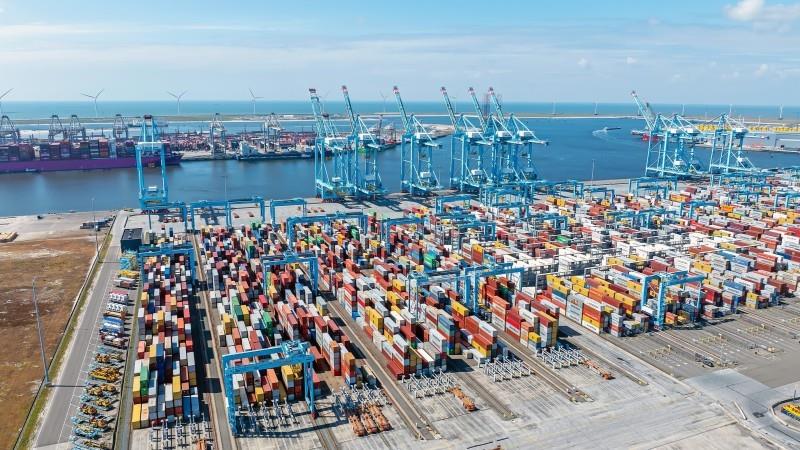
Europe's Search For A New Growth Model


Europe's economic model worked so well for so long that changing it never felt particularly urgent. For decades, Europe was one of the biggest beneficiaries of globalisation. Trade became an ever-larger part of the economy, companies gained access to fast-growing markets abroad, and consumers benefited from cheap imports.
Calls for more innovation, higher productivity and stronger competitiveness never disappeared, but they rarely moved beyond strategy papers and political ambitions. Why change a winning team? The Lisbon Strategy of 2000, which promised to make Europe“the most competitive and dynamic knowledge-based economy in the world” by 2010, is a useful reminder of how long Europe has been discussing today's challenges. And of how little discussion alone achieves.
The discussion has since become even more pressing. The Russian invasion of Ukraine and the energy crisis have pushed up production costs, while Chinese firms have become increasingly competitive in industries that Europe once regarded as its natural strengths. At the same time, global trade has become less predictable and more politicised.
The effects are increasingly visible in trade flows. Since 2019, eurozone imports from China have grown by around 50% while exports to China have declined, widening the eurozone goods trade deficit with China by more than €150bn. But bilateral trade balances should not be confused with competitiveness. To assess competitiveness, it is more useful to look at market shares. Here too, the picture has deteriorated. Europe's traditional strength in machinery and transport equipment has weakened, with trade surpluses shrinking and Chinese firms gaining ground in sectors such as electric vehicles. Even pharmaceuticals, the undisputed bright spot in European trade with exports up more than 80% since 2019, are not immune to growing Chinese competition, as China's share of eurozone imports continues to rise.
A trade surplus that once seemed entrenched is being eroded by several sides at once. And while a trade surplus is not necessarily a sign of economic strength or something to pursue, the shrinking surplus is illustrative of a deteriorating growth model characterised by manufacturing specialisation, strong external demand, sustained export-market gains and sizeable current-account surpluses. Subsidies, industrial policy and trade barriers may slow the adjustment and buy time for businesses to adapt, but they are unlikely to recreate the conditions of the 2010s.
This is what makes today's competitiveness debate different from earlier ones. While the war in the Middle East and US tariffs have dominated headlines over the past year, they are only one part of the story. The larger challenge is that the external environment on which Europe's growth model relied has changed fundamentally. As a result, the eurozone is being pushed towards a new growth model. The question is what that model will look like.
The engine is sputteringThe pressure on the trade balance stems mainly from the export side. The eurozone has become less of an export powerhouse in recent years. To put this into perspective, the contribution of gross exports to GDP was, on average, around two percentage points per year in both the first and second half of the 2010s. Since 2020, that contribution has fallen below one percentage point, and in Germany, of all places, it has turned slightly negative. The Netherlands, the eurozone's most open economy, has seen the export contribution to growth drop to a quarter of its pre-pandemic level.
Contributions of gross exports to GDP have fallen this decade Source: Eurostat, ING Research">
The same picture emerges over a longer time horizon. Since the mid-1990s, eurozone exports have outpaced GDP growth in every expansion and contracted more sharply than GDP in downturns. Meanwhile, domestic demand as a share of GDP retreated after the financial and euro crises and has never fully recovered. But in recent years, there has been a pickup. And in Germany, this pickup seems more structural. The current expansion is the first in which export growth has failed to outgrow the economy. Of course, there are temporary factors playing a role here, but the structural story behind it is becoming harder to ignore.
The role of exports in GDP growth is moderating Homemade growthOne possible response to a weakening export engine is a more domestically driven growth model, in which the eurozone's large pool of relatively wealthy consumers and businesses as well as fiscal stimulus become a larger source of growth through consumption and investment. This is more than a theoretical possibility. The eurozone combines high household wealth, substantial private savings and relatively low levels of household leverage with significant investment needs in defence, infrastructure, energy and digitalisation. If these resources can be mobilised more effectively, domestic demand could become a stronger source of growth than it has been for much of the past decade.
Recent initiatives could give such a shift additional momentum. Higher defence and infrastructure spending, particularly in Germany, are boosting investment demand. The Savings and Investments Union aims to channel Europe's large pool of savings towards productive investment, while policymakers are increasingly focused on reducing barriers within the single market. Together, these developments could provide stronger support for domestic demand than Europe has seen in many years.
But how likely is it that domestic demand can simply take over? It's a clear opportunity, but we don't want to close our eyes to the complications either. Below, we focus on three limiting factors: the lack of historical precedents, the euro, and demographics.
The precedent problem
There are remarkably few examples of countries that have successfully moved from an export-led to a domestically-driven growth model. The United States is the obvious one: a large trade surplus at the end of World War II turned into the historically large deficits of the current era, while the economy kept growing. The dollar's reserve currency role did not cause America's shift towards persistent external deficits, but it made those deficits easier and cheaper to finance than they would be for almost any other country. The US could rebalance on other people's savings.
The other precedents are less flattering. Historical experience suggests that external rebalancing is compatible with solid growth when it reflects higher productive investment, but not when it is driven by credit-fuelled demand booms or declining competitiveness. Or worse, often the so-called rebalancing happens in times of severe crisis. Finland's current account surplus shrank sharply after 2008, but mainly because of the demise of Nokia and weaker export performance; GDP growth fell from around 3% to essentially zero. That was rebalancing out of weakness, not strength.
Spain, Portugal and Greece saw their external balances deteriorate after entering the monetary union as cheap capital fuelled consumption and construction booms. Growth was strong until the bubble burst. Too much of the capital flowed into housing and non-tradables rather than productivity-enhancing investment, leaving these economies exposed when financing conditions tightened after 2008. Ireland was, to a degree, in the same boat as Southern Europe but has recently become more of a rebalancing success story. However, its national accounts are so distorted by multinational activity that both GDP and current account figures need to be taken with a large pinch of salt.
This means there is no blueprint for a highly developed economy to deliberately and successfully transform its economic business model away from exports to more domestic demand. The eurozone would be entering uncharted territory.
Can a 'global euro' help build a new growth model?
As the US was able to use the dollar's status as the world reserve currency to rebalance, could the euro perhaps be of help as well? A successful rebalancing and a strong euro are best understood as a feedback loop rather than a one-way street. If Europe's domestic investment story becomes credible, foreign capital would flow in and the euro could strengthen. A stronger euro, in turn, raises households' purchasing power, lowers import costs and shifts relative incentives away from exporting and towards serving the home market – which is precisely what a rebalancing requires. This is the mechanism that dollar strength provided for the US for decades.
The loop, unfortunately, also runs in reverse. A weak euro flatters exporters, subsidises the old model and postpones the adjustment – while making imports, not least energy, more expensive for the domestic economy. European Central Bank President Christine Lagarde has been promoting a“global euro moment”. And while the euro's international role has increased modestly (when measured at current exchange rates), it would be a stretch to call this a material shift towards euro assets in global financial markets.
Without deeper and more liquid capital markets, a genuine European safe asset and a larger pool of investable euro instruments, the euro will not get the reserve-currency tailwind that carried the American rebalancing. In short: the currency will not lead this transition, but it is a gauge of where the transition stands. Markets will reward a credible rebalancing with a stronger euro, and punish an unconvincing effort by keeping the eurozone dependent on the very export model it is trying to outgrow.
Ageing makes domestic demand growth more challenging
Demographics are the second complication, and they lean against the domestic-demand story rather than for it. Eurozone population growth is grinding to a halt due to rapid ageing, and ageing societies are not natural consumption machines. Without much population growth, it is a lot harder to increase demand. On top of that, while the theory is ambiguous, we so far see that older households save well into retirement, run down wealth more slowly than the textbooks assume so far, and shift their spending towards services and pharma rather than the goods and housing that drive investment cycles. The effects of ageing on labour supply, potential growth and the composition of demand also make a domestically-led acceleration of economic growth hard to achieve.
Japan is the main advanced market that has already gone through a sizeable demographic decline and its growth model has become more reliant on exports over time. The period of significant ageing of the Japanese population went hand in hand with a rising, not falling, share of exports in GDP although this also went hand in hand with a prolonged balance sheet recession. As the domestic market matured and shrank, Japanese companies increasingly looked abroad for growth, and the economy as a whole relied on earning income from the rest of the world to fund retirement at home. If Europe's future relied on ageing consumers suddenly discovering their inner spender, this is again something that hasn't really been done before.
In Japan, ageing has come with a rising share of exports in GDP Source: Macrobond"> A second lease for the export modelThe lack of clear historical precedents suggests that Europe's way forward does not necessarily lie in a rebalancing towards domestic demand alone. Another possibility is that Europe retains an export-oriented growth model, not by defending yesterday's champions, but by building tomorrow's. Europe remains one of the world's largest trading blocs, home to global industrial leaders, deep engineering expertise and a large integrated market. If these strengths can be translated into new competitive advantages, exports could continue to play a central role in growth. Several candidates for these new export champions stand out. Defence and aerospace benefit from a rearmament cycle that will run for a decade and from procurement volumes that finally offer European scale; Airbus is the proof that Europe can build a global champion when it pools resources. Pharmaceuticals and medical technology are already the bright spot of European trade, and an ageing world is a growing market. Although China is rapidly building a strong position in pharma at the moment as well.
In green technologies, the solar battle is lost and the EV battle is difficult, but grid technology, wind services and nuclear expertise remain contested rather than conceded. Industrial AI and robotics may be Europe's most underrated card. Europe will not out-compete the US or China in AI models, but applying AI to the world's largest installed industrial base - the machine data of thousands of hidden champions - is a race that is still open. And services exports have quietly become a larger share of the European story, from business services to tourism, with a persistent surplus that rarely makes headlines.
Add to this the recently agreed trade agreements – Mercosur, India, Australia – which could support export volumes, even if their effect on the trade balance is uncertain and likely to be modest.
Still, none of these opportunities are guaranteed. European exporters face higher energy costs, intensifying competition from China, fragmented capital markets and a single market that remains incomplete in important areas. Creating new export champions is therefore not simply a matter of identifying promising sectors. It requires the same ingredients that would underpin a successful domestic-demand story: stronger productivity growth, deeper capital markets, room for innovation and a business environment that allows firms to scale. Not impossible as we argue here, but a lot of work to be done.
Four roads for the eurozone economyUltimately, the choice is not necessarily between one model and the other. A stronger domestic economy also breeds more opportunities for European businesses to become global export champions. By strengthening the foundations of the eurozone economy, Europe could support both a more demand-driven growth model and a renewed export advantage. But without a healthy foundation, weaker versions of both could be a realistic outcome as well.
To illustrate this, we define four stylised scenarios for the eurozone as it grapples with the erosion of its old growth model. In these scenarios, the key uncertainty is not whether Europe becomes more dependent on domestic demand or continues to rely on exports. It is whether Europe can generate sufficient productivity growth and new competitive advantages to support either model. A balanced economy without productivity growth risks stagnation; an export economy without new areas of competitiveness risks decline.
1. Prosperity at home – Europe finds a new growth engine in its own market
Europe deliberately shifts away from dependence on external demand and develops a stronger internal growth model. Initiatives to strengthen domestic demand through public and private investment succeed. A more aggressive shift towards renewables and nuclear power reduces energy dependence significantly, and structural reforms unlock activity. Supported by the savings and investment union, Europe becomes more attractive for foreign investors; capital inflows strengthen the euro. The wage moderation efforts of the past decades are not repeated as labour becomes more expensive.
Together with the stronger euro, this reinforces purchasing power. Trade surpluses narrow almost automatically – a symptom of success, not failure. Europe imposes import restrictions on Chinese products but keeps the European market open for Chinese investment. While Europe remains dependent on US AI providers, the smart application of AI lifts productivity, and services become a larger share of European growth.
2. Stagnant Europe – rebalancing without renewal
Exports lose momentum and trade surpluses disappear, but Europe fails to generate sufficient domestic dynamism to compensate. Higher commodity prices weigh on purchasing power and ageing and weak productivity dominate. As European exporters lose market share and exports cease to be the main growth driver, the European growth model does indeed become more balanced – but it is a balance of the race-to-the-bottom kind. Productivity remains weak, companies increasingly invest abroad, and the current account balances not because domestic demand rises but because there is less and less to export. Rebalancing by default rather than by design: the Finnish experience at a larger scale.
3. Industrial renaissance – Europe creates the next generation of export champions
Europe retains an export-orientated model, but not by defending existing industries. Reforms in the home market allow for better scaled companies. The basis for revived growth is similar to our 'Prosperity at home' scenario. New, globally competitive sectors emerge and sustain strong external demand: defence, aerospace, renewable technologies and pharma, among others. Industrial AI applications and robotics keep European companies at the forefront of global industry, converting the world's largest installed manufacturing base into a productivity advantage. Labour costs are kept under control by wage moderation and technological advancements. The model stays recognisably European – open, trade-oriented, engineering-heavy – but with a new generation of products under the hood.
4. Disneyland Europe – fighting yesterday's battle
Europe doubles down on preserving existing industrial structures through subsidies, protectionism and wage restraint. The export model remains the ambition, but competitiveness continues to weaken as structural reforms stay superficial and half-hearted. Regulation continues to dominate AI implementation, keeping potential productivity gains low. This is the worst-case scenario: a continued, gradual deterioration of prosperity in which Europe's most reliable growth industry becomes showing tourists from Asia and America what a great economy once looked like. Culture and history, after all, are harder to ruin than economic prosperity.
Le roi est mort – but where is the heir?The old European growth model will not be voted out of office; it is being retired by the world around it. The real choice facing Europe is therefore not between a domestic-led and an export-led model. It is between deliberate change and change by default. Both 'Prosperity at home' and 'Industrial renaissance' are within reach, and they are not even mutually exclusive – a stronger home market and new export champions could happily coexist. Even if historical evidence clearly suggests that an 'industrial renaissance' would be the model with a higher chance of success.
In any case, both outcomes require the same clear but also disruptive policy choices, in order to achieve productivity growth, cheaper energy, deeper capital markets and reforms that survive contact with national politics. In fact, Europe won't need to choose a new business model upfront, it simply needs to do its homework and then step back to see which model will prevail. One thing is for sure: doing nothing would push the European economy further into its very own 'Nokia' moment.

Legal Disclaimer:
MENAFN provides the
information “as is” without warranty of any kind. We do not accept any
responsibility or liability for the accuracy, content, images, videos,
licenses, completeness, legality, or reliability of the information
contained in this article. If you have any complaints or copyright issues
related to this article, kindly contact the provider above.
Comments
No comment