

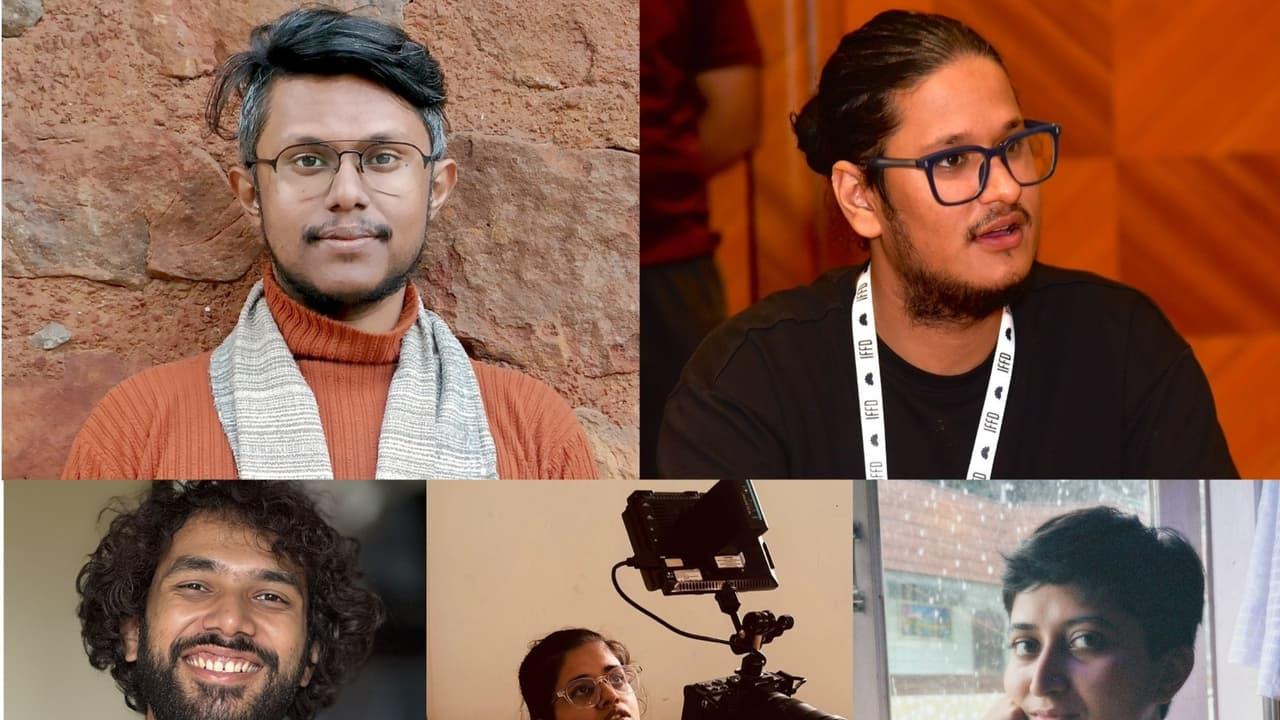
Indian Filmmakers Take Local Stories To Global Stage At Platform Busan


Behind the glamour of globally acclaimed blockbusters of celebrated artists in film festivals thrives a section of filmmakers donned as marketers, learning and pitching to get their next work global support (or sometimes just to make stories come to life). These are independent filmmakers who navigate the financial grind and bootstrap micro-budget shorts to propel their passion. Among the many global stages fueling their dreams is Platform Busan - a networking and professional development program for emerging independent filmmakers from across Asia, held annually during the Asian Contents & Film Market (ACFM) at the Busan International Film Festival (BIFF).
Held as part of the 31st Busan International Film Festival in South Korea, this year Platform Busan is scheduled from October 10 to 13 in Busan. The 2026 edition of this program features five Indian filmmakers who represent this defiant shift, bringing raw, localised stories to the international stage: Garima Pura (co-writer of the Oscar-winning 'The Elephant Whisperers'), Megha Krishnatrey (SRFTI producing alumnus and cinematographer), Utkarsh Chaturvedi (award-winning director of 'Walking Under The Sun' and 'Help Yourself'), Koustabh Mukherjee (National Award-winning cinematographer behind 'Darlings and Tara), and Sourav Yadav (award-winning director of Malwa Khushan). The Indian cohort heads to Busan to take grassroots Indian stories to foreign financiers who value art-house and regional authenticity.
A Springboard for Overlooked Stories
For an independent Indian filmmaker, writing a compelling script is often the easiest part of the journey. The real battle begins when trying to get it made and seen. Amid commercial formulas, hyper-local and unconventional stories rarely find room in traditional studio pitch meetings. This is where Platform Busan steps in. This annual networking and professional development program is designed specifically for emerging independent filmmakers across Asia. Targeting early-career creators with credited work on at least one short film or up to two features, it acts as a vital meeting ground where up-and-coming talent can share field experiences, sharpen artistic philosophies, and discover avenues for international co-production. While the Platform Busan essentially provides a springboard for regional creators to launch onto a broader global stage, it holds a lot many meanings for these filmmakers.
Voices from the Cohort
As Garima Pura puts it, the shift to international platforms is about finding space for stories that mainstream domestic studios routinely reject. In a conversation with ANI, she said, "These hyperlocal films won't get funding or support from the mainstream ecosystem, so independent filmmaking and international co-productions feel like the right place to nurture such projects."
Koustabh Mukherjee notes the value of international platforms as BIFF in providing opportunity for regional hyper-local stories to shake hands with the global skies. "My goal is to take my stories, the place I come from, the narratives I have...for them to see the thing they are missing is a mistake they are doing. Like Satyajit Ray, Bengali cinema is still there, we are still telling our stories our way," he said.
Utkarsh Chaturvedi highlights the frustration of putting in years of labour only to hit a wall with domestic investors. "Even if we have worked hard and been to international festivals, people still don't want to watch us or take a chance. To show that we are someone, it is important to represent ourselves on these global platforms," he stated.
For Sourav Yadav stepping into Busan is both a surreal moment and an essential step to test how local stories resonate across international borders. "It is an amazing feeling to represent my work at a festival in the land of legends like Bong Joon-ho, Park Chan-wook, and Lee Chang-dong. Pitching to such a geographically and culturally diverse cohort helps me understand how the film reads outside the specific mountain community it comes from," Sourav said.
Megha Krishnatrey emphasises how platforms like Busan step in to bridge the gap that local infrastructure leaves wide open: "A lot of these stories simply don't get the opportunity to reach the people who could help take them further internationally. Platforms like Busan create that proximity where you can actually meet producers and start those conversations," she said.
Pitching Ambitious, Hyper-Local Projects
The cohort will not arrive at Platform Busan 2026 with just hopes but also with distinct, ambitious projects. Garima Pura's Pitching Nose Bone, a dark comedy feature about an 18-year-old orphan scrambling for an abortion in Punjab, alongside showcasing her debut short film Kosi Sardi to explore festival distribution. Utkarsh Chaturvedi is developing and pitching his coming-of-age feature 'Ready 1...2...' to find co-producers, while introducing his recent short film FlowerMan to international sales agents and programmers. Koustabh Mukherjee is presenting a double slate in development-the children's coming-of-age short film 'BulBul' and 'The Woman With Two Names', a culturally rooted horror-comedy feature exploring borders. Sourav Yadav is pitching his debut feature fiction project 'Soma Helang' (A Song of Flowers)-co-written and co-directed with Shubham Negi and produced by Neeraj Churi (Cactus Pears)-to secure financing and international co-production partners. Megha Krishnatrey is producing and presenting the short film 'FlowerMan' alongside a slate of feature projects, aiming to build long-term international networks and navigate global co-productions.
Meet the Filmmakers: A Background
Behind every pitch at an international festival lies years of personal sacrifice, unpaid labour, and creative persistence.
Garima Pura
Garima Pura made her mark co-writing the Oscar-winning documentary 'The Elephant Whisperers'. Moving from high-profile productions to indie micro-budgets taught her crucial lessons in unlearning commercial briefs. "When I was on The Elephant Whisperers, it was an indie film that started small and grew through hustle. Big work teaches you to write to a brief, independent filmmaking teaches you collaboration and protecting your voice."
Megha Krishnatrey
Megha Krishnatrey is the producer and cinematographer of 'FlowerMan'. She approaches independent cinema with practical resource-building, ensuring financial survival supports creative risk. "With indie cinema, you don't always raise a large amount of money upfront - you build the film by assembling resources: equipment, locations, and collaborators who believe in the story."
Utkarsh Chaturvedi
Utkarsh Chaturvedi earned a Best Director nomination at Hollywood's Standalone Film Festival for his pandemic documentary 'Walking Under The Sun'. Having directed over 10 short films and produced 15 commercials, he navigates through post-institutional reality. "Film schools teach you craft, but the art of selling yourself and reaching the right audience is something you have to learn after."
Koustabh Mukherjee
Koustabh Mukherjee is an SRFTI alumnus whose cinematography earned a National Film Award for Oru Paathiraa Swapnam Pole and visual acclaim on Netflix's Darlings and Tara. Koustabh is stepping into writing and directing. He highlights the absurdity of survival in the world of filmmaking. "Indie filmmaking is weird: you wear a hat and your pants go down, you wear pants and your top goes down."
Sourav Yadav
Sourav's directorial debut Malwa Khushan won the KASHISH QDrishti Grant and screened across four Oscar-qualifying festivals. Balancing crew work as a colourist (on shows like 'Little Things' and 'Yeh Meri Family') and DP with his personal projects, Sourav spent seven years researching the Kinnaur Valley for Soma Helang. "Living with local communities-even forming god-brother relationships-helped us capture how global crises quietly enter ordinary households without exoticizing them."
A Call for Systemic Change at Home
While international platforms like BIFF's ACFM provide essential networking avenues, relying on overseas markets highlights structural gaps at home. To build a sustainable ecosystem, the filmmakers advocate for urgent policy reforms. Garima Pura questions why creators must seek private grants abroad when sensible local funding could keep stories anchored at home. Utkarsh Chaturvedi points out the prohibitive entry barriers and heavy fees to showcase work at Indian festivals compared to free international platforms. Sourav advocates for subsidised screening slots during prime time hours to make room for regional cinema. Koustabh Mukherjee urges Indian festivals to evolve beyond celebrating celebrities and actively support grassroots creators, while Megha Krishnatrey stresses that film schools must formally teach the business mechanics of financing and co-productions.
The journey of these filmmakers to Platform Busan 2026 is not just a personal milestone for five individual artists but also a practical blueprint for modern Indian independent cinema. (ANI)
(Except for the headline, this story has not been edited by Asianetnews Editorial staff and is published from a syndicated feed.)
Legal Disclaimer:
MENAFN provides the
information “as is” without warranty of any kind. We do not accept any
responsibility or liability for the accuracy, content, images, videos,
licenses, completeness, legality, or reliability of the information
contained in this article. If you have any complaints or copyright issues
related to this article, kindly contact the provider above.
Comments
No comment