

Your House May Be A Haven For Wildlife. It's Time We Design Homes With Nature In Mind


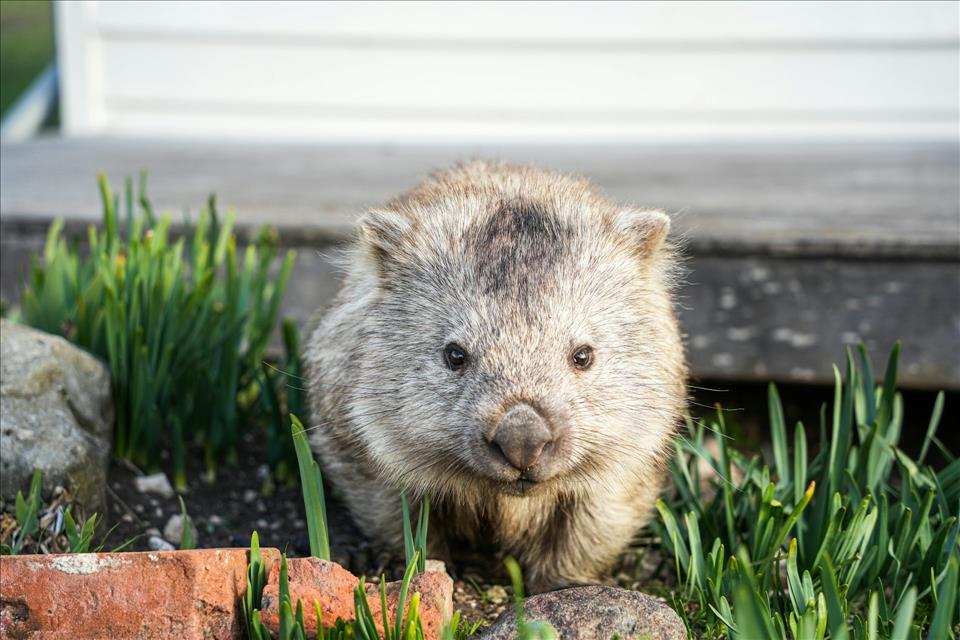
You're not alone. Data from Wildlife Victoria reveals that about 2,400 native animals were reported by people as being in, on or under buildings over the past decade.
For our new study, we analysed these reports to find out which animals were taking up residence in buildings, which parts of dwellings they occupied and what they were doing there.
We uncovered 36 native species that either nest, forage or sleep in our homes, ranging from microbats sleeping in curtains to pacific black ducks nesting on balconies. These encounters show buildings have become de facto habitat for many animals with whom we share our cities.
As Australia races to build more houses, we must design them with at-risk animals in mind. Their survival may depend on it.
Unexpected residentsOur new research reveals wildlife use almost every part of buildings.
Building cavities are the most popular option, with 40% of studied species taking up residence between walls. We found 19% of animals in shelters and structures such as garages and 16% in external surfaces such as eaves, balconies and tops of roofs.
About 10% of animals were found living in interior rooms like bedrooms and kitchens, 9% in spaces under houses and 6% in utility services such as heaters and air conditioners.
These building features often serve similar functions to natural habitats. Roof and wall cavities replicate the conditions of tree hollows. Spaces under houses resemble sheltered ground or burrows. Balconies provide elevated ledges that act as cliff edges. Aircon and water heaters can become ideal microclimates for reptiles.
The habitat gapBuildings are becoming increasingly important for conservation, as natural habitats rapidly disappear from our urban landscapes.
Natural features such as tree hollows – on which more than 300 Australian native species depend – can take centuries to form. Research shows the number of large, hollow-bearing trees in urban areas is declining. And replacement saplings won't grow and provide habitat for a very long time.
Ecologists are working to address this gap by developing nest boxes, carved hollows, bee hotels and other creative solutions.
Relying on buildings for habitat is precarious. A renovation or repair can erase it overnight. Exclusion – using physical barriers or devices to keep wildlife out of buildings – may be necessary if an animal poses a genuine health, safety or welfare risk. This is best done by an expert wildlife carer.
The problem is not exclusion itself. Rather, it is the act of excluding an animal and removing its shelter without considering other safe alternatives. This approach will only exacerbate Australia's extinction crisis.
Our research suggests there's another largely overlooked way to protect our most vulnerable animals: adapting our houses.
Homes as habitatAustralia has a national target to build 1.2 million homes over the next five years.
Constructing a new home involves making many decisions, from where roof cavities will go to whether precious soil is concreted over. Together, these choices shape whole neighbourhoods, including whether they contain vital habitat or force local species to go elsewhere.
Meanwhile, Australia is strengthening standards around the energy efficiency of houses. For example, new builds must be properly sealed to limit air leaks, which account for between 15–25% of heat lost from homes in winter.
However, an energy-efficient home does not need to be a wildlife-free place. Habitat features can be weaved into house designs.
In Scotland, regulations require new buildings to have“swift bricks”, a type of nest box that can be installed in external walls as habitat for the common swift (Apus apus) population.
In Germany's Brantstrasse building, designers have included swift bricks, bat boxes and hedgehog nest boxes in the actual structure. These approaches show adapting buildings for wildlife can be easy and effective.
Australia currently has no such policy. But several grassroots initiatives are emerging such as wildhouses, where builders fund one standalone bird, bat or glider nest box for every building they construct.
Urban designers and planners are increasingly designing cities with wildlife in mind. This approach, known as biodiversity sensitive urban design, aims to construct urban environments that minimise threats to plants and animals while accommodating their resource needs.
For example, a new suburb may decide to plant flowering meadows instead of lawn in streetscapes and parks. Both Canberra and Adelaide have adopted this approach in policy.
Where to from here?Adapting buildings for wildlife must be based on robust ecological research. Certain features such as bird spikes, netting and reflective glass are designed to keep wildlife out. This so-called“hostile architecture” can wound and even kill animals.
In some cities, the design of buildings may favour a handful of urban-adapted species. In Melbourne, for example, a lack of suitable habitat for smaller forest birds such as fairy wrens and yellow robins means they are rapidly being pushed out by aggressive noisy miners.
Cities should not be places where concrete simply replaces nature. Research suggests urban areas will become increasingly important to tackling the extinction crisis. Australia urgently needs more homes. But in our rush to build them, we must not neglect the needs of the vulnerable animals that may have nowhere else to go.
Read more: From frog saunas to butterfly puddles: 8 ways to turn your homes into a wildlife refuge


Legal Disclaimer:
MENAFN provides the
information “as is” without warranty of any kind. We do not accept any
responsibility or liability for the accuracy, content, images, videos,
licenses, completeness, legality, or reliability of the information
contained in this article. If you have any complaints or copyright issues
related to this article, kindly contact the provider above.
Comments
No comment