

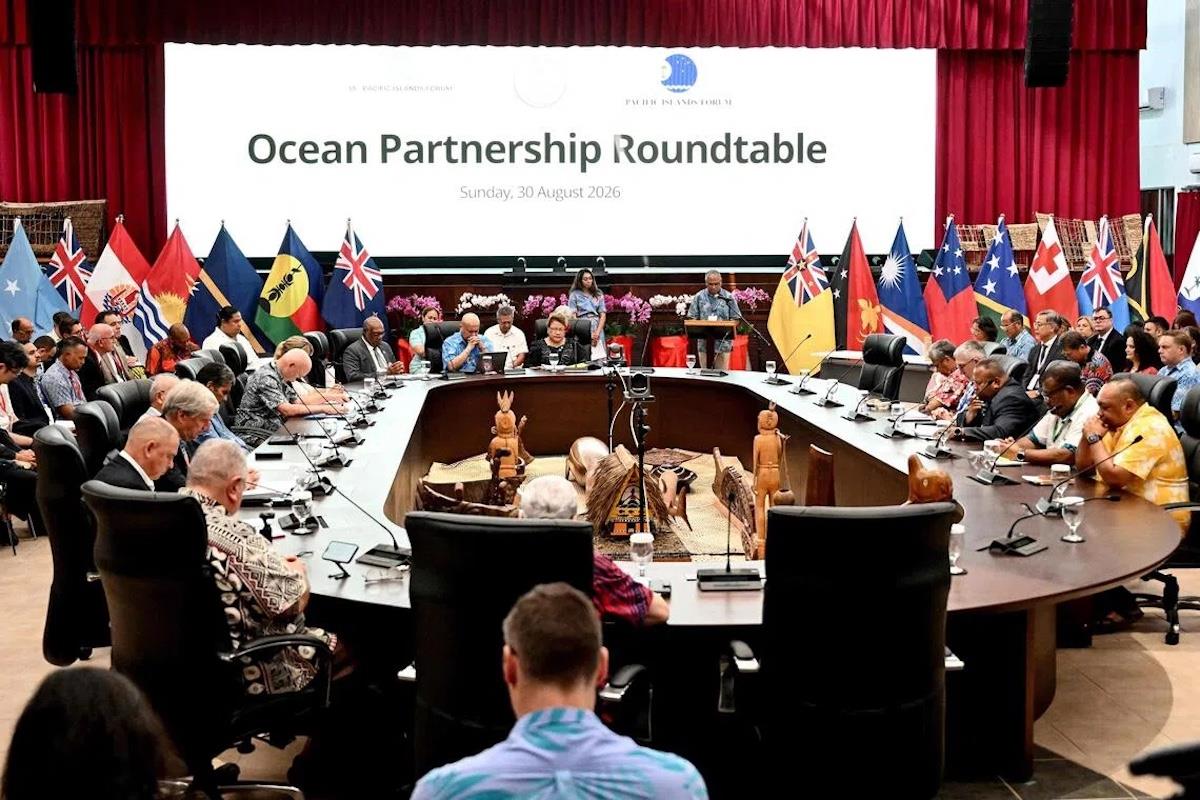
Why Pacific Island States Should Seek Collective Security


Instead, the meeting has been pulled toward the question that now shadows every Pacific regional gathering: What happens when the world's great powers decide your part of the world is strategically important?
The answer does not have to involve choosing between them. For the Pacific's small states, a more useful approach could be to seek shelter collectively.
Shelter theory was developed to explain a basic problem of small-state politics: countries with limited military, economic and diplomatic resources cannot provide everything they need for themselves.
They can instead choose to get collective protection and support from international and regional institutions or a larger power. In the Pacific, sheltering together is becoming painfully urgent.
Growing pressure from ChinaIn June this year, a Chinese Liberation Army (PLA) submarine fired a long-range nuclear-capable ballistic missile with a dummy warhead into waters near Tuvalu.
Last year, a PLA air force and navy flotilla, which included a submarine, conducted live-fire drills in the Tasman, without any warning to Australia or New Zealand. The flotilla traveled through Papua New Guinean waters and sent a military drone into PNG airspace.
The Chinese media said the live-fire exercises signalled the beginning of the“normalization of the deployment” of PLA forces in the South Pacific.
China is attempting to create competing regional architectures to undermine the existing Pacific order, including the 18-member Pacific Island Forum.

Legal Disclaimer:
MENAFN provides the
information “as is” without warranty of any kind. We do not accept any
responsibility or liability for the accuracy, content, images, videos,
licenses, completeness, legality, or reliability of the information
contained in this article. If you have any complaints or copyright issues
related to this article, kindly contact the provider above.
Comments
No comment