

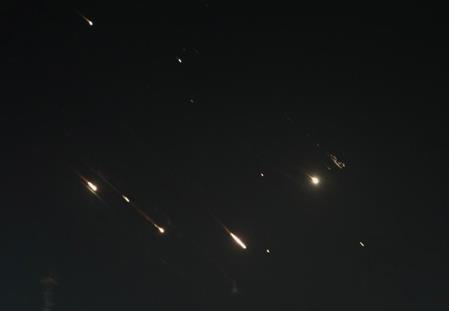
Air Interceptors World's Top Defence Need: Rubio


Rubio said demand was no longer confined to Ukraine, which has repeatedly sought additional Patriot air-defence systems and interceptors to defend against Russian missile and drone attacks.
“The whole world is asking for more air interceptors. It's become the number-one defence need on the planet -- not just for Ukraine, but on the planet,” Rubio said in an interview on Wednesday (local time).
“Countries in the Middle East want it,” he said.
The comments underscore a growing challenge confronting the United States and other military powers as the proliferation of missiles and inexpensive drones changes the nature of modern warfare.
Rubio said availability, rather than willingness to help allies, was becoming a central constraint.
“Look, it's just a question of availability,” he said.
The United States, Rubio said, could not supply other countries at the expense of its own military requirements.
“And obviously, I have to remind people the United States has needs. Like, we have our own defence needs; we have our own defence requirements. And before we can help others, we have to make sure that our stockpiles are always sufficient,” he said.
Rubio also pushed back against reports concerning the condition of US weapons inventories, warning that inaccurate information could itself create security risks.
“I think there's a lot that's been reported inaccurately about what US stockpiles are -- I think dangerously, too, because I think in some ways our adversaries read that stuff and think it's true, and they try to test us, and it could lead to conflict,” he said.
He said maintaining minimum American defence requirements was not a new policy.
“We have minimum requirements of our own, and those always have to be met before we can provide others,” Rubio said.
The pressure on air-defence inventories has grown as conflicts have demonstrated both the destructive power of missiles and drones and the enormous demand created by sustained efforts to intercept them.
Ukraine has relied heavily on Western-supplied air-defence systems to protect cities, energy infrastructure and military facilities against Russian attacks.
Rubio said the United States had provided Ukraine with assistance and would continue doing so within American capabilities.
“We continue to provide them assistance within the limits of our own availability and capability. We always have to look out for America first,” he said.
Washington and Kyiv are also discussing longer-term solutions.
Asked whether the United States opposed allowing Ukraine to manufacture missile-defence systems under licence, Rubio said negotiations were already under way.
“Well, that's being negotiated as we speak,” he said.
But he cautioned that licensed production would not quickly solve the shortage.
“Ramping up production, even if you have a license, is something that takes multiple years to build these factories,” Rubio said.
“These are highly sophisticated weaponry. So that's being negotiated now. That may come to fruition, but it really won't solve the short-term challenge that they're pointing to.”
The wars in Ukraine and the Middle East have put renewed emphasis on integrated air and missile defence, while the growing battlefield use of relatively inexpensive drones has added another layer to the challenge faced by military planners.

Legal Disclaimer:
MENAFN provides the
information “as is” without warranty of any kind. We do not accept any
responsibility or liability for the accuracy, content, images, videos,
licenses, completeness, legality, or reliability of the information
contained in this article. If you have any complaints or copyright issues
related to this article, kindly contact the provider above.
Comments
No comment