

The West Bank: The Middle East's Orphan War


Western governments and the United Nations complain. These actions are illegal and damage chances for Middle East peace. Israel ignores the objections and creates“facts on the ground” that preclude territorial compromise with Palestinians.
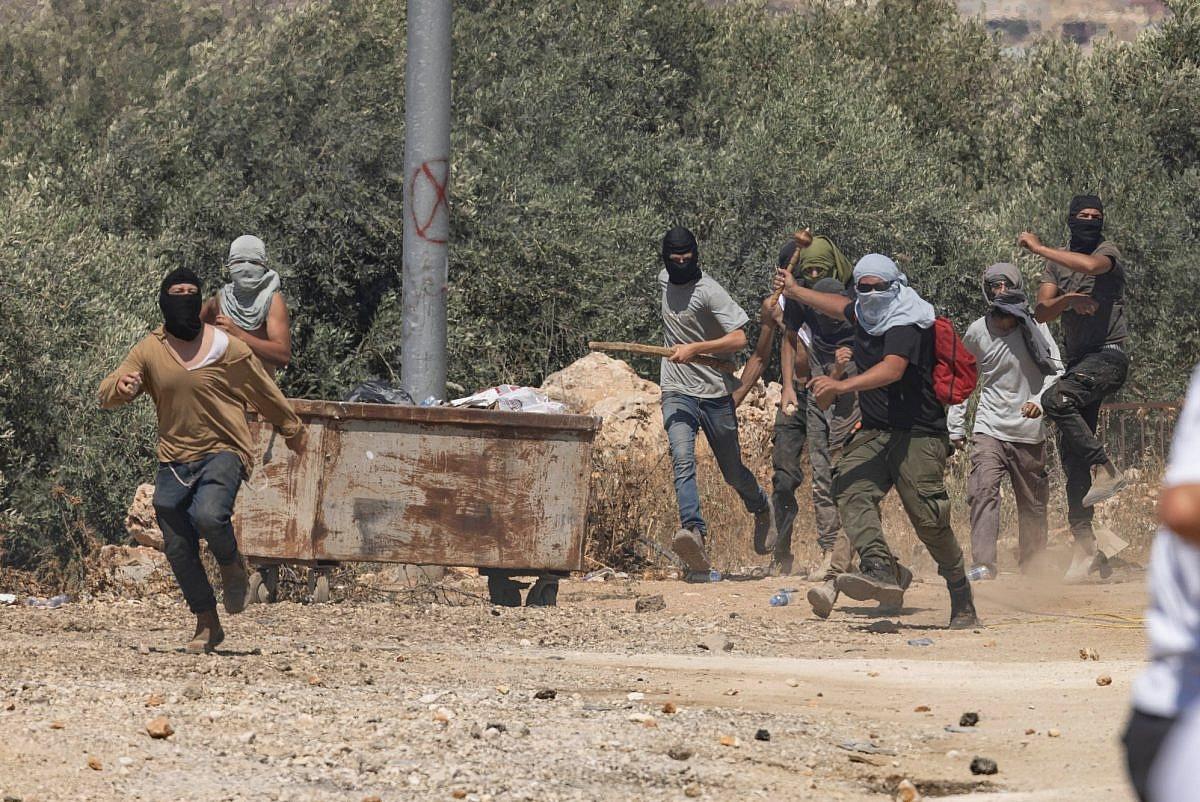
Spearheading the project are civilian militants known as Hilltop Youth who inhabit pop-up encampments known as“outposts” throughout the West Bank. The camps are constructed close to Palestinian towns and rural homesteads that have been targeted for harassment,
The settlers, backed by the Israeli army, employ a broad menu of intimidation: physical violence, destruction of homes, barns and corrals, theft or slaughter of farm animals, incineration of wheat fields and sabotage of piped-in water supplies.
Palestinians get no protection from the Israeli Defense Forces, the armed institution in charge of most of the West Bank. IDF leaders say it is not their job to discipline Israelis attackers. Their role is only punishing Palestinians who do harm to Israelis or are suspected of planning to do so.
Preventing crime by Israelis is the job of civilian police, asserts the IDF. However, police forces in the West Bank work solely within Israeli settlements. In effect,“outpost” dwellers are beyond the reach of either the army or the police.
“It's almost impossible to enforce the law on violent settlers and very easy to do whatever we want to Palestinians,” said Nadav Weiman, a former IDF sniper who belongs to Breaking the Silence, a group that collets and publishes testimony of soldiers who have done duty in the West Bank and Gaza Strip.
During more than two decades, Weiman has collected testimony from soldiers who object to standing by and doing nothing.“I can tell you that in the majority of the units, nothing is being told to the soldier on what they can do with settlers,” he said.
Prime Minister Benjamin Netanyahu downplays settler assaults as the work“of a handful of extremists.” They are but“a minority that does not represent the larger settler community,” he says.
These random troublemakers will soon face arrest, he insists.“We are a state of law and will act according to the law,” he told reporters.
Pledges aside, Netanyahu's ruling coalition depends on politicians who reject any crackdown on settler gangs. They believe that unrelenting pressure is the way to eliminate Palestinian ambitions to create a nation state of their own. In February, Finance Minister Bezalel Smotrich laid out the goal.“Finally, formally,” he said, the country would“embark on a path toward sovereignty, while encouraging emigration. There is no other long-term solution.”
Netanyahu himself has since the beginning of his political carer considered Palestinians interlopers on Israeli land who should find a homeland elsewhere. In the 1970s, he associated with an American lobby organization called Jordan is Palestine, Inc. – Jordan already being by then the residence of tens of thousands of Palestinians.
Arab observers view the settler drive as revived Nakba, the“catastrophe” of the 1948 and 1967 Arab-Israeli wars in which hundreds of thousands of Palestinians were driven into the West Bank, the Gaza Strip or Arab countries abroad. Neither refugees then nor their descendants since have been allowed to return.
In an interview with told The New Arab, a London-based journal, Amina Khalil, a 1948 refugee, said fear of a repeat Nakba is now sweeping new generations.“My grandchildren don't ask me, 'What happened?'” Khalil, 78, said.“They're asking, 'Is this possible now? Will it happen again?'”
The government provides monthly $50 stipends to members of settler groups that harass Palestinians, human rights groups say. Human Rights Watch, the New York-based research organization, has reported that 5,900 people have fully or partially fled 107 communities since 2023.
“The Israeli government and the settlers share the same goal of maximum land and minimum Palestinians, with the authorities not only failing to stop settler violence, but actively enabling it,” wrote Sarah Sanbar, an HRW researcher specializing in Israel and Palestine issues.“Settlers shoot, attack and expel Palestinians from their land, and the state provides the weapons, the legal cover, and the budget to do it.”
“The government has no such policy,” a government spokesman said in response to such accusations.
Latest stories Will Ukraine attack civil aviation in Russia? Israeli minister: Palestinians leaving is only 'solution' in Gaza How China's censoring coverage of the Tibet flood disasterObtaining official Israeli protection requires that Palestinians get access to an orgnization that is out of reach: Only Shin Bet, Israel intelligence service, is authorized to order the IDF to arrest Israeli civilians. If Shin Bet so orders, soldiers can detain Israeli civilians and then turn them over to Israeli police for transfer to jail inside Israel. It perhaps goes without saying that Palestinians do not have a Shin Bet emergency customer service number to call for help.
Israel does not publish statistics of arrests of settlers who might be suspected of attacking Palestinians – unless an incident creates a negative public relations issue or interferes with military activity.
In June, six Hilltop Youth members were arrested at the central West Bank village of Deir Dibwan on charges of setting fire to a mosque. The settlers had also burned grassland and barns and had stolen two cars. The arson was captured on video and made public on social media. A trial date has not been set.
On August 24, Shin Bet did order soldiers to detain five members of the Hilltop Youth. Their alleged victims, however, were not Palestinians but Israeli security forces.“These acts of terror as a grave threat to national security and will continue to work to thwart such activity,” authorities announced. No details of the alleged crimes will be released until October.
Incidents of settler violence have apparently become common enough to prompt Defense Minister Israel Katz to suggest police take over the task of curbing settler violence.“The IDF's role is to fight Palestinian terrorism, focus on defending borders and communities against threats, not chase boys on the hilltops,” Katz said in mid-August. Katz said he was drawing up a plan, though he did not provide a timetable and no proposal has emerged.
Hilltop Youth outposts are composed of mobile homes or campers supplied by the government. The name Hilltop Youth refers to comment made by late-Israeli Prime Minister Ariel Sharon, who urged settlers to take vigilante action against Palestinians.“Everyone that's there should move, should run, should grab more hills, expand the territory,” he said.“Everything that's grabbed will be in our hands. Everything we don't grab will be in their hands.”
After Hamas's October, 2023, attacks from Gaza into southern Israel that killed more than 1,200 Israeli civilians, Netanyahu authorized the creation of armed settler militias. He described the program as a means to avert further Palestinian sneak attacks.
The program soon turned into armed vigilantism. A rundown of recent settler assaults displays the variety and growing intensity of settler attacks.
No siege too smallFor the past two weeks, armed Hilltop Youth members have besieged a single house in the village of Qusra, near the north-central West Bank city of Nablus. One family of residents is hosting a dozen neighbors driven out of their two nearby houses.
Hilltop men and teenagers broke into one of the abandoned homes and stayed. Soldiers occasionally drop by to talk with the intruders. The troops make no move to remove them.
A United Nations Children's Fund team delivers water, food, medicines, hygiene items and recreational kits for a pair of female toddlers. Settlers had cut a water pipe, but Palestinians from elsewhere repaired it.
There's no end in sight to the sieges.
Bye, bye Bedouins, hello settlersIn the mid-1990s, Israeli and Palestinian negotiators signed a peace plan and designed a complicated interim map of the West Bank that temporarily placed much of it in control of Israel until formation of a Palestinian state.
One such areas was an eight-square mile chunk known as E1. About 33,000 Bedouins inhabit the area, which sits between Jerusalem and a Jewish settlement known as Ma'ale Adumim.
Neranyahu aims to take it all.
Last week, Netanyahu announced a takeover of a stretch of E1 where more than 1,200 apartments are to be built. Eventually all of E1 will be filled with 8,000 residences and annexed to Jerusalem.
With its municipal bounds extended, Jerusalem will become the first Israeli city whose boundaries bleed into the West Bank. The Bedouins will be expelled to somewhere else in the West Bank.
Unfortunately the town of Khan al-Ahmar, home to about 6,000 residents, sits in the way of the new apartment blocs. As part of the current efforts to dominate the West Bank, ministers say, the town will soon be removed.
The United Nations High Commissioner for Human Rights said,“The Israeli government must immediately cease its measures to forcibly displace the Khan al-Ahmar community... and stop its settlement expansion plans there.”
The pressure on the town is not new. For years, the Netanyahu government has refused to link it to a pipe that also feeds Ma'ale Adumim, to an electricity grid and roadways, according to a recent report by B'Tselem, the leading Israeli human rights organization.
“Now, Israel is planning to demolish every single structure in the community and expel the residents. The demolitions are set to include the local school, which serves the children of 11 other Palestinian communities slated for transfer,” B'Tselem noted.
“Demolition and transfer are a war crime for which Israel's government and military leadership will bear primary criminal liability.”
Netanyahu appears unfazed. He has authorized US$92 million toward the construction of a new Palestinians-only road built around the far eastern edge of Ma'leh Adumim, so that Israeli traffic from Jerusalem will not cross paths with Palestinian roads.
Figs under fireThe West Bank village of Tel, population 8,000, is known for its plentiful harvest of figs. The first sweet fruit is usually ready to be picked in late June.
But this year, as in recent seasons, the harvest is being interrupted by Israeli soldiers, as well as settlers, who have descended onto the town.
“The sweetness of Tel's figs has turned into bitterness,” said Omar Ishtayeh, a Tel resident reached by phone.“The fruit that once symbolized prosperity has become a witness to a new reality threatening both the land and the people who live on it.”
Over the past 38 years, settlements have sprung up in the west and east of Tel, along with a military base to the south. The construction required the uprooting of hundreds of olive trees, another town specialty.
I first visited Tel in 1988 and witnessed the inception of what was to become an annual affair. A Palestinian uprising known as the intifada, or“shaking off,” had started a few months before. When word reached Tel, teens decorated the village with red, green, white and black Palestinian flags. They also threw stones at passing military convoys.
The army responded by prohibiting fig-bearing trucks from leaving for market.
To save the 1988 harvest, elders persuaded the stone-throwers to stop it and to take down the flags.
But most years ever since, the army has raided. In recent years, settlements and outposts appeared on the outskirts of the town.
In parallel, youthful enthusiasm for Palestinian statehood grew. But no state arrived. More and more violence did.
Last month, a score of settlers raided. There was a fistfight. Then gunfire. Four Palestinians and two Israelis were shot dead army intervened and arrested 40 Tel residents. The town was sealed off.
The figs are rotting on the trees.
Refugees made refugees anewFour refugee camps that date from 1948 and 1967 wars are clustered at the cities of Nablus, Tulkarem and Jenin. Over the year the towns, and especially the camps, have grown into centers of resistance to Israel's West Bank occupation and settlement.
This year, refugees were rousted out of the camps. Each was razed to the ground. Camps located in the central and southern West Bank were also partially bulldozed.
The military rationale for the destruction is simple: The camps' narrow alleyways impede the entry of an army that prefers open field combat. Tanks and jet bombers are the preferred tools of flattening the enclaves. Similar damage was done to camps in the Gaza Strip.
At least 700 resident refugees have died and 23,000 have been arrested in the area's camp wars. A total of 33,000 men, women and children have fled, according to the United Nations Refugee and Works Agency, which is responsible for refugee welfare.
Sign up for one of our free newsletters-
The Daily Report
Start your day right with Asia Times' top stories
AT Weekly Report
A weekly roundup of Asia Times' most-read stories
UNRWA issued plans for reconstruction of Gaza refugee compounds, but the organization has made no such proposals for the West Bank. For now, the job is“to address urgent humanitarian needs” of the displaced.
No residents have been permitted to return to inspect the ruins or collect belongings.
Christian conundrumThe Israeli government has put few restrictions on marauding settlers when their targets of intimidation are Muslim.
But when Christians are assaulted, such raids becomes a public relations problem. Netanyahu has been active in trying to persuade at least evangelical Christians to take Israel's side in Middle East tensions.
In any event, many Christians in Western countries keep an eye on danger to their co-religionists.
Take the village of Taybeh, population 1,200. It has been trying to fend off violent settlers who graze their sheep on village land, set fire to agricultural fields, tear down fences and slice fences, break into homes, pitch tents on private property, cut water lines, rip down electric cables and smash security cameras.
Pope Leo XIX appealed,“for an end to the ongoing violence against the Palestinian civilian population in the West Bank.”
Before the pontiff's intervention, Joseph Hazboun, who heads's the Vatican's Near East Welfare Association, visited Taybeh and described Israeli settlers'“systematic intimidation” of Palestinians.
“The human cost of the West Bank's expanding outposts became starkly evident,” he wrote,“Leaving families stranded away from the very homes they built, caught in a cycle of displacement and daily intimidation.”
The ecumenical World Council of Churches stated flatly that,“Taybeh has been subjected to numerous attacks and acts of arson by Israeli settlers.”
The organization demanded“that the Israeli government act with moral clarity and commitment to hold accountable those responsible for these crimes without delay; ensure effective and consistent protection for the people of Taybeh and all vulnerable communities.”
To avert more problems, the IDF created a“closed military zone” to keep the settlers away from Taybeh.
But the closure also blocks passage to and from Taybeh's agricultural fields and for anyone coming for business or pilgrimage, as well as for providing charity. And Hilltop Youth made a mockery of the IDF restrictions by approaching the town's perimeter to loudly taunt the residents inside.
EU and DC: all talk, no actionThe European Union criticized Israel's recent West Bank expansion.“The EU position is clear: Israel's settlements in the West Bank, including in the E1 area, are illegal under international law,” said the European Commission, the organization's executive.
However, calls from members of the EU parliament for the all-powerful European Commission to cancel trade deals that benefit Israel were rejected.
In Washington, President Donald Trump“has clearly stated, the US does not support Israel annexing the West Bank,” said a State Department spokesperson. His ambassador to Israel, Mile Huckabee, called violent setters“terrorists,” though he has is a supporter of West Bank settlements.
He once said“There's no such thing as a settlement. They're communities.”
In any case, no actions followed any of these words.
Sign up here to comment on Asia Times stories OrThank you for registering!
-
Share on X (Opens in new window)
Share on LinkedIn (Opens in new window)
LinkedI
Share on Facebook (Opens in new window)
Faceboo
Share on WhatsApp (Opens in new window)
WhatsAp
Share on Reddit (Opens in new window)
Reddi
Email a link to a friend (Opens in new window)
Emai
Print (Opens in new window)
Prin

Legal Disclaimer:
MENAFN provides the
information “as is” without warranty of any kind. We do not accept any
responsibility or liability for the accuracy, content, images, videos,
licenses, completeness, legality, or reliability of the information
contained in this article. If you have any complaints or copyright issues
related to this article, kindly contact the provider above.
Comments
No comment