

Before Filipina Trailblazer Eala, These Women Broke Tennis Barriers


Emerging from a nation with no tradition of producing elite tennis players, Eala's meteoric rise has already made her a national icon in the Philippines. On Tuesday, during her first-round match at the US Open, Eala was cheered on by her passionate Filipino fans in New York. Incredibly, there are now even food stalls at stadiums across the world selling Chicken Adobo, the national dish of the Philippines.
Earlier this year, Eala even received a presidential reception when she visited Manila. While her impact among her countrymen is truly incredible, Eala is not the first star to have emerged from a country without a rich tennis culture.
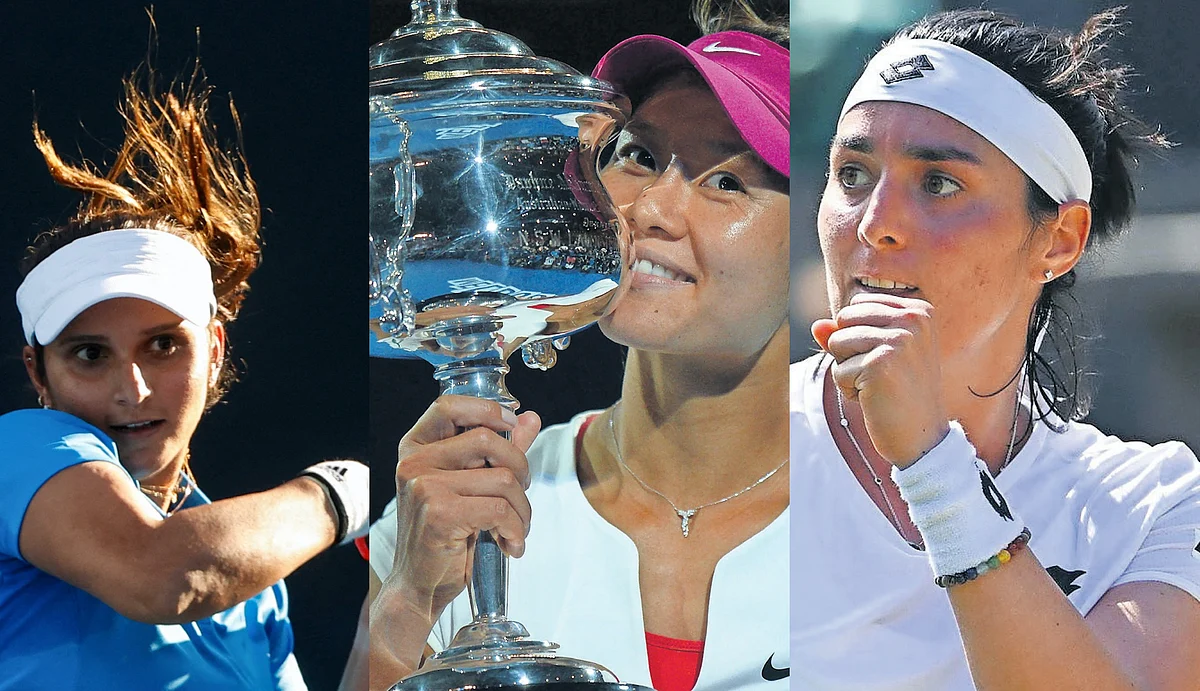
In the recent history of the sport, we have seen three female tennis players who defied the odds in their respective countries to become trailblazers. Here is our list of stars who broke the glass ceiling.
Sania Mirza (India)When Sania Mirza took on Serena Williams in the third round of the Australian Open in 2005, nobody expected the rising Indian star to win a set. Sania went down in straight sets, but what was hard to miss was her fearless approach and a sublime forehand that brought back memories of Steffi Graf. For a generation of Indians who grew up admiring the German legend as well as Martina Navratilova, Boris Becker, Pete Sampras, Andre Agassi and Monica Seles, watching a young female tennis player from a cricket-obsessed country take on elite stars was akin to seeing an Asian athlete winning the Olympic 100-metre gold. Sania's impact in India could never be defined by numbers - even though she won a WTA singles title and rose to 27th in the world rankings when a wrist injury cut short her singles career. The Hyderabad girl switched to doubles, winning majors, becoming world No. 1 and earning the kind of celebrity status usually reserved for cricketers and Bollywood stars in India. It's a truly incredible story of someone whose father drove her to far-flung places across India in their old family car to participate in junior tournaments.
Li Na (China)Like millions of young children in China, it was badminton that first drew Li Na to a court with a racquet in hand. But when she swapped the badminton racquet for a tennis racquet a few years later, no one could have predicted that it was going to change China's sporting landscape. In 2006, she became the first Chinese player to reach a Grand Slam quarterfinal at Wimbledon. But it wasn't until 2011 that Li took the tennis world by storm. At the 2011 French Open, Li made history by becoming the first player from China and the first Asian-born player to win a Grand Slam singles title. The French Open triumph made her an overnight superstar in China as 116 million people watched her win the final. Li added a second Grand Slam title in 2014 when she won the Australian Open, sparking a tennis revolution in China, where big endorsement deals made her one of the highest-earning tennis players in the world. Li is credited with the tennis boom in China. When Qinwen Zheng won the 2024 Paris Olympic gold medal in singles, she proudly named Li Na as her biggest inspiration in life.
Ons Jabeur (Tunisia)Unable to practise regularly due to a lack of top-class tennis facilities at her hometown club in Tunisia, Ons Jabeur's family had to find nearby tourist resorts for her to train and play. By then, Jabeur was already 10, exceeding the expectations of her parents, who had introduced her to tennis only as a recreational sport. By 13, Jabeur had made such progress that there was no other girl in Tunisia who could compete with her. First, there were no tennis courts, and then there were no female players of her calibre with whom she could practise. So Jabeur did what she could have done under the circumstances. She played and trained with boys in Tunis, helping her develop her game even further. Then she moved to Europe before turning pro. She was a late bloomer at WTA level, but once she found her range, there was no stopping her. Jabeur became the first Arab and African player - male or female - to reach Grand Slam finals. She played three Grand Slam finals (2022 and 2023 Wimbledon and 2022 US Open) and lost them all. But hers is a story of defiance, inspiring Arab women to pursue their sporting dreams.
ALSO READ- Eala's star continues to rise as Filipino fans turn US Open into a homecoming 'I want to be Eala': Philippine sensation sparks tennis boom at home After Alex Eala, is the Philippines ready to become a tennis talent hub? 48% jump in ticket sales: Inside the Alex Eala effect in Dubai tennis

Legal Disclaimer:
MENAFN provides the
information “as is” without warranty of any kind. We do not accept any
responsibility or liability for the accuracy, content, images, videos,
licenses, completeness, legality, or reliability of the information
contained in this article. If you have any complaints or copyright issues
related to this article, kindly contact the provider above.
Comments
No comment