

Why UAE Scientists Cloned A Goat That Produces 14 Litres Of Milk A Day


- By: Haneen Dajani
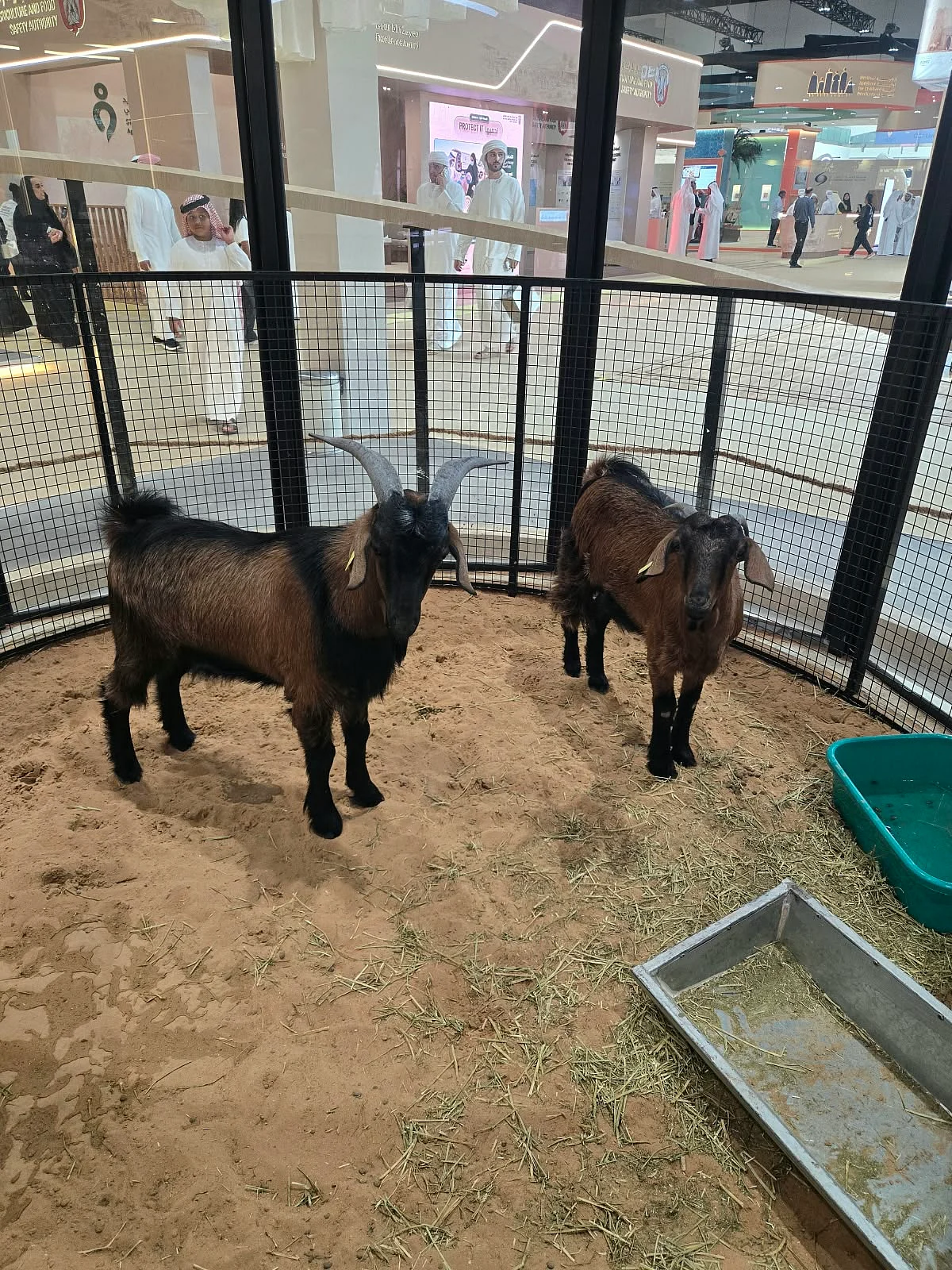
The two goats at the UAE Biotech Research Center's ADIHEX enclosure looked like they were simply having fun, running around, chasing each other and playfully jostling as visitors watched.
But one of them is a clone, and the male beside her has been placed there partly for what researchers describe as emotional support, helping to reduce her stress.
Recommended For YouBehind the playful scene is a much more serious experiment: scientists are trying to replicate the genetic characteristics of a goat capable of producing up to 14 litres of milk a day.
Stay up to date with the latest news. Follow KT on WhatsApp Channels.
Sultan Al Khoori, a junior researcher at the centre, said the Alpine breed is known for high milk production as well as desirable characteristics in its milk, including a higher protein content and lower fat content compared with some other goat breeds.
The centre searched for an animal with particularly high milk production and eventually found one capable of producing up to 14 litres a day. That compares with about four to eight litres a day for an ordinary goat.
The aim now is to use cloning to develop a herd carrying those desirable characteristics. The centre wants to produce a goat whose milk is of good quality and quantity to benefit food security, explained Al Khoori.
The cloning programme focuses on preserving and multiplying genetic characteristics linked to superior dairy production, with the longer-term aim of increasing milk production and contributing to the development of sustainable, high-quality dairy resources.
The goat cloning project recorded its first successful result this year, with two cloned goats currently at the centre.
The animals who are slightly less than one year old have not yet been milked, "goats usually start producing milk after one year of age," explained Al Khoori, a male's presence is essential for the goat to produce milk. The centre is preparing for future production and the possibility of developing a dedicated brand for products from the Alpine goats.
Why clone instead of breed?The reason for cloning, Al Khoori explained, is simple: breeding the exceptional goat would not guarantee that its offspring inherited the combination of genes responsible for its high milk production.
If the original goat were bred normally, its genes would mix with those of the male. Some offspring could inherit the desired characteristics, while others might not.
Researchers would then have to breed, test and genetically analyse the animals to work out which ones carried the traits they were looking for.
That could take years.
“With this, I avoid all these steps and shorten the process,” he pointed, referring to cloning the goat with the 14-litre-a-day production.
How does cloning work?The process begins with the animal the scientists want to replicate.
Researchers take a small skin sample from the original goat. That sample contains its genetic information, which can then be preserved for use in cloning.
An egg is taken from another goat and its own genetic information is removed. The genetic material from the original goat is then placed into the prepared egg.
In the laboratory, the egg is given an electrical stimulus to start the developmental process.
The resulting embryo can then be transferred into another female goat, which carries the pregnancy naturally.
The surrogate provides the environment and nourishment needed for the developing embryo, while the genetic information being replicated comes from the original animal.
Using different goats for the various stages also means the exceptional animal itself does not have to undergo every procedure.
Once its genetic material has been collected, eggs can be taken from other goats and pregnancies carried by other females.
The centre is already applying the wider principle of cloning to other animals; it has produced more than 600 cloned camels, while cloning can also be used to preserve rare breeds or animals with particularly valuable characteristics.
Al Khoori said the technology could be useful for preserving rare animal lines and preventing their loss;“preserve the breeds that perform better, and have special qualities.”
Could humans be cloned?The same science inevitably raises a much bigger question: if animals can be cloned, could humans theoretically be cloned too?
Scientifically, Al Khoori said, it is possible. Scientific research in humans is more advanced than animal research in some aspects of this field and human cloning could theoretically be carried out.
However, he stressed that the UAE Biotech Research Center has no involvement in such work; he did not know whether any centres outside the UAE had actually applied the technology to humans, or whether anyone would do so.
For now, the centre's focus remains on animals, with the Alpine goat project aimed at turning one exceptional milk-producing animal into the starting point for a potentially much larger herd. The broader objective, Al Khoori concluded, is to use cloning where it can preserve valuable genetic characteristics and, ultimately, contribute to food security in the UAE.
ALSO READ- Over 20 cloned wolves in UAE offer new hope for protecting rare species This Emirati started with 2 cows, now his dairy farm produces 400 litres of milk How world's first cloned camel 'Injaz' was born in Dubai 17 years ago today

Legal Disclaimer:
MENAFN provides the
information “as is” without warranty of any kind. We do not accept any
responsibility or liability for the accuracy, content, images, videos,
licenses, completeness, legality, or reliability of the information
contained in this article. If you have any complaints or copyright issues
related to this article, kindly contact the provider above.
Comments
No comment