

403
Sorry!!
Error! We're sorry, but the page you were looking for doesn't exist.
ICBA Puts Science, Investment And Regional Partnerships At The Heart Of Its COP17 Participation


(MENAFN- Mid-East Info) Under the Theme“Restoring Land. Restoring Hope.”
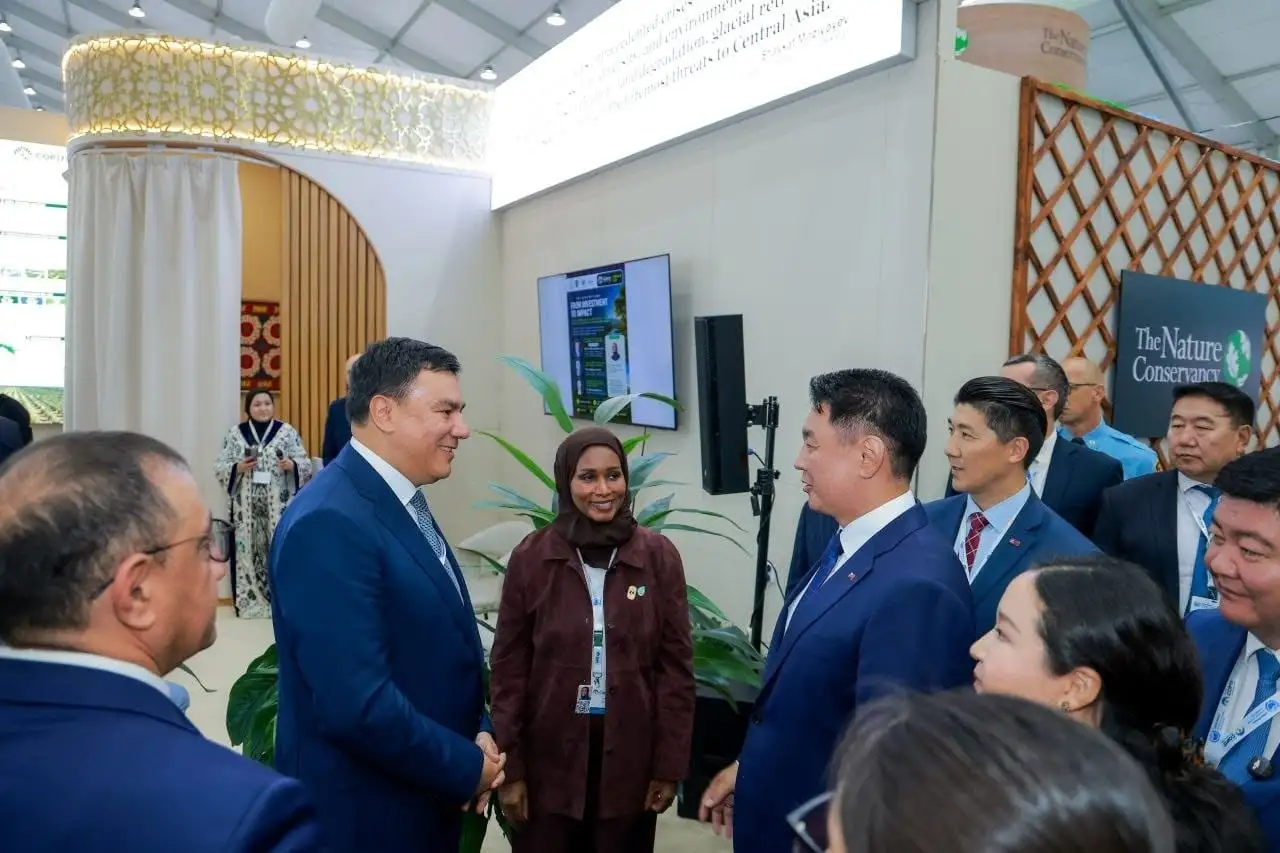
Engagement spans the Mayors' Forum, Finance Day and Water Day, as Uzbekistan renews accreditation of ICBA's Regional Office in Tashkent through 2029 Ulaanbaatar, Mongolia, August 2026: The International Center for Biosaline Agriculture (ICBA) actively participated in the 17th Session of the Conference of the Parties to the United Nations Convention to Combat Desertification (UNCCD COP17), hosted by Mongolia under the theme“Restoring Land. Restoring Hope.” ICBA's contributions connected science, policy, investment and implementation across land restoration, drought resilience, and food and water security. ICBA participated as part of Uzbekistan's delegation and at its national pavilion, with its engagement also marked by the Republic of Uzbekistan's announcement that the accreditation of ICBA's Regional Office in Tashkent had been renewed until 2029. Dr. Tarifa Alzaabi, Director General of ICBA, said:“COP17 reaffirmed that turning ambition into tangible impact requires science-based policies, finance and investment directed towards scalable solutions, and partnerships capable of connecting knowledge with implementation and delivering sustainable results on the ground. Our participation as part of Uzbekistan's delegation and at its pavilion provided an important opportunity to demonstrate the role this integration can play in Central Asia, while the renewal of our Regional Office's accreditation in Tashkent until 2029 reflects confidence in ICBA's role and its scientific and innovation mandate in the region. We will continue working with our partners to translate research and innovation into practical solutions and mobilize the investment needed to scale their impact, supporting sustainable agriculture, food and water security, and greater resilience in arid and saline environments.” ICBA's participation also reflected its expanding presence and partnerships across Central Asia. During a tour of the COP17 exhibition pavilions, Dr. Alzaabi briefed H.E. Khurelsukh Ukhnaa, President of Mongolia, on ICBA's role in the region and its efforts to advance sustainable agriculture. From Investment to Impact: During Finance Day, ICBA organized the high-level dialogue“From Investment to Impact: Financing the Restoration of Degraded Lands for Food Security, Climate Resilience and Sustainable Livelihoods” at the Uzbekistan Pavilion, bringing together senior representatives from several countries. Moderated by Dr. Alzaabi, the dialogue focused on connecting national priorities with research, innovation and investment, while exploring pathways to scale successful solutions and translate them into sustainable impact. H.E. Aziz Abdukhakimov, Advisor to the President of the Republic of Uzbekistan on Environmental Issues and Chairman of the National Committee on Ecology and Climate Change, joined the dialogue as Guest of Honour and highlighted the role of investment in advancing national priorities and scaling impact. Professor Bakhtiyor Pulatov, Rector of the Central Asian University of Environmental and Climate Change Studies (Green University), highlighted the role of scientific research and innovation and the work of AquaBio Lab as a platform for research, innovation and technological development within the cooperation between Green University and ICBA. Dr. Marguba Rejapova, Post-Doctoral Research Fellow with ICBA's Central Asia and the Caucasus Program, addressed the importance of strengthening national capacities and engaging stakeholders through international projects. The cooperation between ICBA and Abu Dhabi Fund for Development (ADFD) provides a practical example of how investment can be translated into scalable impact in Uzbekistan. Through the ADFD-funded project“Development of Sustainable Agricultural Production Systems in Degraded Areas of Karakalpakstan,” ICBA and its partners in Uzbekistan are developing sustainable agricultural systems adapted to drought and salinity while supporting local communities. More than 1,500 farmers across seven districts have benefited from project activities, while the scope of the work expanded in 2026 through the Farmers' and Agro-Entrepreneurs Accelerator, supporting the transition of solutions from field trials to wider applications that strengthen production, value chains and market access. Uzbekistan Renews Accreditation of ICBA's Regional Office until 2029: During ICBA's participation at the Uzbekistan Pavilion, H.E. Aziz Abdukhakimov announced the Republic of Uzbekistan's renewal of the accreditation of ICBA's Regional Office in Tashkent until 2029, reflecting confidence in the Center's role and mandate and recognition of its scientific and innovation contributions across Central Asia. Dr. Alzaabi also met with H.E. Abdukhakimov to discuss the further development of ICBA's work in Uzbekistan and opportunities for future cooperation. ICBA's contribution to COP17 extended to local leadership and policymaking. At the COP17 Mayors' Forum, Dr. Alzaabi participated in the session“Regenerating Urban Ecosystems: Combating Land Degradation, Dust, and Sandstorms,” where she highlighted ICBA's expertise in arid environments and nature-based solutions. The Forum concluded with the adoption of the Ulaanbaatar Declaration, which calls for a stronger role for cities and local governments in sustainable land management and drought resilience. It also saw the launch of the Ulaanbaatar Initiative, a voluntary effort to test mechanisms for measuring and reporting land degradation at the city level, with results expected to be presented by COP18. Water Day: During Water Day, ICBA contributed to the high-level event“Transforming Agricultural Water Management for Drought Resilience and Food Security,” which brought together policymakers, experts and international organizations to examine ways to strengthen agricultural water management and enhance the resilience of food systems to drought. Dr. Alzaabi delivered the closing remarks, emphasizing the importance of connecting policy with science, investment and implementation. She also underscored the need to give greater attention to water quality and salinity in agricultural planning, particularly in arid and saline environments. ICBA's participation at COP17 reflected the Center's approach to connecting scientific knowledge with policy, investment and partnerships and translating this work into practical, scalable solutions that support land restoration, sustainable water management, food security and greater resilience in arid and saline environments. About the International Center for Biosaline Agriculture ICBA: The International Center for Biosaline Agriculture (ICBA) is a unique international not-for-profit applied research-for-development center. Established with the support of the Government of the United Arab Emirates and the Islamic Development Bank, ICBA combines strategic partnerships, technical expertise and knowledge empowerment to co-create innovative solutions for sustainable livelihoods and food security in arid and saline environments. ICBA's research focuses on soil, water, crops and climate to address salinity, manage affected lands and restore agricultural systems. Through this holistic and integrated approach, ICBA works to create lasting positive impact for farming communities and their livelihoods, strengthening their ability to adapt and contribute to a more sustainable future for all.
Engagement spans the Mayors' Forum, Finance Day and Water Day, as Uzbekistan renews accreditation of ICBA's Regional Office in Tashkent through 2029 Ulaanbaatar, Mongolia, August 2026: The International Center for Biosaline Agriculture (ICBA) actively participated in the 17th Session of the Conference of the Parties to the United Nations Convention to Combat Desertification (UNCCD COP17), hosted by Mongolia under the theme“Restoring Land. Restoring Hope.” ICBA's contributions connected science, policy, investment and implementation across land restoration, drought resilience, and food and water security. ICBA participated as part of Uzbekistan's delegation and at its national pavilion, with its engagement also marked by the Republic of Uzbekistan's announcement that the accreditation of ICBA's Regional Office in Tashkent had been renewed until 2029. Dr. Tarifa Alzaabi, Director General of ICBA, said:“COP17 reaffirmed that turning ambition into tangible impact requires science-based policies, finance and investment directed towards scalable solutions, and partnerships capable of connecting knowledge with implementation and delivering sustainable results on the ground. Our participation as part of Uzbekistan's delegation and at its pavilion provided an important opportunity to demonstrate the role this integration can play in Central Asia, while the renewal of our Regional Office's accreditation in Tashkent until 2029 reflects confidence in ICBA's role and its scientific and innovation mandate in the region. We will continue working with our partners to translate research and innovation into practical solutions and mobilize the investment needed to scale their impact, supporting sustainable agriculture, food and water security, and greater resilience in arid and saline environments.” ICBA's participation also reflected its expanding presence and partnerships across Central Asia. During a tour of the COP17 exhibition pavilions, Dr. Alzaabi briefed H.E. Khurelsukh Ukhnaa, President of Mongolia, on ICBA's role in the region and its efforts to advance sustainable agriculture. From Investment to Impact: During Finance Day, ICBA organized the high-level dialogue“From Investment to Impact: Financing the Restoration of Degraded Lands for Food Security, Climate Resilience and Sustainable Livelihoods” at the Uzbekistan Pavilion, bringing together senior representatives from several countries. Moderated by Dr. Alzaabi, the dialogue focused on connecting national priorities with research, innovation and investment, while exploring pathways to scale successful solutions and translate them into sustainable impact. H.E. Aziz Abdukhakimov, Advisor to the President of the Republic of Uzbekistan on Environmental Issues and Chairman of the National Committee on Ecology and Climate Change, joined the dialogue as Guest of Honour and highlighted the role of investment in advancing national priorities and scaling impact. Professor Bakhtiyor Pulatov, Rector of the Central Asian University of Environmental and Climate Change Studies (Green University), highlighted the role of scientific research and innovation and the work of AquaBio Lab as a platform for research, innovation and technological development within the cooperation between Green University and ICBA. Dr. Marguba Rejapova, Post-Doctoral Research Fellow with ICBA's Central Asia and the Caucasus Program, addressed the importance of strengthening national capacities and engaging stakeholders through international projects. The cooperation between ICBA and Abu Dhabi Fund for Development (ADFD) provides a practical example of how investment can be translated into scalable impact in Uzbekistan. Through the ADFD-funded project“Development of Sustainable Agricultural Production Systems in Degraded Areas of Karakalpakstan,” ICBA and its partners in Uzbekistan are developing sustainable agricultural systems adapted to drought and salinity while supporting local communities. More than 1,500 farmers across seven districts have benefited from project activities, while the scope of the work expanded in 2026 through the Farmers' and Agro-Entrepreneurs Accelerator, supporting the transition of solutions from field trials to wider applications that strengthen production, value chains and market access. Uzbekistan Renews Accreditation of ICBA's Regional Office until 2029: During ICBA's participation at the Uzbekistan Pavilion, H.E. Aziz Abdukhakimov announced the Republic of Uzbekistan's renewal of the accreditation of ICBA's Regional Office in Tashkent until 2029, reflecting confidence in the Center's role and mandate and recognition of its scientific and innovation contributions across Central Asia. Dr. Alzaabi also met with H.E. Abdukhakimov to discuss the further development of ICBA's work in Uzbekistan and opportunities for future cooperation. ICBA's contribution to COP17 extended to local leadership and policymaking. At the COP17 Mayors' Forum, Dr. Alzaabi participated in the session“Regenerating Urban Ecosystems: Combating Land Degradation, Dust, and Sandstorms,” where she highlighted ICBA's expertise in arid environments and nature-based solutions. The Forum concluded with the adoption of the Ulaanbaatar Declaration, which calls for a stronger role for cities and local governments in sustainable land management and drought resilience. It also saw the launch of the Ulaanbaatar Initiative, a voluntary effort to test mechanisms for measuring and reporting land degradation at the city level, with results expected to be presented by COP18. Water Day: During Water Day, ICBA contributed to the high-level event“Transforming Agricultural Water Management for Drought Resilience and Food Security,” which brought together policymakers, experts and international organizations to examine ways to strengthen agricultural water management and enhance the resilience of food systems to drought. Dr. Alzaabi delivered the closing remarks, emphasizing the importance of connecting policy with science, investment and implementation. She also underscored the need to give greater attention to water quality and salinity in agricultural planning, particularly in arid and saline environments. ICBA's participation at COP17 reflected the Center's approach to connecting scientific knowledge with policy, investment and partnerships and translating this work into practical, scalable solutions that support land restoration, sustainable water management, food security and greater resilience in arid and saline environments. About the International Center for Biosaline Agriculture ICBA: The International Center for Biosaline Agriculture (ICBA) is a unique international not-for-profit applied research-for-development center. Established with the support of the Government of the United Arab Emirates and the Islamic Development Bank, ICBA combines strategic partnerships, technical expertise and knowledge empowerment to co-create innovative solutions for sustainable livelihoods and food security in arid and saline environments. ICBA's research focuses on soil, water, crops and climate to address salinity, manage affected lands and restore agricultural systems. Through this holistic and integrated approach, ICBA works to create lasting positive impact for farming communities and their livelihoods, strengthening their ability to adapt and contribute to a more sustainable future for all.

Legal Disclaimer:
MENAFN provides the
information “as is” without warranty of any kind. We do not accept any
responsibility or liability for the accuracy, content, images, videos,
licenses, completeness, legality, or reliability of the information
contained in this article. If you have any complaints or copyright issues
related to this article, kindly contact the provider above.
Comments
No comment