

403
Sorry!!
Error! We're sorry, but the page you were looking for doesn't exist.
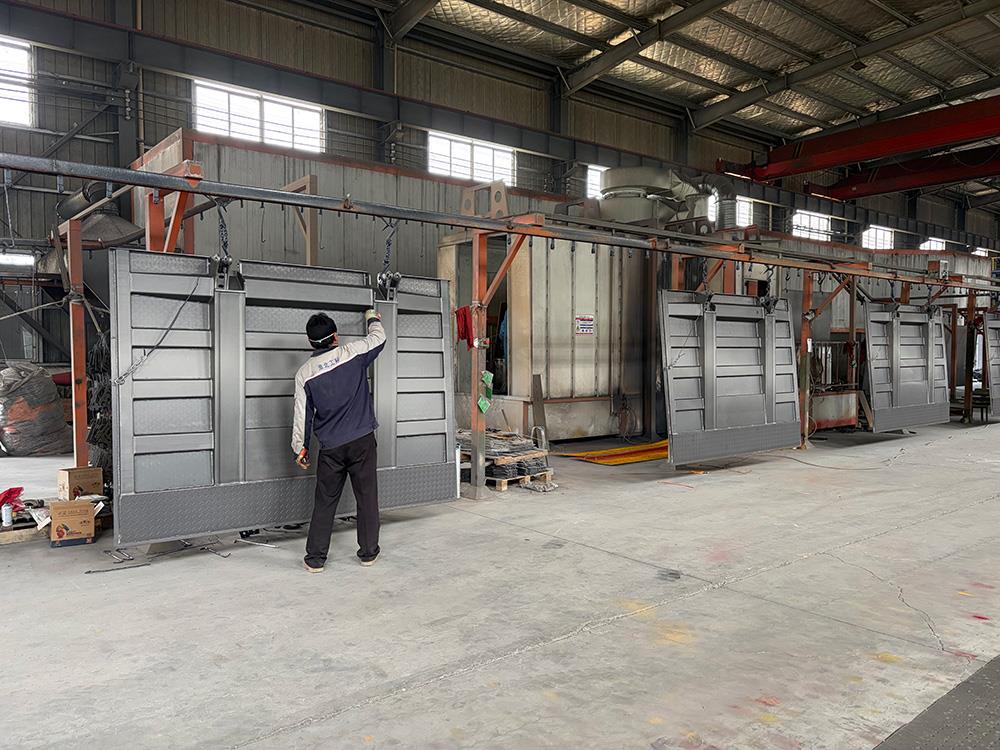
Why Can a Tail Lift Work Normally Empty but Struggle With a Full Load?


(MENAFN- Global Industrial Parts Inc.) If you've ever watched a tail lift glide up and down smoothly with nothing on it, then hesitate, shudder, or slow to a crawl the moment a loaded pallet rolls on, you've probably wondered whether something is actually broken — or whether this is just what happens near the edge of tail lift capacity.
The honest answer is: it depends, and the difference between "normal" and "something's wrong" almost always comes down to how the system behaves under pressure, not how it behaves at rest.
Empty Operation Doesn't Test the System
When a tail lift runs empty, the hydraulic circuit barely has to work. The pump only needs to generate enough pressure to move the platform's own weight, so almost any pump, seal, or valve — even a slightly worn one — can get the job done. Empty-load testing is, in that sense, a low bar. It confirms the lift moves. It tells you almost nothing about whether it can do its actual job.
The moment you add real cargo, the pressure the hydraulic system needs to generate climbs sharply. This is where marginal components stop being marginal and start being the bottleneck.
What Actually Changes When You Add Weight
A few things happen simultaneously once a full load is on the platform:
Pump output has to keep up with real demand. A pump that's lost a bit of efficiency — through wear, age, or a slightly low fluid level — may still push enough flow to lift an empty platform, but fall short once real tail lift weight is added to the equation.
Internal leakage becomes visible. Small internal leaks past worn seals or valve spools bleed off a trickle of pressure. Empty, that trickle doesn't matter. Loaded, it's enough to make the platform sag, jerk, or stall partway up.
Relief valve settings get tested for real. Every hydraulic tail lift has a pressure relief valve protecting the system from overload. If that valve is set slightly low, or has drifted over time, it may start bypassing pressure right around the load level where things start to feel wrong — often well within the rated tail lift weight limit, which is what makes it confusing.
Structural flex shows up. Platforms and lifting arms are rigid enough not to visibly bend empty. Under a full load, tiny amounts of flex in the frame or linkage can change geometry just enough to throw off the smoothness of the lift.
It's Rarely About the "Big Number"
People often ask how much does a tail lift weigh or what the maximum-rated capacity is, assuming the issue is a simple case of overloading. Genuine overloading does happen — but far more often, the problem shows up well under the rated limit. That's the real signal something is degrading in the system, rather than the load simply being "too much."
If a tail lift labeled for a solid working capacity starts struggling at half that weight, the load isn't the problem. The system's ability to convert stored hydraulic pressure into consistent, controlled tail lift lifting force is.
How to Tell the Difference
A few practical checks help separate "normal near-limit behavior" from "something needs attention":
Does it struggle at a fraction of rated capacity, or only near the true maximum? Struggling well below the rated limit points to a developing fault, not overload.
Is the slowdown gradual or sudden? A hydraulic system losing efficiency over time tends to show a gradual decline across many loaded lifts. A sudden change after one incident suggests a specific fault — a seal failure, a valve stuck, air introduced into the lines.
Does it recover after a pause? Momentary pressure loss that eases after a short rest can point to fluid temperature or minor leakage; a hard stall that doesn't recover suggests a mechanical or valve issue.
Is the behavior consistent load after load? If it varies wildly between two similarly loaded pallets, something intermittent — like a marginal electrical connection to the pump motor — may be at play rather than the hydraulics themselves.
The Bigger Picture
A tail lift's rated capacity is a design target, not a guarantee that every unit will perform at that level indefinitely. Wear, fluid condition, valve drift, and structural fatigue all quietly eat into the margin between "moves an empty platform" and "handles a full load with confidence." Empty operation simply doesn't demand enough from the system to reveal any of that.
So if your tail lift feels fine with nothing on it but hesitates, slows, or strains once real cargo goes on — don't assume you're simply pushing it too close to its limit. More often, it's telling you the margin it once had has quietly shrunk, and it's worth having the hydraulic circuit checked before that margin disappears completely.
The honest answer is: it depends, and the difference between "normal" and "something's wrong" almost always comes down to how the system behaves under pressure, not how it behaves at rest.
Empty Operation Doesn't Test the System
When a tail lift runs empty, the hydraulic circuit barely has to work. The pump only needs to generate enough pressure to move the platform's own weight, so almost any pump, seal, or valve — even a slightly worn one — can get the job done. Empty-load testing is, in that sense, a low bar. It confirms the lift moves. It tells you almost nothing about whether it can do its actual job.
The moment you add real cargo, the pressure the hydraulic system needs to generate climbs sharply. This is where marginal components stop being marginal and start being the bottleneck.
What Actually Changes When You Add Weight
A few things happen simultaneously once a full load is on the platform:
Pump output has to keep up with real demand. A pump that's lost a bit of efficiency — through wear, age, or a slightly low fluid level — may still push enough flow to lift an empty platform, but fall short once real tail lift weight is added to the equation.
Internal leakage becomes visible. Small internal leaks past worn seals or valve spools bleed off a trickle of pressure. Empty, that trickle doesn't matter. Loaded, it's enough to make the platform sag, jerk, or stall partway up.
Relief valve settings get tested for real. Every hydraulic tail lift has a pressure relief valve protecting the system from overload. If that valve is set slightly low, or has drifted over time, it may start bypassing pressure right around the load level where things start to feel wrong — often well within the rated tail lift weight limit, which is what makes it confusing.
Structural flex shows up. Platforms and lifting arms are rigid enough not to visibly bend empty. Under a full load, tiny amounts of flex in the frame or linkage can change geometry just enough to throw off the smoothness of the lift.
It's Rarely About the "Big Number"
People often ask how much does a tail lift weigh or what the maximum-rated capacity is, assuming the issue is a simple case of overloading. Genuine overloading does happen — but far more often, the problem shows up well under the rated limit. That's the real signal something is degrading in the system, rather than the load simply being "too much."
If a tail lift labeled for a solid working capacity starts struggling at half that weight, the load isn't the problem. The system's ability to convert stored hydraulic pressure into consistent, controlled tail lift lifting force is.
How to Tell the Difference
A few practical checks help separate "normal near-limit behavior" from "something needs attention":
Does it struggle at a fraction of rated capacity, or only near the true maximum? Struggling well below the rated limit points to a developing fault, not overload.
Is the slowdown gradual or sudden? A hydraulic system losing efficiency over time tends to show a gradual decline across many loaded lifts. A sudden change after one incident suggests a specific fault — a seal failure, a valve stuck, air introduced into the lines.
Does it recover after a pause? Momentary pressure loss that eases after a short rest can point to fluid temperature or minor leakage; a hard stall that doesn't recover suggests a mechanical or valve issue.
Is the behavior consistent load after load? If it varies wildly between two similarly loaded pallets, something intermittent — like a marginal electrical connection to the pump motor — may be at play rather than the hydraulics themselves.
The Bigger Picture
A tail lift's rated capacity is a design target, not a guarantee that every unit will perform at that level indefinitely. Wear, fluid condition, valve drift, and structural fatigue all quietly eat into the margin between "moves an empty platform" and "handles a full load with confidence." Empty operation simply doesn't demand enough from the system to reveal any of that.
So if your tail lift feels fine with nothing on it but hesitates, slows, or strains once real cargo goes on — don't assume you're simply pushing it too close to its limit. More often, it's telling you the margin it once had has quietly shrunk, and it's worth having the hydraulic circuit checked before that margin disappears completely.
Global Industrial Parts Inc.
Legal Disclaimer:
MENAFN provides the
information “as is” without warranty of any kind. We do not accept any
responsibility or liability for the accuracy, content, images, videos,
licenses, completeness, legality, or reliability of the information
contained in this article. If you have any complaints or copyright issues
related to this article, kindly contact the provider above.
Comments
No comment