

Antibodies Market Size, Share, Growth, Analysis, Report, 2034


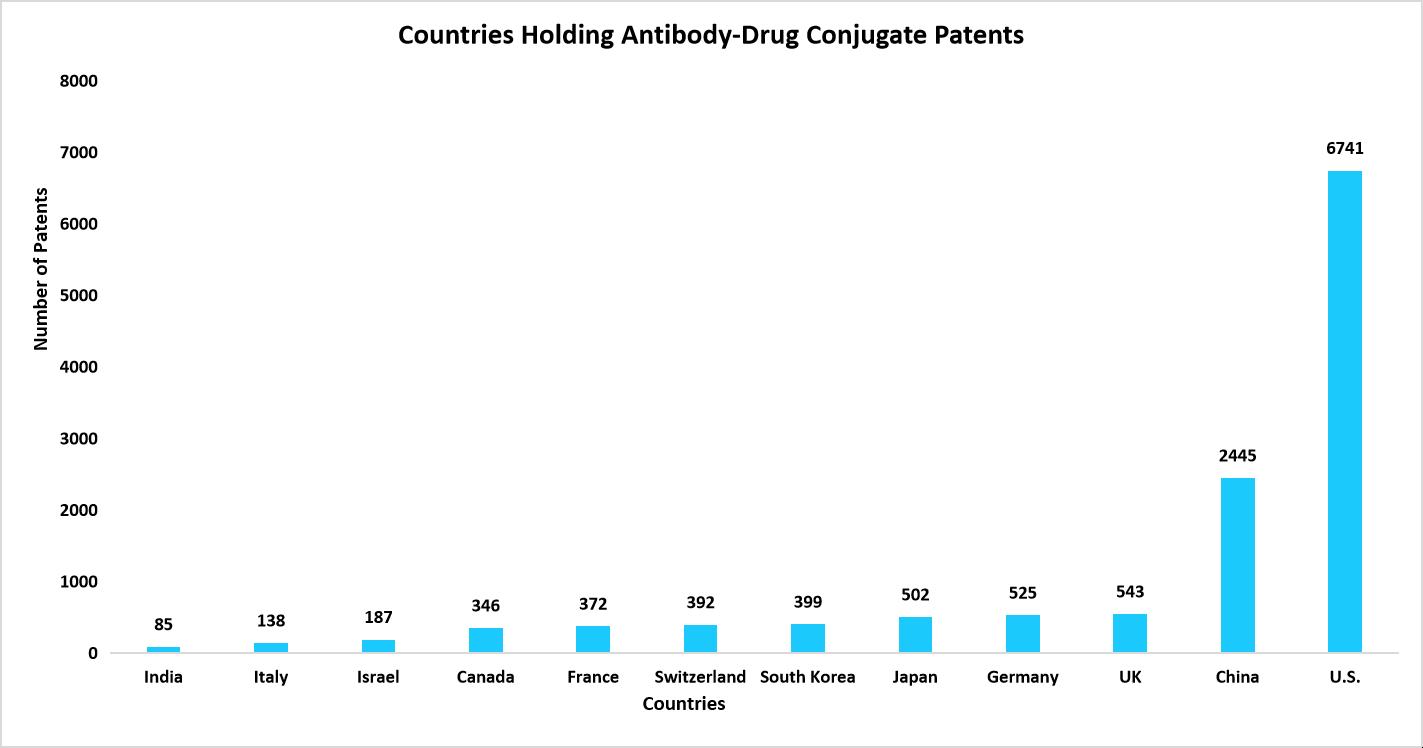
| Antibody-Drug Conjugate Product | Revenue 2023 ($ Million) |
| Enhertu | 1283 |
| Kadcyla | 2188.2 |
| Adcetris | 292.1 |
| Besponsa | 236 |
| Polivy | 931.58 |
| Padcev | 687.96 |
| Trodelvy | 1063 |
| Zynlonta | 69.1 |
| Elahere | 212.1 |
| Tivdak | 112.7997 |
Source: Company Annual Reports and Straits Research
Emerging Advancements in Antibody EngineeringAntibody engineering is pivotal in the development of more effective antibody therapies. Recent advancements are transforming the field by integrating innovative tools such as artificial intelligence (AI) to improve our understanding of antibody structures and accelerate their development.
-
For instance, researchers at Stanford University have pioneered a machine learning-based method that predicts molecular changes with greater speed and accuracy. This breakthrough leverages the 3D structure of the protein backbone, combined with large language models that focus on amino acid sequences. Such advancements enable the development of more precise and efficient antibody drugs.
These growing innovations in antibody engineering are significantly influencing the market, driving the launch of more effective products, and shaping the future.
Antibodies Market Growth Factors Increasing Prevalence of Cancer and Autoimmune DiseasesThe rising prevalence of cancer and autoimmune diseases is a significant driver of market growth. Antibodies, particularly antibody-drug conjugates and monoclonal antibodies, are critical in providing targeted therapies for both cancer and autoimmune conditions. As the incidence of these diseases continues to grow, so does the demand for antibody-based treatments.
For example,
-
The National Health Council reports that autoimmune diseases affect approximately 50 million people in the U.S., with an annual increase of 3-12%.
Similarly, the World Health Organization (WHO) estimated that in 2022, there were 20 million new cancer cases globally.
This growing disease burden is pushing the demand for effective antibody therapies, fueling market expansion.
Increasing Adoption of Antibodies in DiagnosticsAntibodies are also gaining traction in the diagnostic space, further driving market growth. Their ability to specifically target and bind to antigens allows for highly accurate diagnostic results. This expanding role in diagnostics, alongside their therapeutic use, is helping to solidify antibodies' place in healthcare.
A key example is the November 2023 partnership expansion between AmoyDx and CST to develop companion diagnostics (CDx) for precision oncology. This collaboration focuses on creating diagnostic assays to identify patients who are suitable candidates for targeted therapies.
Increased investment in the development of antibody-based diagnostic assays is expected to continue driving market growth.
Market Restraining Factor High Risk of Product RecallingThe risk of product recalls poses a significant challenge to the antibodies market, as it impacts both revenue generation and consumer trust. Several antibody products have been recalled by the U.S. Food and Drug Administration (FDA) due to safety and efficacy concerns.
For example, in November 2022, GSK recalled Belantamab from the U.S. market at the request of the FDA after it failed to meet primary endpoints for progression-free survival (PFS). Similarly, AstraZeneca withdrew Moxetumomab from the U.S. market in July 2023 due to insufficient usage.
These recalls not only affect the financial performance of the companies involved but also diminish confidence in the safety and efficacy of antibody treatments, which can slow market growth and hinder the development of future therapies.
Antibodies Market Opportunities Increasing Investments in Biotechnology and R&dThe biotechnology sector is experiencing rapid growth, with an increasing preference for biologic products over chemically synthesized ones. This surge is encouraging key market players and investors to ramp up investments in biotechnology and related research and development (R&D). As antibodies are a cornerstone of the biotechnology industry, these investments are directly benefiting the market.
-
For instance, in September 2024, Arch Venture Partners announced a capital fund exceeding $3 billion to support the development of early-stage biotechnology companies. Arch Ventures emphasizes that AI and data-driven insights into biology can help drive a more preventive, curative, and equitable healthcare system.
Such investments are creating valuable opportunities, further fueling market growth, and advancing the development of innovative antibody-based therapies.
Type InsightsThe monoclonal antibodies (mAbs) segment leads the global antibodies industry, contributing the largest revenue share. This dominance is driven by the high specificity of mAbs, targeting only a single epitope on an antigen, which enhances their effectiveness. Moreover, the approval of several mAb-based products by the U.S. Food and Drug Administration (FDA) has further propelled their use. For example, in 2022, 13 monoclonal antibodies received first approvals in both the U.S. and Europe, expanding treatment options and boosting market growth.
Request Customization to receive a tailored report.
Application InsightsThe oncology segment is the largest revenue-generating application in the global market, primarily driven by the rising incidence of cancer. As cancer cases continue to rise, there is an increasing demand for effective therapies, which antibodies, especially monoclonal antibodies and antibody-drug conjugates, provide. According to the American Cancer Society, an estimated 2,001,140 new cancer cases were expected in the U.S. in 2024, highlighting the urgent need for targeted antibody treatments to address this growing health burden.
Speak to an Analyst to discuss market opportunities.
Regional InsightsNorth America holds the largest revenue share in the global market, with 48.03% market share, driven by several key factors. The region benefits from well-established healthcare systems, which enable better access to advanced therapies, including monoclonal antibodies and antibody-drug conjugates. The high prevalence of cancer and autoimmune diseases in the region creates significant demand for effective treatments.
Moreover, rising investments in research and development (R&D) are accelerating the innovation and approval of new antibody-based therapies. The presence of major pharmaceutical players like Bristol-Myers Squibb, Merck & Co., Inc., and Regeneron Pharmaceuticals, Inc., further strengthens the market.
-
United States – The U.S. market leads due to its advanced healthcare system, significant R&D investments, and strong regulatory support. For example, in September 2024, Dupixent, a monoclonal antibody, was approved for treating chronic obstructive pulmonary disease (COPD). Such product approvals ensure precise disease management and drive market growth, solidifying the U.S. as a hub for antibody innovations and expanding therapeutic options.
Canada – Canada's antibodies market growth is fueled by government investments in biotechnology. For instance, in May 2023, the Canadian government contributed $225 million towards AbCellera's $701 million project to establish a biotech campus with an advanced preclinical antibody development facility. These investments enhance the country's capabilities in developing innovative antibody-based therapies, accelerating market expansion.
Unlock Regional Insights to access country-level data, & regional trends.
Asia-Pacific Antibodies Market TrendsAsia Pacific region is expected to experience the fastest CAGR, driven by the rising incidence of cancer, with the region accounting for 49.2% of global cancer cases in 2022, as estimated by the American Cancer Society. Moreover, expanding healthcare awareness, improving access to treatments, and increasing investments in research, development, and manufacturing facilities are fueling market expansion. These factors, combined with a growing focus on biotechnology innovations, position the Asia-Pacific region as a key player in the global antibodies market's future growth.
-
China - In China, the increasing prevalence of cancer is driving the antibody market growth. The increasing number of cancer cases is demanding a precise diagnostic as well as treatment approach, and antibodies are the only targeted approach to detect and treat cancer. For instance, according to NIH, in 2024, 3,246,625 new cancer cases were estimated, with the highest incidence of lung cancer in China.
India– India's antibodies industry is expanding due to disease-specific product launches by key players. For instance, in March 2024, Roche Pharma India introduced Vabysmo (faricimab), a bispecific monoclonal antibody for vision loss, addressing a significant healthcare need in the country. These launches meet disease-specific demands and contribute to market growth.
-
Germany– Germany's strong healthcare system and demand for innovative diagnostics and treatments drive its market. Significant investments in R&D centers are propelling biopharmaceutical advancements. For instance, in April 2024, Merck invested over $309.57 million in a life science research center focused on developing antibodies, mRNA applications, and biopharmaceutical products, boosting innovation and market growth.
UK – The UK's market is expanding due to regulatory support and advanced product approvals. For example, in October 2023, the Medicines and Healthcare products Regulatory Agency (MHRA) authorized Jemperli, a monoclonal antibody for endometrial cancer, in combination with chemotherapy. Such approvals improve patient care and strengthen the market's growth trajectory.
France - In France, the government's commitment to improving cancer care and increasing funding for oncology and chronic diseases drives the market for antibodies. For instance, in August 2024, the French government funded $22.35 million to ImCheck to develop the company's most advanced drug candidate, a T cell-activating monoclonal antibody. Such funding is influencing market growth in France.
-
AbbVie Inc.
AstraZeneca
Bayer AG
Biogen
Bristol-Myers Squibb Company
Lilly
GSK plc.
Johnson & Johnson Services, Inc.
Merck & Co., Inc.
Novartis AG
Pfizer Inc.
Regeneron Pharmaceuticals, Inc.
F. Hoffmann-La Roche Ltd
Sanofi
Takeda Pharmaceutical Company Limited
-
May 2026: Microsoft expanded its global data center infrastructure with new AI-optimized facilities featuring advanced cooling systems, high-density computing capabilities, and renewable energy integration to support growing cloud and AI workloads.
March 2026: Amazon Web Services (AWS) announced new data center investments focused on expanding cloud capacity, AI infrastructure, and energy-efficient computing solutions across key global markets.
October 2025: Google expanded its data center network with new AI-focused infrastructure, incorporating advanced processors, liquid cooling technologies, and sustainable power solutions to support large-scale machine learning workloads.
June 2025: Equinix expanded its global data center footprint through new hyperscale facilities and digital infrastructure investments, strengthening support for cloud, enterprise, and AI applications.
| Market Metric | Details & Data (2025-2034) |
|---|---|
| Market Size in 2025 | USD 273.95 Billion |
| Market Size in 2026 | USD 307.92 Billion |
| Market Size in 2034 | USD 784.46 Billion |
| CAGR | 12.4% (2026-2034) |
| Base Year for Estimation | 2025 |
| Historical Data | 2022-2024 |
| Forecast Period | 2026-2034 |
| Study Period | 2022-2034 |
| Dominant Region | North America |
| Fastest Growing Region | Asia Pacific |
| Key Market Players | AbbVie Inc., AstraZeneca, Bayer AG, Biogen, Bristol-Myers Squibb Company |
| Report Coverage | Revenue Forecast, Competitive Landscape, Growth Factors, Environment & Regulatory Landscape and Trends |
| Segments Covered | By Type, By Application |
| Geographies Covered | North America, Europe, APAC, Middle East and Africa, LATAM |
| Countries Covered | US, Canada, UK, Germany, France, Spain, Italy, Russia, Nordic, Benelux, China, Korea, Japan, India, Australia, Taiwan, South East Asia, UAE, Turkey, Saudi Arabia, South Africa, Egypt, Nigeria, Brazil, Mexico, Argentina, Chile, Colombia |
Customize This Report to Match Your Strategic Objectives
Frequently Asked Questions (FAQs)
Legal Disclaimer:
MENAFN provides the
information “as is” without warranty of any kind. We do not accept any
responsibility or liability for the accuracy, content, images, videos,
licenses, completeness, legality, or reliability of the information
contained in this article. If you have any complaints or copyright issues
related to this article, kindly contact the provider above.
Comments
No comment