

Srinagar Is Moving Uphill, Can Infrastructure Follow?


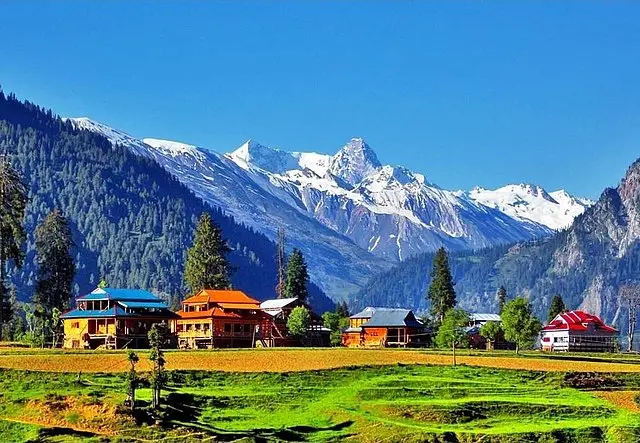
Srinagar- The road into Harwan climbs toward the wooded slopes, where Srinagar starts to look less like a valley city and more like a city rising into the hills.
ADVERTISEMENTHouses have appeared on land that once marked the outer edge of urban life. Tourist traffic moves toward Dachigam, Dara and Astanmarg, while private construction has followed the view.
The growth has created a common complaint among residents and developers: buildings have reached the hills faster than civic infrastructure has.
ADVERTISEMENTOn Monday, Mohammad Muqsit Wani, the Block Development Officer of Harwan, went into the field to inspect what the administration was doing about that gap.
Acting under the guidance of Akshay Labroo, the District Development Commissioner of Srinagar, Wani examined development works at several sites, including the upgradation of the Health Centre at Syedpora, works at Khimber and improvements to irrigation channels at different locations.
“The inspection had a larger significance in a city whose physical footprint has expanded sharply,” Wani said.
Srinagar's urban population stood at 1.22 million in the 2011 Census, accounting for almost the entire district population. Research published this year found that the city's built-up area increased from 24.2 square kilometres in 1992 to about 108 square kilometres in 2024, a more than fourfold expansion.
“Much of that growth has followed roads, peripheral land and new residential demand,” says Saqib Bhat, a Srinagar-based real estate agent.“Rising land values have pushed construction toward the edges, while tourism has added another source of pressure.”
A recent report put residential land in some Srinagar neighbourhoods at Rs 3 crore to Rs 4 crore a kanal, with brokers describing strong demand on the city's outskirts.
Harwan has gained a particular pull because geography and tourism meet there.
Dara has developed as an adventure-tourism destination, with paragliding flights beginning around Astanmarg and landing in Harwan.
Srinagar itself draws roughly 1 million to 1.5 million domestic tourists a year, according to the city's climate-resilience plan.
“Tourism has brought hotels, restaurants and other visitor infrastructure closer to the hills,” says Farooq Ahmad, a resort owner in Harwan.“Private investment has also followed the search for views, open land and an escape from the density of the city below.”
The same forces that make Harwan attractive have increased the public cost of extending health services, irrigation, roads and other infrastructure into terrain once considered peripheral.
At the worksites, Wani reviewed physical progress and spoke with officials and field functionaries. He directed them to follow approved specifications, maintain quality, complete projects within stipulated timelines and use public funds effectively.
The Harwan administration said regular field inspections would continue so that government projects reach residents at the grassroots.
Read AlsoNo Content AvailableIts stated goal, Wani concluded, is to strengthen public infrastructure and improve service delivery through the block's Panchayats.
Srinagar's expansion has already moved beyond the old boundaries of the city. Harwan shows what comes next.
As people and investment move into the hills, the question is shifting from where Srinagar can grow to whether its public infrastructure can keep pace.

Legal Disclaimer:
MENAFN provides the
information “as is” without warranty of any kind. We do not accept any
responsibility or liability for the accuracy, content, images, videos,
licenses, completeness, legality, or reliability of the information
contained in this article. If you have any complaints or copyright issues
related to this article, kindly contact the provider above.
Comments
No comment