

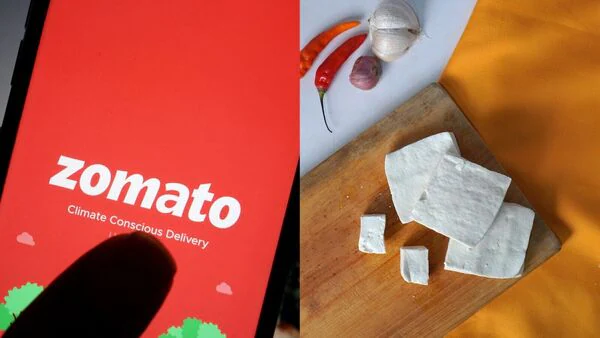
Why Zomato Banned Analogue Paneer? What It Is And How It Harms Even Your Healthy Body Explained


Zomato has asked restaurants on its platform to stop using analogue dairy products, directing them to replace such products with natural dairy or remove the affected dishes from their menus.
The platform has also asked restaurant partners to check supplier labels and ingredient declarations, raising questions about what customers are actually being served.
Quick answers to key questions
.5 QUESTIONS1What is analogue paneer and how is it made?⌵Analogue paneer is a dairy-like product that mimics traditional paneer in appearance and texture, but replaces some or all milk components with non-dairy ingredients like vegetable oils, plant proteins, and emulsifiers.
2Why did Zomato ban analogue paneer and other analogue dairy products?⌵Zomato banned analogue dairy products to ensure customers receive food accurately represented as natural dairy, safeguarding health and supporting transparency in food labeling.
3What are the health implications of consuming analogue paneer?⌵Consuming analogue paneer is not necessarily unsafe; however, its nutritional profile may differ from traditional paneer, and the concern lies in potential misrepresentation to consumers.
4How can consumers identify analogue paneer in restaurant menus?⌵Consumers can identify analogue paneer by checking ingredient lists for non-dairy components like vegetable fats and starches, as reliance on appearance alone can be misleading.
5Should restaurants switch to traditional paneer due to Zomato's policy?⌵Yes, restaurants are required to replace analogue paneer with natural dairy products or remove affected dishes from their menus to comply with Zomato's zero-tolerance policy.
But what exactly is analogue paneer? Is it the same as the "fake paneer" often discussed online? And does eating it mean consuming something unhealthy?
So, what is analogue paneer?Analogue paneer is made to resemble traditional paneer in appearance and texture, but some or all of its milk components may be replaced with non-dairy ingredients.
Also Read | Analogue paneer: How is it different from regular paneer? Price gap, home testsDepending on the formulation, these may include vegetable oils or fats, starches, plant proteins, emulsifiers and stabilisers. The exact ingredients can vary between products.
In other words, two cubes of paneer can look almost identical on a plate while being made quite differently.
That is also why simply calling analogue paneer "fake paneer" can be misleading. An analogue product is not automatically an adulterated product. What matters is what it contains, whether it meets applicable food-safety requirements and whether consumers are clearly informed about it.
Also Read | Karnataka's 1-year 'analogue paneer' ban: Does it apply to frozen desserts? How is traditional paneer different?The paneer most Indians are familiar with is a milk-based dairy product.
It is generally made by heating milk and adding an acidic ingredient such as lemon juice, vinegar or another permitted acidulant. The milk separates into curds and whey, after which the curds are collected, pressed and allowed to set.
This is the paneer commonly used in dishes such as palak paneer, matar paneer, shahi paneer and paneer tikka.
Why has Zomato taken this step?Zomato's decision is primarily about what restaurants tell customers about the food they serve.
A person ordering a paneer dish may expect conventional dairy paneer. Restaurants using analogue dairy products have therefore been asked to either switch to natural dairy products or remove the relevant dishes from Zomato.
The platform has also asked restaurants to verify supplier labels and ingredient declarations.
Also Read | Milky Mist's paneer heft to help it take on cooperative giantsThe issue has attracted regulatory attention too. The Food Safety and Standards Authority of India (FSSAI) has emphasized appropriate identification of products made with dairy analogues, so consumers are not misled about what they are buying or eating.
Is analogue paneer unsafe?Not necessarily.
Being an analogue product does not automatically mean it is unsafe or unhealthy. Its safety depends on the ingredients used, the manufacturing process, and compliance with applicable food safety standards.
Its nutritional profile, however, can differ from traditional dairy paneer. Some formulations may contain plant proteins, while others may use vegetable fats, starches or other ingredients.
The bigger concern is when a product made with non-dairy ingredients is presented in a way that leads customers to believe they are getting conventional dairy paneer.
What happened in Maharashtra?The analogue paneer issue has led to regulatory action. Maharashtra recently announced a one-year ban on the manufacture and sale of artificial or analogue paneer following an enforcement drive in which several samples failed to meet prescribed standards.
How can consumers tell difference?For packaged paneer, check the product name and ingredient list rather than relying on its appearance.
Ingredients such as vegetable oils or fats, starches and plant proteins can indicate that you are looking at a formulated alternative rather than conventional dairy paneer.
Restaurants are trickier because customers do not have access to the full ingredient list. That makes accurate menu descriptions and supplier declarations important.
Zomato's move ultimately raises a straightforward consumer question: when a food looks like paneer, do you know what it is actually made of?

Legal Disclaimer:
MENAFN provides the
information “as is” without warranty of any kind. We do not accept any
responsibility or liability for the accuracy, content, images, videos,
licenses, completeness, legality, or reliability of the information
contained in this article. If you have any complaints or copyright issues
related to this article, kindly contact the provider above.
Comments
No comment