

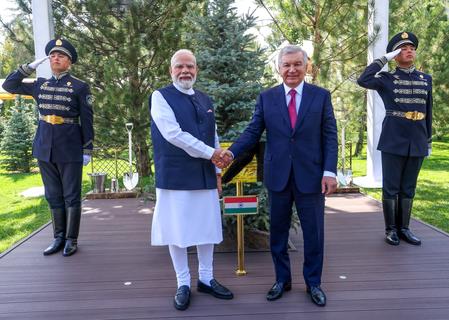
PM Modi's Tashkent Visit Opens Key Strategic Option For India: Report


“The architecture of the agreements links the hard power of uranium and minerals, the practical power of trade routes and digital payments, and the durable power of skills, culture and institutions,” states the article by Carmen Hernández.
They also agreed to a working group on non-tariff and investment barriers, time-bound exploration of a preferential-trade agreement, and a business summit. These are the unglamorous devices that determine whether memoranda become factories, contracts and jobs.
It also highlights that the target to increase bilateral trade between the two countries from, $1.3 billion to more than $5 billion by 2030, is backed by solid steps that include the creation of a foreign-ministers-led mechanism to coordinate and oversee implementation. Besides, investor-grievance mechanisms, regulatory discussions and possible mutual-recognition arrangements to deal with any obstacles will help implementing the agreements.
“A trade target without these details is a slogan; with them, it becomes a testable development strategy. The United States should recognize the distinction, especially when it urges partners to build resilient, diversified networks,” the article observes.
It highlights that the most strategically important commitments concern geology, mining, nuclear energy and critical minerals. India and Uzbekistan intend to pursue joint exploration, mining, processing, value-added production and recycling, while encouraging Indian firms to develop Uzbek deposits. The two sides also advanced a long-term framework for Uzbek uranium supplies to India for civil nuclear cooperation.
This assumes significance as these minerals and processed materials are required to make electric vehicles, grids, electronics, defence hardware, solar power units.
“Securing deposits matters, but processing capacity, contractual reliability, environmental standards and recycling matter as much. The joint statement's emphasis on integrated value chains is therefore more mature than a race to lock up raw materials,” the article points out.
The article further highlights that uranium adds a second layer as Uzbekistan produced 7,000 tonnes in 2025, and its government says identified reserves reached 139,000 tonnes. For India, which sees nuclear power as part of its energy transition, a durable arrangement diversifies a critical input.
For Uzbekistan, selling more than ore and partnering on industrial capability supports its push to capture more value at home. Agreements cannot erase commercial, safety or market risks; they can reduce the vulnerability of relying on too few suppliers, the article opines.

Legal Disclaimer:
MENAFN provides the
information “as is” without warranty of any kind. We do not accept any
responsibility or liability for the accuracy, content, images, videos,
licenses, completeness, legality, or reliability of the information
contained in this article. If you have any complaints or copyright issues
related to this article, kindly contact the provider above.
Comments
No comment