

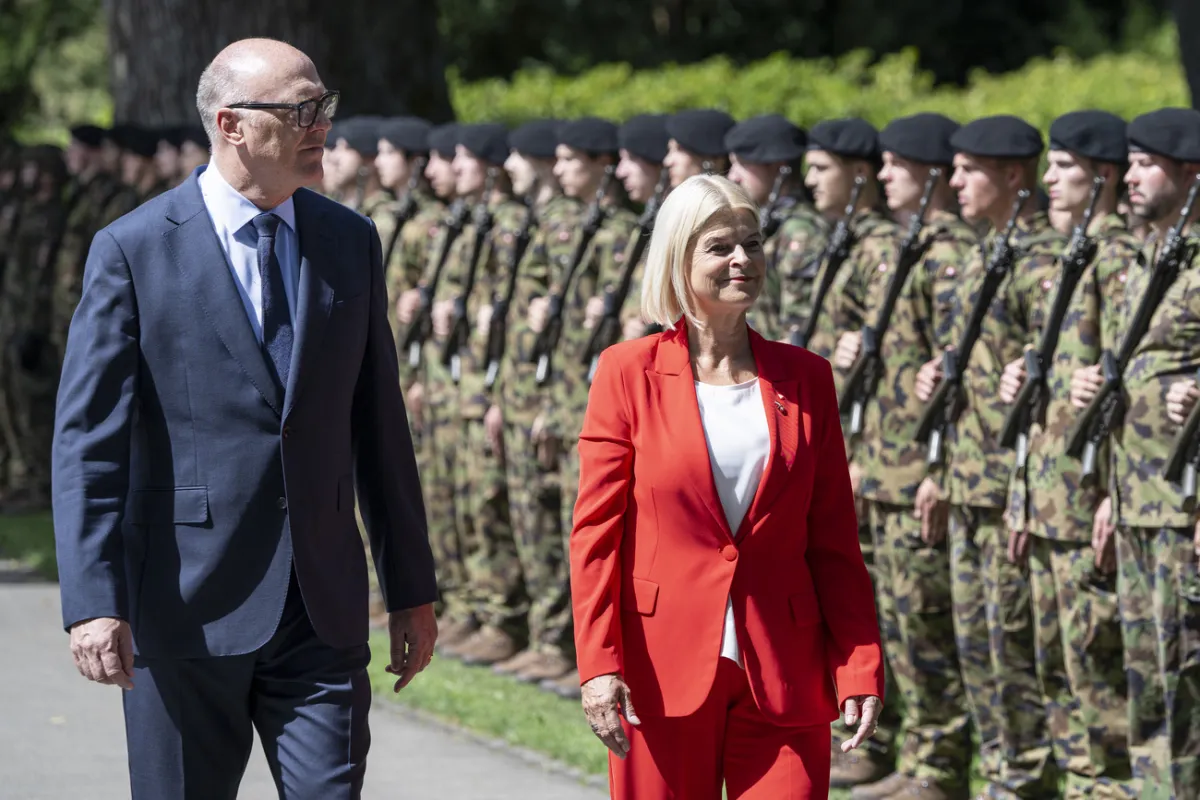
Austria, Costa Rica And Malta: Neutral But Unlike Switzerland


As a correspondent at the Federal Palace for SWI swissinfo, I report on federal politics for the Swiss Abroad. After studying at the Academy of Journalism and Media at the University of Neuchâtel, my career path initially took me to various regional media, working in the editorial offices of Journal du Jura, Canal 3 and Radio Jura bernois. Since 2015, I have been working in the multilingual editorial department of SWI swissinfo, where I continue to practise my profession with passion.
-
More from this aut
French Departm
-
Deutsch
de
Österreich, Costa Rica oder Malta: Diese neutralen Länder folgen nicht dem Schweizer Modell
Read more: Österreich, Costa Rica oder Malta: Diese neutralen Länder folgen nicht dem Schweizer M
Français
fr
L'Autriche, le Costa Rica ou encore Malte: ces pays neutres qui ne suivent pas le modèle suisse
Original
Read more: L'Autriche, le Costa Rica ou encore Malte: ces pays neutres qui ne suivent pas le modèle s
Italiano
it
Austria, Costa Rica, Malta: Paesi neutrali che non seguono il modello svizzero
Read more: Austria, Costa Rica, Malta: Paesi neutrali che non seguono il modello svi
Español
es
Austria, Costa Rica o Malta: países neutrales que no siguen el modelo suizo
Read more: Austria, Costa Rica o Malta: países neutrales que no siguen el modelo
Русский
ru
Швейцарский нейтралитет не является единственной моделью
Read more: Швейцарский нейтралитет не является единственной мо
The Russian invasion of Ukraine and growing security tensions have put neutrality under pressure around the world. The accession of Finland and Sweden to NATO in 2023 and 2024 have reduced the number of neutral countries to around ten, according to the list compiled by the foreign ministryExternal link.
Switzerland has traditionally symbolised neutrality in Europe. Its model is based on several historical and legal features that make it unique.
First, Switzerland is the oldest neutral country in the world. Its neutrality has been recognised by the major powers since the Congress of Vienna in 1815, although its origins date back to the defeat at Marignano in 1515 and the Peace of Westphalia in 1648.
Second, Swiss neutrality is both permanent and armed. Permanent, because it applies in times of both peace and war. Armed, because the country must be able to defend its territory and its neutrality itself.
It is also based on the international law of neutrality, which, in particular, prohibits Switzerland from taking part in a war, providing military support to a belligerent party or entering into a military alliance that could draw it into a conflict.
Finally, Switzerland is not a member of the European Union and thus has greater scope for manoeuvre in implementing its policy of neutrality.
The neutrality initiative, however, calls into question the scope of this principle. The initiative, on which the Swiss people will vote on September 27, calls for a stricter definition of neutrality to be enshrined in the constitution.
>> To find out everything about the net neutrality initiative, read our explainer:
More More Swiss Politics Should Swiss neutrality be stricter? Voters will decideThis content was published on Jul 24, 2026 On September 27, Swiss voters will decide on whether or not to enshrine a stricter definition of neutrality into the country's constitution.
Read more: Should Swiss neutrality be stricter? Voters will d
Legal Disclaimer:
MENAFN provides the
information “as is” without warranty of any kind. We do not accept any
responsibility or liability for the accuracy, content, images, videos,
licenses, completeness, legality, or reliability of the information
contained in this article. If you have any complaints or copyright issues
related to this article, kindly contact the provider above.
Comments
No comment