

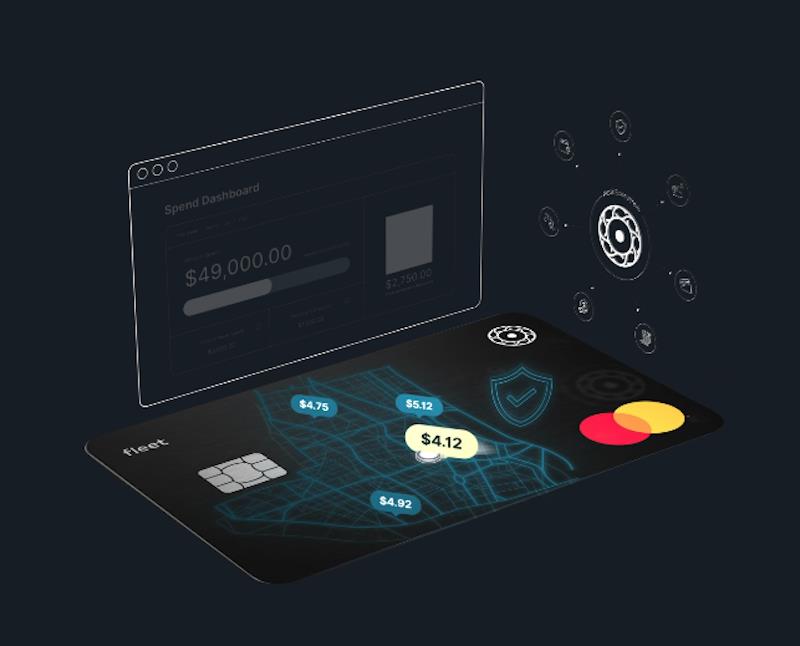
How Fuel Card Controls Can Reduce Fleet Spending And Fuel Costs


Most fleet managers accept that as the nature of the business. What's harder to accept, once you actually look closely, is how much of that“normal variance” is really just money slipping out the door unnoticed.
Fleet fuel cards were supposed to solve this. And in a lot of ways, they did – no more paper receipts, no more reimbursement headaches, a clean digital trail of every purchase.
But a card without controls is just a more convenient way to spend without oversight. The real value doesn't come from having a fuel card program. It comes from how tightly that program is managed.
This article walks through why fuel spending risk is bigger than most fleets assume, and what practical controls actually do to shrink it.
The Real Cost of an Unwatched Fuel CardIt's easy to assume fuel overspending is a rounding error. It isn't. Fuel typically makes up somewhere between 30% and 40% of a fleet's total operating expenses, according to the Bureau of Transportation Statistics, and the National Private Truck Council's benchmarking research puts fuel at roughly 31.8% of vehicle-based operating costs. When a line item is that large, even small leaks add up fast.
And leaks happen more than people like to admit. A driver fuels up a personal vehicle“just this once.” A card gets used at a location nowhere near the actual route. Someone buys a few extra items at the pump that have nothing to do with the truck. None of these feel like a big deal in isolation.
Multiplied across a fleet of twenty, fifty, or two hundred vehicles over a year, they become a real problem – one that often doesn't show up until someone finally sits down and reconciles the numbers months later.
Why Fuel Spending Slips Through the Cracks So EasilyMost fuel misuse isn't dramatic. It doesn't look like theft in the moment – it looks like a normal transaction. That's exactly why it's hard to catch without the right systems in place.
A few reasons this happens so often:
-
Fuel purchases happen dozens or hundreds of times a week across a scattered network of stations, far from anyone's direct view.
Monthly reconciliation catches problems weeks after the money is already gone, which makes patterns hard to trace back to a cause.
Drivers aren't necessarily dishonest – they're often just working around a system that has no built-in limits, so small liberties feel harmless.
Idling and inefficient routes quietly inflate fuel usage even when every transaction on the card is legitimate. Argonne National Laboratory estimates that U.S. vehicles burn through more than 6 billion gallons of fuel every year just from idling, at a cost exceeding $20 billion – and roughly half of that comes from medium- and heavy-duty commercial vehicles.
The point isn't that every driver is trying to game the system. It's that without structure, the system doesn't stop anyone who wants to, and it doesn't flag the waste that happens even with good intentions.
What Fuel Card Controls Actually Do“Controls” can sound like a vague, corporate word, so it helps to be specific about what it actually means day to day. A well-managed fuel card program typically includes:
-
Spending limits set per transaction, per day, or per week, tied to what a vehicle actually needs
Restrictions on what can be purchased – fuel only, no snacks, no add-ons at the register
Geographic or merchant-category restrictions that keep purchases within a driver's normal route
Driver-specific PINs or ID numbers so every transaction is tied to a person, not just a card
Real-time alerts that flag unusual activity the moment it happens, not weeks later
None of these are complicated to set up. Most providers of fleet fuel cards already offer them. The gap, in a lot of fleets, isn't technology – it's that these features sit unused, turned off by default, because nobody made the time to configure them.
Setting Purchase Limits That Actually Match RealityGeneric limits don't work well. A flat cap that's the same for every vehicle in the fleet either restricts long-haul drivers too much or leaves short-route vehicles with far more room than they'll ever need.
The better approach is to build limits around actual usage patterns – tank size, average route length, typical fuel frequency – and adjust them as routes or vehicles change.
This takes a bit more setup work up front, but it turns the limit into something meaningful rather than a number picked out of convenience. A driver hitting a well-calibrated limit is a signal worth investigating. A driver hitting an arbitrary one just learns to ignore the warning.
Restricting Where and What Can Be BoughtThis is where a lot of the quiet leakage actually happens – not in the fuel itself, but in everything around it.
-
Merchant category restrictions can lock a card to fuel purchases only, cutting off convenience-store add-ons entirely.
Geofencing or approved-location lists keep purchases confined to a driver's actual route or region, making off-route transactions stand out immediately.
Time-of-day restrictions can flag purchases made outside normal working hours, which is often when off-book usage happens.
Fuel-grade restrictions prevent someone from filling a diesel truck with premium unleaded meant for a different vehicle, whether by mistake or otherwise.
These aren't punitive measures. They're just narrowing the card down to do exactly what it's meant to do, nothing more.
Real-Time Alerts: Catching Problems Before They CompoundThe biggest shift in fuel card management over the past several years isn't the cards themselves – it's the speed of detection. A transaction that once sat unnoticed until the monthly statement now triggers an alert within minutes.
That speed matters more than people expect. A single unauthorized purchase caught the same day is a quick conversation and a corrected habit.
The same pattern left unnoticed for two months becomes a much harder, more expensive conversation, and by then the money is long gone. Real-time visibility turns fuel management from an accounting exercise into an operational one – something a fleet manager can actually act on instead of just documenting after the fact.
PINs, Driver IDs, and Closing the Anonymity GapOne of the simplest and most underrated controls is also one of the easiest to skip: requiring a driver ID or PIN with every transaction.
Without it, a card is just a card – anyone holding it can use it, and there's no way to tell who actually made a given purchase. With it, every transaction has a name attached. That single change does two things at once.
It makes accountability real instead of theoretical, and it protects honest drivers too, since a disputed charge can actually be traced rather than becoming a he-said-she-said situation.
Building a Culture of Accountability, Not SuspicionThere's a risk worth naming here: controls implemented poorly can feel like the company doesn't trust its own drivers. That's a fair concern, and it's worth taking seriously, because a fleet that treats every driver like a suspect will struggle with morale and turnover just as much as one that ignores fuel spending altogether.
The fleets that get this right tend to do a few things consistently:
-
They explain the“why” behind controls clearly – protecting the business, not policing individuals.
They apply the same rules evenly across every driver, without exceptions that create resentment.
They use alerts as a starting point for a conversation, not an automatic accusation.
They give drivers an easy way to flag legitimate exceptions – a detour, an emergency fill-up – before it becomes a flagged incident.
Done this way, fleet fuel cards stop feeling like surveillance and start feeling like a shared system that protects everyone's interests, including the driver's.
Fuel is too large a cost, and too easy a target for quiet leakage, to leave unmanaged. The good news is that the fix doesn't require a massive overhaul or a new piece of expensive technology bolted onto an existing program.
Most of it comes down to configuring the tools already sitting inside a standard fuel card account – sensible limits, tighter purchase restrictions, real-time alerts, and a PIN tied to every driver.
None of these controls are about distrust. They're about visibility. A fleet that can see exactly where its fuel dollars go, in real time, is a fleet that can catch small problems before they become expensive ones – and that's a much better place to run a business from than waiting for the numbers to explain themselves at the end of the month.

Legal Disclaimer:
MENAFN provides the
information “as is” without warranty of any kind. We do not accept any
responsibility or liability for the accuracy, content, images, videos,
licenses, completeness, legality, or reliability of the information
contained in this article. If you have any complaints or copyright issues
related to this article, kindly contact the provider above.
Comments
No comment