

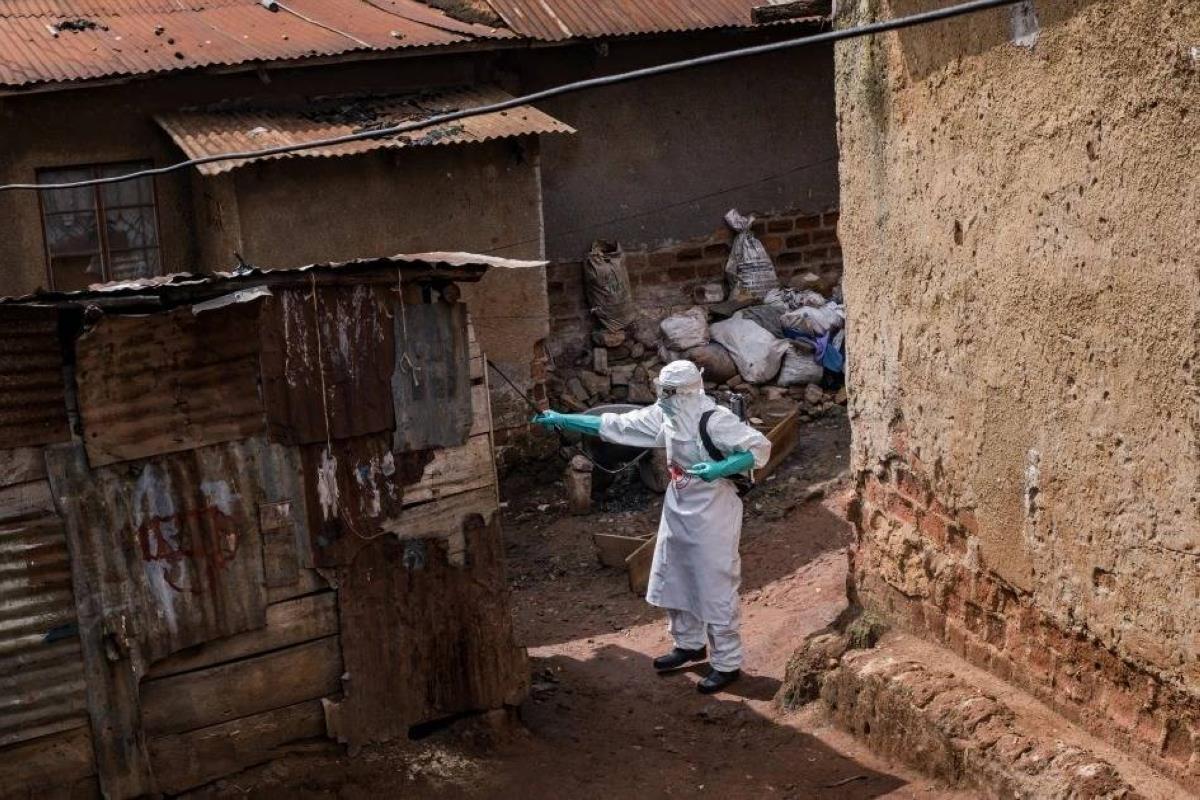
DR Congo Ebola Epidemic Passes 6,000 Cases


Since being declared in mid-May, the latest bout of the viral haemorrhagic fever has surpassed a 2018-2020 outbreak to become the deadliest in the vast central African country's history.
The current epidemic is being caused by the Bundibugyo strain of the virus, for which no approved vaccine nor specific treatment exists.
It rapidly spread across six provinces in the DRC's restive north and east, plagued by a plethora of armed groups fuelling long-running violence in the mineral-rich region.
According to yesterday's toll from the Congolese health authorities, 2,911 people have died, while 1,366 more have made a recovery out of the 6,041 cases confirmed since the epidemic began.
The response to the epidemic, already underfinanced, has struggled to keep up with the explosion in cases.
With the state having long been absent in many parts of the epidemic's epicentre in the eastern DRC, health workers have also had to contend with the distrust of the authorities from some within the affected communities.
According to the Congolese health authorities, the Bundibugyo variant often causes apparently mild symptoms in its initial stage, which complicates detection.
Most of the DRC's previous Ebola epidemics have been caused by the Zaire strain of the virus. Several vaccines and treatments are currently being tested to see if they are effective against the Bundibugyo strain.

Legal Disclaimer:
MENAFN provides the
information “as is” without warranty of any kind. We do not accept any
responsibility or liability for the accuracy, content, images, videos,
licenses, completeness, legality, or reliability of the information
contained in this article. If you have any complaints or copyright issues
related to this article, kindly contact the provider above.
Comments
No comment