

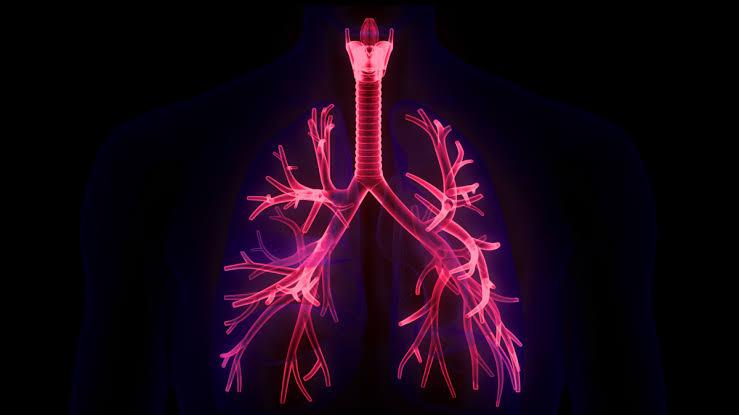
South Korean Scientists Create Breathing-Like Artificial Lung


Researchers in South Korea have developed an artificial lung with an ultra-thin hydrogel membrane that mimics the movement of alveoli during inhalation and exhalation. The new technology could help scientists study how lung cells behave under conditions that closely resemble those inside the human body and how they respond to different diseases.
To create the membrane, scientists from Pohang University of Science and Technology (POSTECH) developed a composite hydrogel. The material combines the flexibility of natural lung tissue with the strength needed to withstand repeated stretching and contraction. The artificial lung reproduces breathing movements through controlled pressure differences that imitate the mechanical action of the diaphragm. During laboratory tests, the model successfully withstood approximately 240,000 respiratory cycles.
Using 3D bioprinting, the researchers also recreated the three-layer structure of the alveoli. The model contains epithelial and vascular cells separated by a thin basement membrane, closely resembling the structure of real lung tissue. When exposed to the influenza virus, the artificial lung showed a cellular response similar to that observed in human lung tissue.
According to the researchers, the technology could be used to study respiratory diseases and test potential medications in conditions that are much closer to those found in the human body. This could make laboratory research more reliable than traditional models in which lung cells are grown on flat surfaces.
One particularly promising application is drug development. Scientists could use the artificial lung to observe how new treatments affect living lung cells before conducting more advanced experiments. In the long term, such technology could help reduce the need for some animal experiments and make the development of new therapies faster and more precise.
The development is also part of a growing field known as “organ-on-a-chip” technology, in which scientists create miniature laboratory systems that reproduce the structure and functions of human organs. If these models continue to improve, they could eventually allow researchers to study diseases in highly realistic laboratory environments and even develop more personalized treatments for individual patients.
The South Korean team's work demonstrates how advanced biomaterials and 3D bioprinting can be combined to create increasingly realistic models of the human body. Such technologies could play an important role in the future of medical research and the development of safer and more effective treatments.

Legal Disclaimer:
MENAFN provides the
information “as is” without warranty of any kind. We do not accept any
responsibility or liability for the accuracy, content, images, videos,
licenses, completeness, legality, or reliability of the information
contained in this article. If you have any complaints or copyright issues
related to this article, kindly contact the provider above.
Comments
No comment