

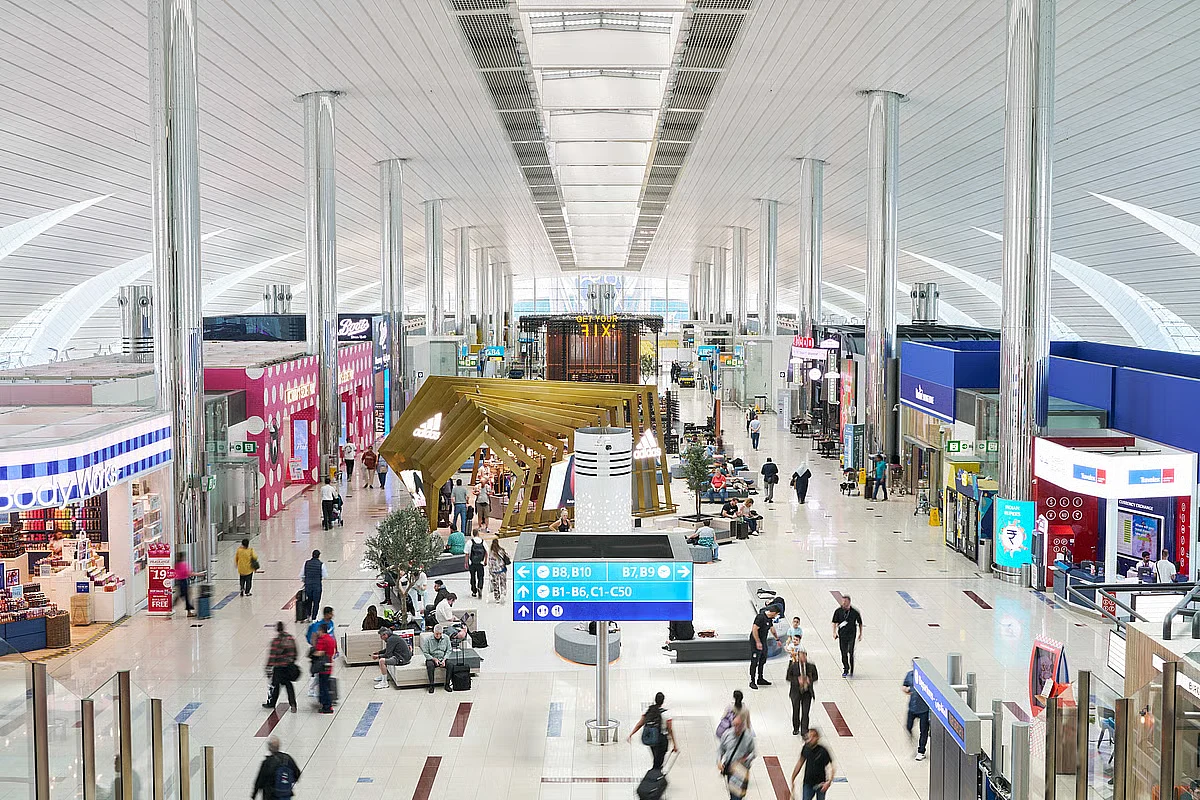
Gulf Carriers' Passenger Slump Eases In July Even As Cargo Demand Climbs


Capacity offered by Gulf carriers fell 5.8 per cent year-on-year, while the load factor slipped 3.3 percentage points to 80.9 per cent – the lowest among all regions tracked by the Geneva-based body.
Recommended For YouStay up to date with the latest news. Follow KT on WhatsApp Channels.
On the cargo side, however, Middle East carriers posted a 1.7 per cent year-on-year rise in demand, even as capacity expanded at a faster 4.0 per cent, suggesting airlines in the region are still adding freight capacity ahead of demand recovery.
Global picture mixedGlobally, total passenger demand – measured in revenue passenger kilometres (RPK) – edged up just 0.2 per cent in July compared with the same month last year. Stripping out the Middle East, global demand growth was more than five times stronger at 1.2 per cent, underlining how much the regional slump weighed on the overall figure. Total capacity, measured in available seat kilometres (ASK), rose 0.3 per cent, while the global load factor eased slightly to 85.2 per cent.
International demand fell 0.1 per cent year-on-year, but rose 1.5 per cent excluding Middle East carriers. Domestic demand grew 0.6 per cent, with capacity up 0.2 per cent and load factor improving to 85.3 per cent.
Marie Owens Thomsen, Iata's senior vice-president for sustainability and chief economist, said the peak Northern summer travel season had been a largely positive story for the industry.
“The peak Northern summer travel season is a mostly positive story for air travel. Overall growth of 0.2 per cent in July was achieved despite year-on-year collective declines by carriers in North America and the Middle East. Notably, traffic through the Gulf hubs continues its recovery trajectory. Although high fuel costs, economic uncertainty and geopolitical tensions continue, carriers are expressing confidence in demand for the last part of the year with an almost 3 per cent expansion of seat capacity in September,” she said.
European carriers led international growth with a 3.1 per cent year-on-year rise in demand, driven by a 12.1 per cent surge in Europe-Asia traffic, the strongest of any major international corridor. Latin American airlines posted the strongest overall regional growth at 7.1 per cent, followed by Africa at 6.4 per cent. Asia-Pacific demand slipped 0.7 per cent, while North American carriers fell 2.3 per cent, with the transatlantic corridor down 2.2 per cent amid notable declines in traffic from the UK, France and Spain.
Cargo demand acceleratesSeparately, global air cargo demand rose 3.9 per cent year-on-year in July, or 4.7 per cent for international operations, while capacity grew a more modest 1.7 per cent.
North American carriers posted the strongest cargo growth of any region at 4.8 per cent, ahead of Europe at 4.4 per cent and Asia-Pacific at 4.1 per cent. Middle East carriers' 1.7 per cent rise outpaced only Africa, which recorded the weakest cargo growth at 1.1 per cent.
Thomsen noted that Asia-Pacific, Europe and North America accounted for more than 90 per cent of the overall increase in cargo demand.
“Air cargo demand grew 3.9 per cent year-on-year in July. While all regions recorded growth, airlines in Asia-Pacific, Europe and North America accounted for more than 90 per cent of the overall increase. Dedicated freighters gained market share as belly-hold traffic declined, possibly reflecting demand for larger or specialist shipments and the operational flexibility that freighters can provide. Looking ahead, the outlook remains broadly positive, supported by manufacturing activity, export orders and global trade. However, higher fuel prices, geopolitical tensions and tariff uncertainty will need to be watched carefully,” she said.
Global trade rose 7.5 per cent year-on-year, while jet fuel prices climbed 12.2 per cent month-on-month and were 56.9 per cent higher than a year earlier. The Global Manufacturing Output Purchasing Managers' Index eased 0.3 points to 52.7, while the New Export Orders Index rose to 50.0, indicators Iata said remained broadly supportive of cargo demand.
Trade lane performance diverged sharply in July: Asia-North America recorded the strongest growth, followed by Europe-Asia and Europe-North America, while Gulf-linked corridors remained disrupted by the conflict in the Middle East.
ALSO READ- Tourism travel from UAE to Nepal remains steady, say travel agents 'Set-Jetting' from UAE: Travellers choose destinations seen in movie, series for holidays UAE residents can get up to 40% off car rentals with Nol travel card from Sept 1

Legal Disclaimer:
MENAFN provides the
information “as is” without warranty of any kind. We do not accept any
responsibility or liability for the accuracy, content, images, videos,
licenses, completeness, legality, or reliability of the information
contained in this article. If you have any complaints or copyright issues
related to this article, kindly contact the provider above.
Comments
No comment