

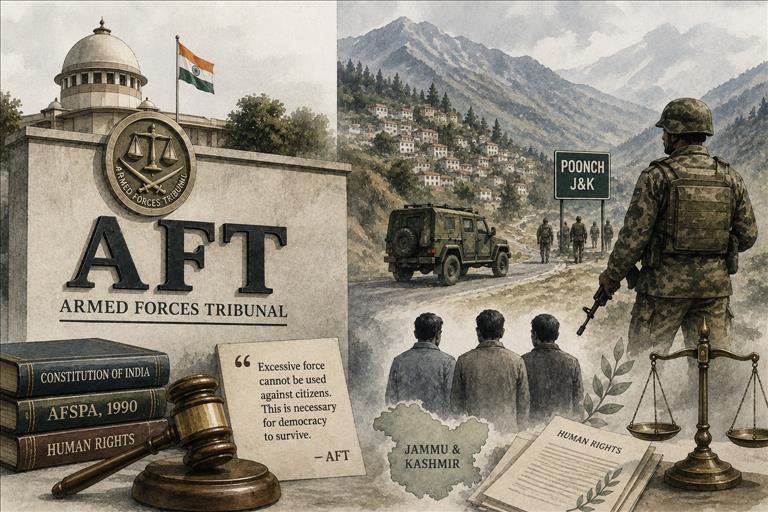
Poonch Custodial Deaths: Gujjar Leaders Question Removal Of Officer's Censure


The AFT, while dismissing Brigadier Padmasambhava Acharya's challenge to the“Severe Displeasure” censure imposed on him on July 8, 2024, directed that the punishment be deleted from his administrative file after taking into account a Ministry of Defence policy that limits the duration of such censure to two years.
ADVERTISEMENTThe tribunal clarified that the deletion of the punishment from the record was being ordered as an exception in the particular case.
The case relates to the Army operation launched following an ambush near Dera Ki Gali in Poonch on December 21, 2023, in which four soldiers were killed and two of them were mutilated.
ADVERTISEMENTDuring subsequent searches, several civilians were detained for questioning. Three of them later died from injuries allegedly sustained while in custody at the Company Operating Base in Mastan Dhara. A purported video showing the alleged torture of detainees subsequently surfaced on social media.
Following a Court of Inquiry ordered by the Headquarters of XVI Corps, administrative action was taken against Acharya, who was then commanding 13 Sector, for failing to exercise proper command and control, improper handling of civilians and failing to prevent excesses.
Gujjar community leader Shahnawaz Choudhary criticised the AFT order, describing it as a“complete betrayal of the community”.
“The fact that the senior Army officer has been censured for two years but now a tribunal order has directed that this action of the officer will not be reflected in his personal record makes a mockery of our judicial system,” he said.
Choudhary said the decision could affect accountability and argued that removing the censure from the officer's record could facilitate his future promotion.
He also called for a response to submissions made during the proceedings alleging that senior military leadership, including the then Corps Commander of XVI Corps based at Nagrota, was present in a control room at Dera Ki Gali during the period when the civilians were allegedly subjected to torture.
“One cannot escape the issue of moral and operational responsibility by taking refuge in legal technicalities,” he said.
Social activist Zahid Parwaz also called for an investigation into the alleged role of senior commanders, warning that any failure to address command responsibility could set a“dangerous precedent” for civil-military accountability in sensitive areas.
“Justice cannot be treated as a symbolic slap on the wrist that fades away with the arrival of the season of promotions,” Parwaz said.
Sharif Chouhan, former Senior Superintendent of Jammu and Kashmir Police and general secretary of the Gujjar Desh Charitable Trust, said accountability was essential to maintaining the credibility and discipline of the armed forces.
“If internal submissions establish that top operational commanders knew about systemic atrocities being committed by their men just kilometres away, then the decision of the tribunal in diluting record entries will be detrimental to the discipline of the armed forces,” he said.
During the proceedings, Acharya had challenged the censure and argued that senior officers, including the Corps Commander of XVI Corps and the General Officer Commanding of Counter Insurgency Force Romeo, were present in the control room during the operations and should therefore share responsibility.
He had also alleged that there was a case of the Corps Commander acting as a judge in his own cause.
The tribunal rejected these submissions, observing that the direction, control and supervision of ground operations rested with the sector commander and commanding officer.
The AFT also noted that the applicable guidelines under the Armed Forces (Jammu and Kashmir) Special Powers Act, 1990, prohibit the use of physical force and third-degree methods against civilians.
Read Also Poonch Custodial Deaths: AFT Faults Command Failure GoC Visits Forward Areas in Ladakh to Review Operational ReadinessHowever, relying on the Ministry of Defence policy dated October 30, 2023, which provides for a two-year duration of“Severe Displeasure” imposed by a Corps Commander, the tribunal directed that the punishment be deleted from the administrative file.
The tribunal said the direction was being issued as an exception in this particular case Gujjar community leaders and activists have expressed concern over the Armed Forces Tribunal's decision to remove from the administrative record a punitive censure imposed on a senior Army officer in connection with the custodial deaths of three civilians in Poonch in December 2023.
The AFT, while dismissing Brigadier Padmasambhava Acharya's challenge to the“Severe Displeasure” censure imposed on him on July 8, 2024, directed that the punishment be deleted from his administrative file after taking into account a Ministry of Defence policy that limits the duration of such censure to two years.
The tribunal clarified that the deletion of the punishment from the record was being ordered as an exception in the particular case.
The case relates to the Army operation launched following an ambush near Dera Ki Gali in Poonch on December 21, 2023, in which four soldiers were killed and two of them were mutilated.
During subsequent searches, several civilians were detained for questioning. Three of them later died from injuries allegedly sustained while in custody at the Company Operating Base in Mastan Dhara. A purported video showing the alleged torture of detainees subsequently surfaced on social media.
Following a Court of Inquiry ordered by the Headquarters of XVI Corps, administrative action was taken against Acharya, who was then commanding 13 Sector, for failing to exercise proper command and control, improper handling of civilians and failing to prevent excesses.
Gujjar community leader Shahnawaz Choudhary criticised the AFT order, describing it as a“complete betrayal of the community”.
“The fact that the senior Army officer has been censured for two years but now a tribunal order has directed that this action of the officer will not be reflected in his personal record makes a mockery of our judicial system,” he said.
Choudhary said the decision could affect accountability and argued that removing the censure from the officer's record could facilitate his future promotion.
He also called for a response to submissions made during the proceedings alleging that senior military leadership, including the then Corps Commander of XVI Corps based at Nagrota, was present in a control room at Dera Ki Gali during the period when the civilians were allegedly subjected to torture.
“One cannot escape the issue of moral and operational responsibility by taking refuge in legal technicalities,” he said.
Social activist Zahid Parwaz also called for an investigation into the alleged role of senior commanders, warning that any failure to address command responsibility could set a“dangerous precedent” for civil-military accountability in sensitive areas.
“Justice cannot be treated as a symbolic slap on the wrist that fades away with the arrival of the season of promotions,” Parwaz said.
Sharif Chouhan, former Senior Superintendent of Jammu and Kashmir Police and general secretary of the Gujjar Desh Charitable Trust, said accountability was essential to maintaining the credibility and discipline of the armed forces.
“If internal submissions establish that top operational commanders knew about systemic atrocities being committed by their men just kilometres away, then the decision of the tribunal in diluting record entries will be detrimental to the discipline of the armed forces,” he said.
During the proceedings, Acharya had challenged the censure and argued that senior officers, including the Corps Commander of XVI Corps and the General Officer Commanding of Counter Insurgency Force Romeo, were present in the control room during the operations and should therefore share responsibility.
He had also alleged that there was a case of the Corps Commander acting as a judge in his own cause.
The tribunal rejected these submissions, observing that the direction, control and supervision of ground operations rested with the sector commander and commanding officer.
The AFT also noted that the applicable guidelines under the Armed Forces (Jammu and Kashmir) Special Powers Act, 1990, prohibit the use of physical force and third-degree methods against civilians.
However, relying on the Ministry of Defence policy dated October 30, 2023, which provides for a two-year duration of“Severe Displeasure” imposed by a Corps Commander, the tribunal directed that the punishment be deleted from the administrative file.
The tribunal said the direction was being issued as an exception in this particular case.

Legal Disclaimer:
MENAFN provides the
information “as is” without warranty of any kind. We do not accept any
responsibility or liability for the accuracy, content, images, videos,
licenses, completeness, legality, or reliability of the information
contained in this article. If you have any complaints or copyright issues
related to this article, kindly contact the provider above.
Comments
No comment