

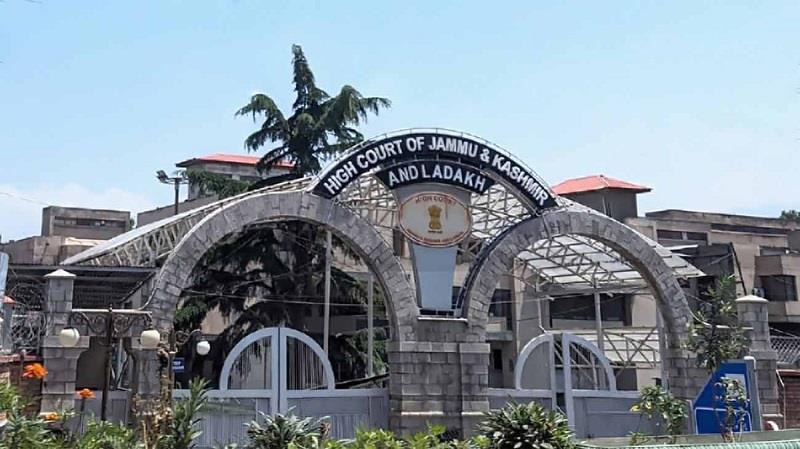
High Court Quashes JK Bank Officer's Dismissal


A bench of Justice Sanjay Dhar, while disposing of the plea, ruled that four conditions must be satisfied before the Managing Director and CEO of the Bank can exercise powers under Clause 12.29. These include an investigation by a State, UT or Central investigating agency; a finding that the employee was directly or indirectly involved in terrorist or anti-national activities or that his activities posed a threat to national security and the sovereignty, security and integrity of the country; advice for removal or dismissal by a competent government authority not below the rank of Principal Secretary or Director General of Police; and dismissal on the basis of such advice without departmental proceedings.
ADVERTISEMENTThe Court made it clear that unless these conditions were fulfilled, an employee of the Bank could not be removed or dismissed without holding a departmental inquiry.
The Court also drew a clear distinction between the powers of the President or Governor under Article 311(2)(c) of the Constitution and those of the J&K Bank's Managing Director and CEO under Clause 12.29 of the OSM. It rejected the respondents' contention that the two provisions were in pari materia, observing that Article 311(2)(c) does not contemplate a prior investigation or advice from another authority before the President or Governor decides that, in the interest of the security of the State, it is not expedient to hold an inquiry.
ADVERTISEMENTIn contrast, the Court said, Clause 12.29 specifically incorporates these safeguards as mandatory preconditions before the Bank's MD and CEO can dispense with a regular inquiry. It further observed that while the President and Governor are high constitutional functionaries vested with such powers, the same level of discretion cannot be extended to an officer such as the Managing Director and CEO of a bank, which is why specific safeguards were deliberately incorporated in Clause 12.29.
Turning to the facts of the case, the Court noted that it was an admitted position that no FIR had been registered against the petitioner. While the petitioner argued that an investigation could not exist without registration of an FIR, the respondents contended that the term“investigation” under Clause 12.29 should be interpreted more broadly and could include collection of material even without an FIR.
The Court later held that although an FIR was not an essential prerequisite, the discreet verification and information gathered from confidential sources in the present case did not amount to an investigation as required under Clause 12.29. Consequently, it quashed the dismissal order and restored the petitioner to the status he held immediately before his dismissal, while leaving it open to the respondents to proceed afresh in accordance with the prescribed procedure or conduct a regular departmental inquiry.

Legal Disclaimer:
MENAFN provides the
information “as is” without warranty of any kind. We do not accept any
responsibility or liability for the accuracy, content, images, videos,
licenses, completeness, legality, or reliability of the information
contained in this article. If you have any complaints or copyright issues
related to this article, kindly contact the provider above.
Comments
No comment