

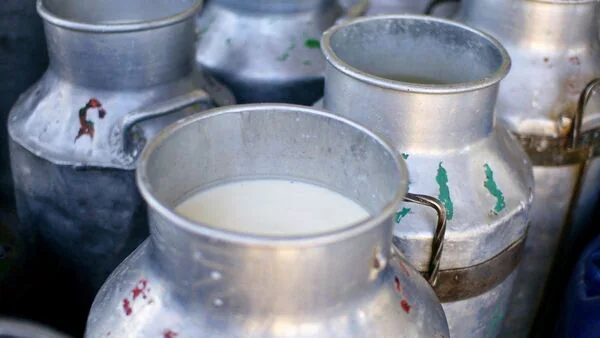
Mumbai Milk Price Hike: How Much Prices Rose, Why, And How Other Metros Compare


The revised rate will remain in effect until 28 February 2027. The increase comes just ahead of the festive season, when demand for milk and milk-based products typically rises.
At ₹9 a litre, the hike is significant in itself. It represents an increase of nearly 10% over the current price, taking Mumbai's fresh tabela milk into a distinctly higher price bracket than regular packaged milk sold by several large dairy brands.
The producers' case is straightforward: the economics of running dairy farms have become more expensive. The cost of dairy cattle has become more expensive. The cost of dairy cattle has risen, while expenditure on feed and fodder has increased sharply. According to a report by India Today, prices of some types of animal feed, including grains, have risen by up to 25%, with costlier fodder and oil cakes adding further pressure on milk production costs. Producers said continuing to sell at the existing ₹93-a-litre rate had become difficult.
This is not Mumbai's first milk price increase this year. Maharashtra raised prices of cow and buffalo milk by ₹2 a litre from 11 August after dairy producers and processors approved a revision. That statewide increase, however, is separate from the latest hike in Mumbai's tabela milk prices, which reflects the higher costs faced by the city's fresh-milk producers.
The latest revision also follows a familiar pattern. In 2025, the Mumbai Milk Producers Association increased the wholesale price of buffalo milk from ₹89 to ₹91 a litre, citing the rising cost of milch animals, cattle feed, grass and fodder. Retail prices at the time were already higher, ranging from around ₹100 to ₹110 a litre depending on the locality.
How does Mumbai compare with other metros?The comparison is not entirely straightforward because Mumbai's tabela milk is a fresh, locally supplied product and is not directly equivalent to standardised packaged milk sold by cooperative and private dairies. Prices also vary by milk type, fat content and brand.
Even so, Mumbai stands out at ₹102 a litre for fresh tabela milk. In Delhi, Mumbai and Kolkata, milk has historically tended to cost more than in Chennai and Bengaluru, where large state-backed dairy networks have helped keep consumer prices comparatively lower, according to an Indian Express analysis of milk prices across major cities.
The contrast is particularly visible when compared with milk sold through large cooperative networks. Amul and Mother Dairy raised prices by ₹2 a litre in May 2026, citing higher input costs. That increase affected several standard packaged variants, but their prices remain dependent on the product and market, rather than following a single uniform national rate.
For Mumbai consumers, though, the immediate impact is simpler. A household buying two litres of tabela milk a day will now spend ₹18 more each day, or roughly ₹540 extra over a 30-day month.
The increase could also have consequences beyond household kitchens. Tabela milk is used by tea shops, restaurants, sweet makers and other small food businesses, and a higher procurement cost could eventually feed into the price of milk-based products during the festive season.
For now, the change is limited to tabela milk. But it underscores a wider pressure running through the dairy business: when the cost of maintaining cattle and feeding them rises, the price eventually reaches the consumer's doorstep.

Legal Disclaimer:
MENAFN provides the
information “as is” without warranty of any kind. We do not accept any
responsibility or liability for the accuracy, content, images, videos,
licenses, completeness, legality, or reliability of the information
contained in this article. If you have any complaints or copyright issues
related to this article, kindly contact the provider above.
Comments
No comment