

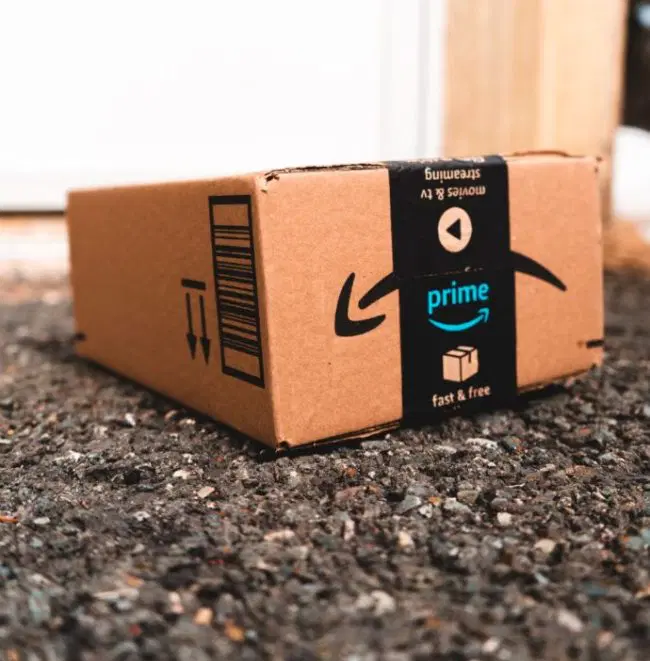
The Amazon Return Pile Is Trying To Tell You Something About Your Spending


An Amazon return pile creates a physical record of purchasing decisions that your monthly credit-card statement may not fully explain. Maybe you ordered three organizers after watching a home makeover video, two pairs of shoes because you couldn't choose a color, and a kitchen gadget that seemed essential at midnight. Returning those purchases recovers the purchase price in many cases, but it doesn't erase the impulse that originally put them in your cart. If the same categories repeatedly appear in your return pile-clothing that doesn't fit your lifestyle, organizational products you don't use, beauty products influenced by social media, or gadgets purchased during sales-that pattern is useful financial information. Instead of viewing every return as an isolated mistake, look at what your last five or 10 returns have in common.
Easy Returns Can Change the Question You Ask Before BuyingA generous return policy can quietly change the shopping decision from“Do I really want this?” to“Why not order it and decide when it gets here?” That's understandable because consumers increasingly expect online purchases to be easy to undo. NRF found that 82% of consumers consider free returns important when shopping online, while 76% said they're more likely to choose a return option offering an instant refund or exchange. Convenience is valuable when clothing doesn't fit, an item arrives damaged, or a product isn't what the description promised. But if you routinely order products you're already uncertain about because“I can always send it back,” your return policy may have effectively become part of your purchasing strategy.
A Refund Doesn't Mean the Purchase Never HappenedIt is tempting to treat a returned $70 purchase as though it never existed, but your cash flow may tell a different story. Until the refund is completed, that money may remain unavailable while bills and additional purchases continue arriving. Someone who orders $400 worth of products and eventually returns $250 of them still temporarily committed $400 of cash or credit to shopping. The problem becomes more significant when multiple purchases and refunds overlap because your credit-card balance or checking account can become difficult to mentally reconcile with what you've actually decided to keep. Instead of thinking only about your net shopping total after returns, pay attention to how much money you're routinely committing before you've decided whether you actually want the merchandise.
Your Return Pile May Be Showing You Your Spending TriggersFor one month, keep a simple record of every item you return, including its price, purchase time, reason for returning it, and what originally prompted you to order it. You might discover that late-night browsing produces unnecessary home purchases, stressful workdays lead to clothing orders, sales encourage you to buy things you weren't looking for, or social media sends you directly to checkout. Those triggers matter because a Bankrate survey found that 48% of social-media users had impulsively purchased something they saw on social media, and 68% of those shoppers regretted at least one such purchase. The same survey found social-media impulse buyers spent an average of $754 over the previous year on products they encountered on social platforms. Identifying when and why you order products you later return gives you something much more useful than another lecture about having better self-control.
Calculate Your“Return Rate” for One MonthHere's an experiment that can turn a vague spending problem into an actual number. Add up everything you order online for one month and then separately total the merchandise you return. If you purchased $800 worth of nonessential products and returned $300, your personal return rate by dollars was 37.5%. That doesn't automatically mean you wasted $300 because returns are a legitimate part of online shopping, particularly with clothing and other products that are difficult to evaluate without seeing them. But repeatedly discovering that you don't want a large percentage of what arrives at your house suggests your decision point may need to move from after delivery back to before checkout.
Create Friction Before the Package Ever ShipsOnline shopping is designed to minimize the effort between seeing something and purchasing it, so reducing impulse spending sometimes means deliberately putting a little effort back into the process. Bankrate recommends the 24-hour rule for nonessential impulse purchases, allowing the initial excitement surrounding an item to fade before you decide whether to buy it. It also recommends removing stored credit-card information from shopping sites because having to retrieve and enter payment information creates another opportunity to reconsider the purchase. Another option is using your cart as a holding area rather than a checkout line: add the item, close the app, and return tomorrow. If you can't remember what you wanted badly enough to buy yesterday, you probably don't need a delivery notification for it tomorrow.
Give Yourself a Longer Waiting Period for More Expensive PurchasesA $12 impulse purchase and a $300 impulse purchase shouldn't necessarily receive the same cooling-off period. Bankrate senior industry analyst Ted Rossman has suggested extending the traditional 24-hour waiting rule as prices rise-for example, giving yourself additional time to consider a purchase costing several hundred dollars. You could create your own rule: 24 hours for purchases under $100, three days for $100 to $250, and a week for anything above that unless it is a genuine household need. The exact thresholds matter less than separating the moment you want something from the moment you pay for it. If an item still makes sense after the excitement of discovering it disappears, you're much less likely to see it sitting in your return pile next weekend.
Some Returns Are Completely Rational-So Separate Those OutA large return pile isn't automatically evidence of bad spending habits, and treating every return as financial failure would miss an important distinction. Shoes can fit differently than expected, products can arrive damaged, descriptions can be inaccurate, and ordering two sizes of an unfamiliar clothing brand may sometimes be the most practical option available. NRF's research underscores just how normal returns have become in ecommerce, with nearly one in five dollars of online sales projected to be returned in 2025. What deserves attention is the avoidable return: something bought impulsively, something you already owned in another form, something purchased solely because it was discounted, or something you knew you probably didn't need when you clicked“Buy Now.” Separating legitimate returns from regretted purchases makes your personal return audit much more meaningful.
Turn Your Return Pile Into a Spending ResetYour Amazon return pile doesn't mean you need to stop shopping online or feel guilty every time something gets sent back. Instead, treat those boxes as information about the gap between what looks appealing while browsing and what you actually value once the package arrives. Before your next nonessential purchase, ask three questions: Would I buy this if returns were difficult? Would I still want it 48 hours from now? What specific need is this purchase solving? If several recent returns would have failed those questions, consider removing saved payment information, unsubscribing from shopping alerts, creating waiting periods, and tracking returns for the next month. The easiest return to make may ultimately be the package you never order.
Look at your last five online returns: Were they legitimate problems with the products, or were some things you probably shouldn't have ordered in the first place? What pattern do you see? Share your experience in the comments.

Legal Disclaimer:
MENAFN provides the
information “as is” without warranty of any kind. We do not accept any
responsibility or liability for the accuracy, content, images, videos,
licenses, completeness, legality, or reliability of the information
contained in this article. If you have any complaints or copyright issues
related to this article, kindly contact the provider above.
Comments
No comment