

Your House Still Looks Like You Have Three Kids At Home - But You're Paying To Maintain All Of It


A bedroom nobody sleeps in may seem harmless, but owning extra square footage creates expenses whether the room is occupied or not. You still pay property taxes on the entire property, insure the entire structure, maintain the entire roof, and heat or cool far more than the rooms you use every day. Bankrate's 2025 Hidden Costs of Homeownership Study estimated that the average single-family homeowner faces about $21,400 annually in expenses beyond the mortgage, including property taxes, insurance, utilities, internet and cable, and maintenance. On a home that once comfortably accommodated five people but now houses two, those expenses can look very different when measured against how much of the property is actually being used. Empty nest home costs aren't necessarily wasteful, but homeowners should know what they're buying with that money.
Maintenance Doesn't Shrink When Your Household DoesThe roof, siding, plumbing, HVAC system, driveway, yard, bathrooms, and appliances continue aging regardless of how many family members remain at home. Bankrate estimated average home-maintenance costs alone at $8,808 annually in its 2025 analysis, although actual expenses vary enormously according to home value, age, condition, and location. A large family house may also have multiple bathrooms, extensive landscaping, more windows, larger heating and cooling systems, or additional appliances that create more opportunities for something to break. That's why an inexpensive year shouldn't necessarily be mistaken for an inexpensive house; the $12,000 HVAC replacement or $20,000 roof may simply not have arrived yet. A realistic empty-nest budget should include money reserved for those irregular repairs instead of counting only this month's bills.
The Second Refrigerator Is a Perfect Example of a Cost Nobody NoticesEmpty nesting often leaves behind small household expenses that made perfect sense when several children lived at home. The garage refrigerator once held sports drinks and overflow groceries, the basement freezer stored family-sized purchases, and the extra television and cable box kept everyone from fighting over what to watch. Once the household shrinks, some of those expenses can continue almost invisibly for years. Walk through the house and ask which appliances, subscriptions, rooms, landscaping services, storage areas, and household routines still serve the life you're living today. Cutting empty nest home costs doesn't necessarily require selling the house when unplugging, canceling, consolidating, or closing off things you no longer need can produce savings first.
Calculate Your Real Annual Cost of StayingPull together 12 months of mortgage payments, property taxes, homeowners insurance, electricity, gas, water, sewer, internet, lawn care, pest control, HOA fees, repairs, and routine maintenance. Then estimate an annual reserve for major replacements such as the roof, HVAC system, water heater, appliances, driveway, or exterior work. Bankrate's research illustrates why this exercise matters: its $21,400 national estimate included $4,316 for property taxes, $2,267 for homeowners insurance, and $4,494 for utilities and energy, in addition to maintenance and communications costs. If your own total comes to $24,000 annually beyond the mortgage, that's $120,000 over five years before accounting for inflation or unusually expensive repairs. Seeing one annual number can make the financial tradeoff much clearer than looking at a $250 electric bill here and a $600 repair there.
Ask What That Money Could Do Somewhere ElseHousing has an opportunity cost that's particularly important as retirement approaches. Suppose moving to a smaller property would realistically reduce your combined taxes, insurance, utilities, maintenance, and landscaping costs by $500 per month after accounting for the replacement home's expenses. That's $6,000 annually, or $30,000 over five years before considering what could happen if some of those savings were invested or used to reduce debt. The comparison isn't an argument for moving; paying more to remain in a home you love can be a perfectly reasonable use of money. But homeowners should know whether keeping the family house means giving up additional travel, retirement flexibility, financial help for children, or other goals they value more.
Downsizing Is Not Automatically the Cheaper ChoiceSelling the family home can create an entirely new set of expenses, so“smaller” should never automatically be translated into“cheaper.” A replacement property can bring moving expenses, transaction costs, renovations, HOA fees, higher property taxes, or a much more expensive mortgage if the current home was financed years ago at a low rate. Realtor reported in June 2026 that current housing economics have made traditional downsizing less attractive for some retirees and empty nesters, with some families even considering larger multigenerational homes instead. Bankrate also found that ongoing maintenance and hidden costs were the most commonly cited regret among homeowners who reported regretting something about their purchase. Compare the complete annual cost of your existing home with the complete cost of a realistic replacement rather than assuming fewer bedrooms automatically produce savings.
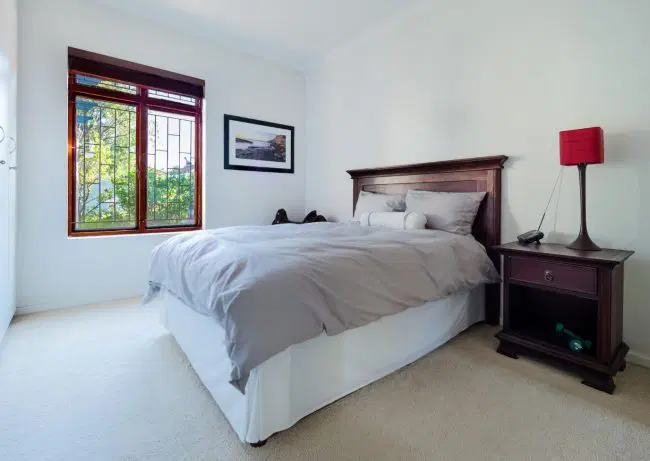
You May Be Able to“Rightsize” Without MovingThere's another option between preserving the house exactly as it was and putting a For Sale sign in the yard. Empty nesters can“rightsize” their existing home by changing how they use it and eliminating expenses that no longer provide value. An unused bedroom could become an office, hobby room, exercise space, or comfortable guest room; an unused formal dining room could become something you actually use every week. Angi notes that rightsizing can mean adapting your existing space to your current lifestyle rather than necessarily moving to a smaller property. If you genuinely use and enjoy the square footage after repurposing it, the financial calculation becomes different because you're paying for space that actively contributes to your life.
Don't Forget What You'd Be Giving UpFinancial spreadsheets can't measure everything that makes a house valuable. Maybe your children return for holidays, grandchildren sleep in those bedrooms, neighbors have become close friends, or your mortgage is paid off and the property gives you tremendous peace of mind. Moving could also mean losing familiar doctors, community connections, nearby family, or a house specifically adapted to your needs. Those benefits have value even though they don't appear beside the property-tax bill. The goal isn't to prove that empty nesters should downsize; it's to make sure they're consciously choosing what they're paying for.
Your House Should Fit the Life You're Living NowThe family home may still be exactly where you want to spend the next 10 or 20 years, and there's nothing financially irresponsible about paying for something you genuinely value and can comfortably afford. The warning sign is continuing to maintain thousands of dollars' worth of unused space every year simply because nobody has reconsidered the arrangement since the kids moved out. Calculate your complete annual housing cost, identify expenses that belong to your former family lifestyle, compare staying with realistic alternatives, and decide what the house provides in return. Your home doesn't have to become smaller after your children leave, but it should make financial and practical sense for the household living there now.
If you added up every dollar spent maintaining the space your kids no longer use, would keeping it still feel worth the cost-or would you rather put some of that money toward something else? Share your thoughts and experiences in the comments.

Legal Disclaimer:
MENAFN provides the
information “as is” without warranty of any kind. We do not accept any
responsibility or liability for the accuracy, content, images, videos,
licenses, completeness, legality, or reliability of the information
contained in this article. If you have any complaints or copyright issues
related to this article, kindly contact the provider above.
Comments
No comment