

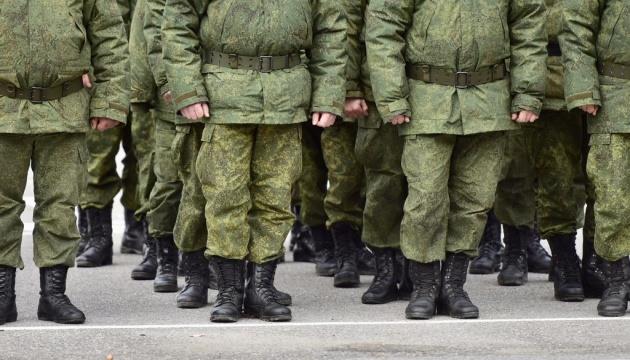
Russia Planning To Mobilize 600,000 More Troops This Year And Next, Ukrainian Intel Says


“Ukraine has information that the Russian General Staff has already prepared a scenario for the additional mobilization of 600,000 people within the specified time frames this year and next. First and foremost, they plan to bring up to full strength the formations and military units fighting against Ukrainians, as well as units of the Russian armed forces that are currently being formed,” the statement said.
The report notes that Russia's political leadership views another wave of mobilization as a response to the aggressor state's loss of the initiative in the war, the continued rise in battlefield personnel losses and a significant slowdown in the recruitment of contract soldiers across the regions.
According to intelligence data, Russia's personnel losses from January through July 2026 amounted to approximately 240,000, of whom at least 140,000 were irrecoverable losses. At the same time, fewer than that number – 232,000 people – were recruited under contract into the Russian occupation force during the same period.
As part of preparations for another mobilization wave and the recruitment of criminal elements under contract, Russia has begun amending relevant legislation and regulations. Military registration controls are being significantly tightened, mechanisms are being created to recruit people serving sentences in the Russian prison system, and additional coercive measures are being developed.
The categories of convicts eligible for military service in the occupation force have been expanded to include people with outstanding or unexpunged convictions under 11 articles of Russia's Criminal Code. These include offenses involving the smuggling of toxic, radioactive and explosive substances, weapons and narcotics; banditry and organizing or participating in criminal gangs; organizing illegal migration; violating safety requirements at fuel and energy facilities; and the illegal handling, theft or extortion of nuclear or radioactive materials.
The Russian leadership has also approved extending mobilization or contract recruitment to certain significant categories of women serving sentences in prisons and penal colonies.
Preparations are also under way to establish quotas for law enforcement agencies – including the Ministry of Internal Affairs, the Federal Bailiffs Service, the Federal Penitentiary Service, the Investigative Committee – to send employees for military service under mobilization.
Depending on their level of training and the expected length of time they are likely to remain combat-effective, mobilized personnel may undergo between 15 to 60 days of training. Some of those mobilized could potentially be trained at military ranges in Belarus.
According to Ukrainian intelligence agencies, the Russian leadership is preparing a set of coercive measures to respond to possible negative social and economic consequences of placing cities and regions under a more restrictive wartime regime.
Internal Russian documents reportedly justify the need for another mobilization wave by citing a significant rise in regional dissatisfaction with the war. Dissatisfaction levels reportedly reach as high as 69%, accompanied by a decline in the number of people willing to voluntarily sign military contracts.
Problems with contract recruitment are most pronounced in the Oryol and Vladimir regions, as well as Dagestan. In the Kurgan region, monthly recruitment targets have been met at only 57–69% since the beginning of the year. In the Volgograd region, the number of potential contract recruits has fallen by 40% compared with 2025. A further decline is being recorded in many other Russian regions as well.
Compared with 2025, some regions have seen a 30–40% decline in the number of debtors, convicted prisoners and other criminal elements, migrants and other categories that had long served as the main pool for contract recruitment into the Russian army and participation in the war. A campaign to recruit students, involving the overwhelming majority of Russian universities, has also failed, according to the intelligence services.
In addition, the Russian leadership plans to increase the personal accountability of regional authorities and expand the powers of law enforcement agencies.
Read also: Partisans document preparations at Russian training grounds for new wave of mobilizationA system for issuing electronic mobilization orders has already been introduced, while expanded coercive measures are being developed, including bans on leaving Russia, obtaining loans, buying or selling real estate, revoking driver's licenses and freezing funds in bank accounts. Enterprises are also expanding their mobilization and military-registration departments.
As of the end of July 2026, more than 2,500 new vacancies had already been posted on online employment platforms for staffing these mobilization units at enterprises.
The most likely scenario is that Russian leader Vladimir Putin will make a decision on mobilization after the“elections” to the Russian State Duma, scheduled for September 18–20 this year, the intelligence agencies concluded.
As reported by Ukrinform, President Volodymyr Zelensky previously said that Russia was preparing to launch a mobilization campaign after the so-called parliamentary elections in the fall.

Legal Disclaimer:
MENAFN provides the
information “as is” without warranty of any kind. We do not accept any
responsibility or liability for the accuracy, content, images, videos,
licenses, completeness, legality, or reliability of the information
contained in this article. If you have any complaints or copyright issues
related to this article, kindly contact the provider above.
Comments
No comment