


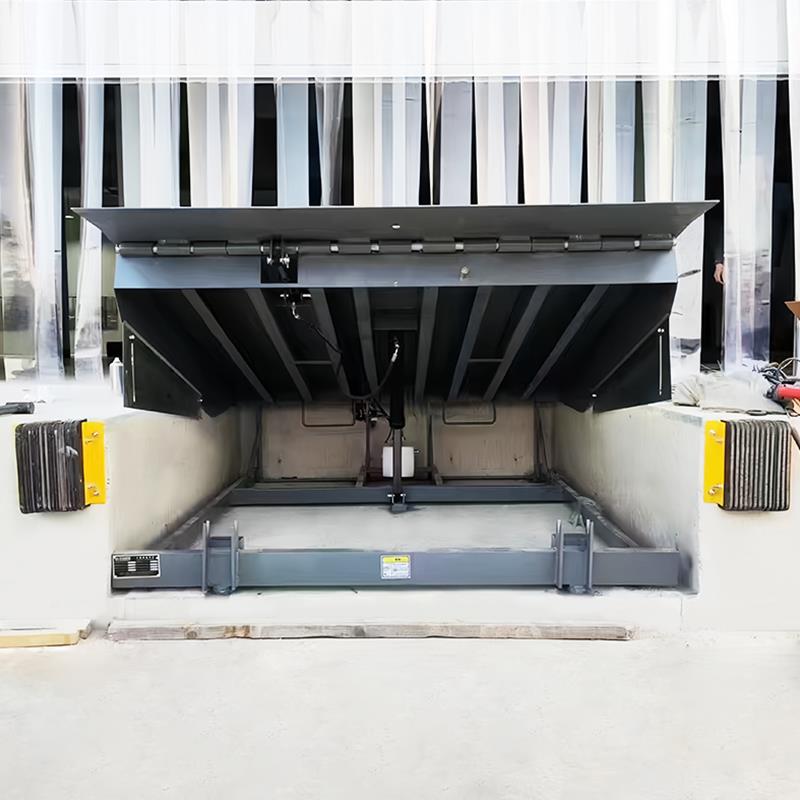
How a Floating Deck Design Reduces Wear on Hydraulic Dock Levelers


(MENAFN- Global Industrial Parts Inc.) Anyone who has watched a fully loaded forklift drive across a loading dock plate onto an uneven trailer bed has probably noticed a small but noticeable jolt at the transition point. That jolt isn't just uncomfortable for the operator — over thousands of repetitions, it's also one of the leading causes of premature wear on dock equipment. This is the exact problem that a hydraulic dock leveler floating deck design is engineered to solve.
Why Trailer Beds Are Rarely Perfectly Level
It's easy to assume that a truck backed up to a dock creates a flat, even surface for a leveler to bridge. In reality, trailer beds shift constantly due to uneven cargo weight distribution, tire pressure differences, suspension settling, and the sheer variability of how loads are packed. A trailer loaded heavier on one side will often sit at a slight angle relative to the dock, even when properly positioned.
A rigid, non-flexing platform has no way to accommodate this variation. It either forces the trailer bed to conform to the leveler's fixed angle (which it can't), or it creates a small but repeated impact every time a wheel crosses the transition point between the leveler and the trailer.
What "Floating" Actually Means in This Context
A dock leveler flex design allows the platform itself to move slightly under load, rather than remaining perfectly rigid. In hydraulic systems, this is typically achieved by allowing the deck to flex downward by a small margin — often just a few inches — under the weight of a forklift, before returning to its resting position once the load passes.
This flexing isn't a flaw or a sign of weak construction — it's an intentional engineering feature. By allowing controlled movement rather than resisting it entirely, the platform absorbs some of the shock that would otherwise be transferred directly into the structural frame, the hydraulic cylinder, and the forklift itself.
The Mechanical Benefits of Reducing Impact Stress
Repeated impact loading is one of the most damaging forces a piece of industrial equipment can experience, precisely because the damage accumulates gradually and isn't always visible until a failure occurs. A floating deck design helps in several specific ways:
Reduced stress on welds and structural joints. Every hard impact sends stress through the platform's welded connections. Over months or years of daily use, repeated stress at the same points can lead to fatigue cracking — a failure mode that's difficult to detect visually until it's advanced.
Lower cylinder wear. Hydraulic cylinders are engineered for controlled, gradual pressure changes. Sudden shock loading — the kind caused by a rigid deck hitting an uneven trailer bed — creates pressure spikes that accelerate seal wear and can eventually lead to leaks or reduced lifting capacity.
Less wear on forklift components. This benefit often gets overlooked, but it's significant. Forklift suspensions, tires, and operator seating all absorb the same shock that a rigid deck would transmit. A dock that reduces impact at the leveler transition also reduces cumulative wear on every forklift that crosses it.
Why This Matters More on High-Traffic Docks
The value of a floating deck design scales directly with usage frequency. A dock that sees a handful of forklift passes per day may never experience enough cumulative stress for the difference to matter much. But on a high-volume dock — the kind where forklifts might cross a single leveler tens of thousands of times per year — even a small reduction in per-pass impact stress compounds into a meaningful difference in equipment lifespan.
This is one of the reasons floating deck designs are particularly relevant when evaluating a hydraulic dock leveler for facilities running multiple shifts or handling consistently high forklift traffic, as opposed to lower-volume operations where a simpler, more rigid design might be sufficient.
How to Evaluate This Feature When Specifying Equipment
Because "floating deck" isn't a single standardized specification, it's worth asking specific questions when comparing equipment:
How much vertical flex does the deck allow, and under what load conditions?
What is the deck's return behavior — does it settle back into position smoothly, or does it require manual reset?
How does the flex mechanism interact with the hydraulic cylinder — is the cylinder isolated from shock loading, or does it absorb the full impact?
These details matter more than a general marketing claim of "shock absorption," since the actual engineering approach can vary significantly between designs.
Maintenance Implications
A floating deck introduces additional moving components compared to a fully rigid platform, which means a few extra maintenance considerations:
Pivot points and flex mechanisms should be inspected periodically for wear, since these are the components doing the work of absorbing impact
Return spring or hydraulic damping components, if present, should be checked to confirm the deck is returning to its resting position correctly rather than settling into a permanently deflected state
Structural inspection should still occur regularly, since flex reduces but does not eliminate cumulative stress entirely
Final Thoughts
A floating deck design addresses a problem that's easy to overlook precisely because its damage is gradual rather than dramatic. By allowing the platform to absorb some of the impact from uneven trailer beds rather than transferring it directly into the structure, cylinders, and forklifts that use it, this design approach extends equipment life in ways that become increasingly valuable as dock traffic increases.
Beauway has been specializing in the field of logistics loading and unloading equipment for many years, with a full product range covering tail lifts, dock levelers, and lifting platforms. For a customized solution tailored to your specific site conditions, you are welcome to schedule a technical consultation.
Why Trailer Beds Are Rarely Perfectly Level
It's easy to assume that a truck backed up to a dock creates a flat, even surface for a leveler to bridge. In reality, trailer beds shift constantly due to uneven cargo weight distribution, tire pressure differences, suspension settling, and the sheer variability of how loads are packed. A trailer loaded heavier on one side will often sit at a slight angle relative to the dock, even when properly positioned.
A rigid, non-flexing platform has no way to accommodate this variation. It either forces the trailer bed to conform to the leveler's fixed angle (which it can't), or it creates a small but repeated impact every time a wheel crosses the transition point between the leveler and the trailer.
What "Floating" Actually Means in This Context
A dock leveler flex design allows the platform itself to move slightly under load, rather than remaining perfectly rigid. In hydraulic systems, this is typically achieved by allowing the deck to flex downward by a small margin — often just a few inches — under the weight of a forklift, before returning to its resting position once the load passes.
This flexing isn't a flaw or a sign of weak construction — it's an intentional engineering feature. By allowing controlled movement rather than resisting it entirely, the platform absorbs some of the shock that would otherwise be transferred directly into the structural frame, the hydraulic cylinder, and the forklift itself.
The Mechanical Benefits of Reducing Impact Stress
Repeated impact loading is one of the most damaging forces a piece of industrial equipment can experience, precisely because the damage accumulates gradually and isn't always visible until a failure occurs. A floating deck design helps in several specific ways:
Reduced stress on welds and structural joints. Every hard impact sends stress through the platform's welded connections. Over months or years of daily use, repeated stress at the same points can lead to fatigue cracking — a failure mode that's difficult to detect visually until it's advanced.
Lower cylinder wear. Hydraulic cylinders are engineered for controlled, gradual pressure changes. Sudden shock loading — the kind caused by a rigid deck hitting an uneven trailer bed — creates pressure spikes that accelerate seal wear and can eventually lead to leaks or reduced lifting capacity.
Less wear on forklift components. This benefit often gets overlooked, but it's significant. Forklift suspensions, tires, and operator seating all absorb the same shock that a rigid deck would transmit. A dock that reduces impact at the leveler transition also reduces cumulative wear on every forklift that crosses it.
Why This Matters More on High-Traffic Docks
The value of a floating deck design scales directly with usage frequency. A dock that sees a handful of forklift passes per day may never experience enough cumulative stress for the difference to matter much. But on a high-volume dock — the kind where forklifts might cross a single leveler tens of thousands of times per year — even a small reduction in per-pass impact stress compounds into a meaningful difference in equipment lifespan.
This is one of the reasons floating deck designs are particularly relevant when evaluating a hydraulic dock leveler for facilities running multiple shifts or handling consistently high forklift traffic, as opposed to lower-volume operations where a simpler, more rigid design might be sufficient.
How to Evaluate This Feature When Specifying Equipment
Because "floating deck" isn't a single standardized specification, it's worth asking specific questions when comparing equipment:
How much vertical flex does the deck allow, and under what load conditions?
What is the deck's return behavior — does it settle back into position smoothly, or does it require manual reset?
How does the flex mechanism interact with the hydraulic cylinder — is the cylinder isolated from shock loading, or does it absorb the full impact?
These details matter more than a general marketing claim of "shock absorption," since the actual engineering approach can vary significantly between designs.
Maintenance Implications
A floating deck introduces additional moving components compared to a fully rigid platform, which means a few extra maintenance considerations:
Pivot points and flex mechanisms should be inspected periodically for wear, since these are the components doing the work of absorbing impact
Return spring or hydraulic damping components, if present, should be checked to confirm the deck is returning to its resting position correctly rather than settling into a permanently deflected state
Structural inspection should still occur regularly, since flex reduces but does not eliminate cumulative stress entirely
Final Thoughts
A floating deck design addresses a problem that's easy to overlook precisely because its damage is gradual rather than dramatic. By allowing the platform to absorb some of the impact from uneven trailer beds rather than transferring it directly into the structure, cylinders, and forklifts that use it, this design approach extends equipment life in ways that become increasingly valuable as dock traffic increases.
Beauway has been specializing in the field of logistics loading and unloading equipment for many years, with a full product range covering tail lifts, dock levelers, and lifting platforms. For a customized solution tailored to your specific site conditions, you are welcome to schedule a technical consultation.
Global Industrial Parts Inc.
Legal Disclaimer:
MENAFN provides the
information “as is” without warranty of any kind. We do not accept
any responsibility or liability for the accuracy, content, images,
videos, licenses, completeness, legality, or reliability of the information
contained in this article. If you have any complaints or copyright
issues related to this article, kindly contact the provider above.


Comments
No comment