

The Double Standard Of Global Gold: Why Disparaging The UAE Ignores Reality


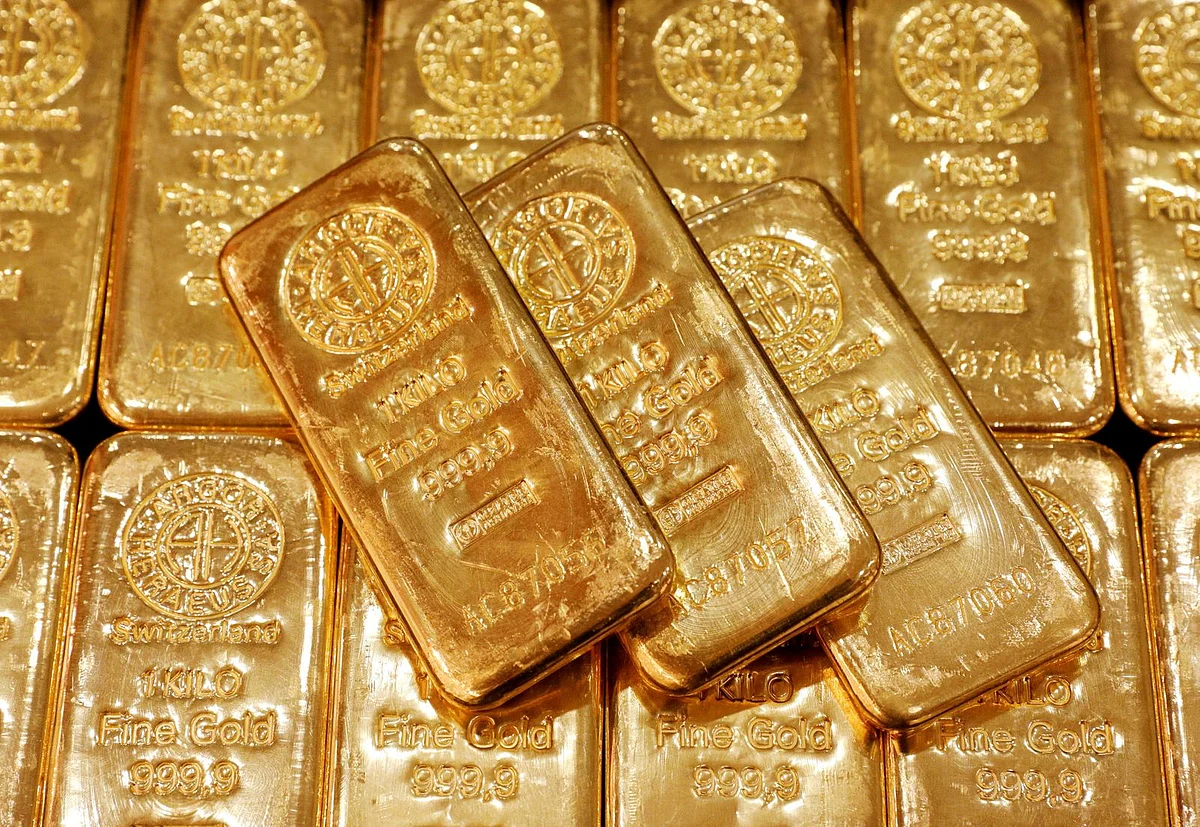
A recent investigative piece by Semafor, echoing superficial claims from outlets such as Swissaid and the Financial Times, levelled serious accusations against the UAE, alleging that the nation procured over $100 million in stolen gold bullion from Sudan's Central Bank. While the humanitarian tragedy in Sudan demands serious global engagement, pointing fingers at the UAE misrepresents international commodity mechanics, relies on basic arithmetic errors, and ignores elementary facts.
Recommended For YouToday's global trade ecosystem no longer accepts a brand of hypocrisy in which wealthy Western institutions dictate terms while remaining blind to their own systemic flaws. Look no further than Washington, where public health officials issued broad mandates around vaccines, only for figures like Dr Anthony Fauci to receive a blanket presidential pardon and plead his Fifth Amendment right 111 times before a US Senate Committee.
If public health and media narratives in developed nations demand such scepticism, why should we accept unvetted, sensationalist reporting on global trade chains funded by Western state bodies such as the Swiss Agency for Development and Cooperation (SDC), Swissaid's largest donor?
Dismantling the logistics and Swissaid methodology
While the FT's investigative piece stated that at least 1.5 tonnes of bullion worth $100 million was stolen, a corroborated witness clearly states that the gold was subsequently transported into neighbouring Chad and South Sudan. The piece goes on to state that“much of the gold” was then loaded onto planes from Juba to the UAE.
Firstly, an elementary verification of facts: according to the average rate of exchange and the bullion spot price in 2023, the total value of the“heist” would be as much as $10 million less than the $100 million claimed. Putting aside the journalistic tendency to“round up”, the completely unaccounted disbursement of the bullion would mean no one knows what went where. Anyone who knows their geography would know that Chad is not only separated from South Sudan by two other African states, but whose border alone is in completely the opposite direction to Juba by over a thousand miles, suggesting multiple beneficiaries.
The two key questions that need to be asked boil down to a simple case of Occam's razor. Why would the UAE risk significant financial sanctions and penalties, challenges the country has worked years towards overcoming, for less than one-tenth of one per cent of its total declared gold imports in 2023, and secondly, if it were culpable, why wouldn't it have bought the full 1.5 tonnes?
While the FT doesn't directly state that the UAE received $100 million, lazy journalists who didn't read the whole story did. Ed Clowes, for example, writing for Semafor, stated clearly that“The UAE received more than $100 million worth of gold bullion”, citing the Financial Times as its source, which makes no such claim.
On the secondary issue of Swissaid's claim that“$30 billion of undeclared artisanal gold” reaches Dubai annually from Africa, it evidently relies on flawed mirror-data analysis. This method measures discrepancies between African countries' declared exports and destination countries' imports, attributing the gap to smuggling, yet 15 gold-producing African countries publish no export data at all. The gap is constructed almost entirely from source-side non-reporting and then blamed on the destination jurisdiction that publishes the most transparent data. Our transparency is, ironically, what gives these organisations a tangible metric on which to do their guesswork.
Engagement over disengagement
The UAE did not become a top-three global bullion destination by accident, but through rigorous regulatory enforcement. Today, we remain the only country to directly incorporate LBMA recommendations into national legislation, backed by UAE Good Delivery standard. Compare our zero-tolerance stance with Western jurisdictions, where Russian gold entered Swiss refineries for years post-2014, and where Swiss prosecutors routinely indict transnational laundering networks.
Transparency is achievable through partnership, investment, and continuous improvement, not simply by publishing another report or article. As such, I extend an open invitation to journalists and researchers from the Financial Times, Semafor, and Swissaid to attend this year's Dubai Precious Metals Conference taking place on 16–17 November. There, they will be able to listen, learn, and engage directly with a broad cross-section of global stakeholders who share the common goal of actively working towards greater efficacy, provenance, and equitable supply chains.

Legal Disclaimer:
MENAFN provides the
information “as is” without warranty of any kind. We do not accept any
responsibility or liability for the accuracy, content, images, videos,
licenses, completeness, legality, or reliability of the information
contained in this article. If you have any complaints or copyright issues
related to this article, kindly contact the provider above.
Comments
No comment