

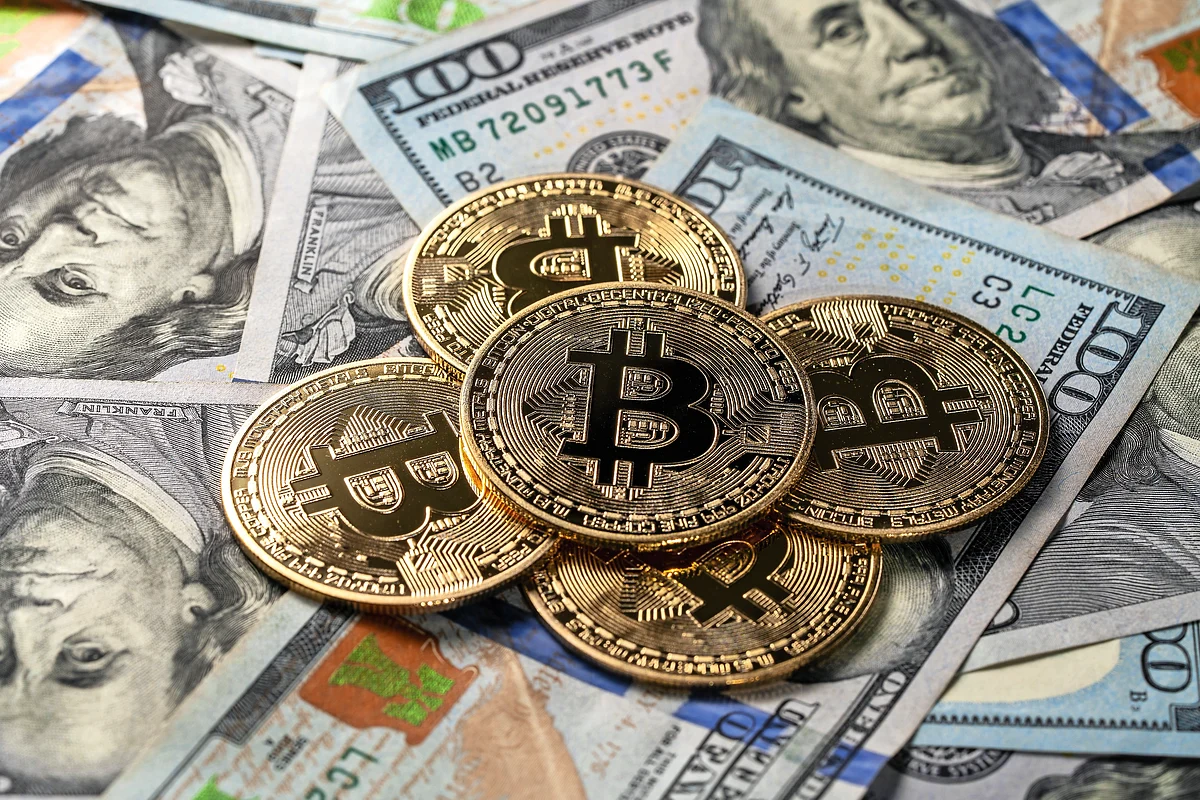
Bitcoin Tops $80,000: What's Next For Crypto's Short-Term Path?


The world's largest cryptocurrency touched $81,237.94 on Tuesday, its highest level since mid-May, before easing to around $79,276 by evening in the UAE. A softer US dollar and Treasury Secretary Scott Bessent's efforts to ease pressure in the bond market helped reignite buying across crypto markets.
Recommended For YouBitcoin has now gained 28 per cent in August alone, its strongest monthly performance since November 2024, with the advance gathering pace after President Trump urged Congress to pass legislation clarifying crypto regulation.
Stay up to date with the latest news. Follow KT on WhatsApp Channels.
Short squeeze meets real demand
Alice Liu, Head of Research at CoinMarketCap, offered the most detailed read on what's actually driving the move. She noted that leveraged positioning was not the root cause: open interest stands at just 1.2 per cent of Bitcoin's market cap, modest by breakout standards. Instead, she pointed to ETFs absorbing close to $2 billion over six consecutive days of inflows and another $944 million in spot buying, which she said“walked straight into stale short positions.” As she put it,“the shorts didn't cause the move, they were the fuel it burned on the way through $80,000.”
Liu flagged a key technical marker: a daily close above $80,000 on strong volume would confirm the breakout, with support around $76,000. She also highlighted a rising correlation between Bitcoin and gold - now at +0.46, the highest since 2021 - suggesting Bitcoin is“trading like gold, not like tech stocks.” Her near-term view hinges on Wednesday's inflation print and the Jackson Hole speech: if ETF inflows continue through both events, she expects dips into the high-$70,000s to attract buyers rather than trigger deeper selling.
Vijay Valecha, Chief Investment Officer at Century Financial, struck a more cautious note. He attributed the 27 per cent two-week surge to a mix of Bessent's bond-buyback plan and roughly $7.2 billion in forced liquidations of bearish bets. Institutional flows are only just re-engaging, he said, with Bitcoin ETFs logging their strongest weekly inflow in 10 months. Still, he cautioned that“a single strong week during a squeeze can reflect momentum-chasing as much as durable, strategic allocation,” adding that sustained gains will require continued regulatory progress and institutional buying.
Ryan Lee, Chief Analyst at Bitget Research, framed the rally as a test of whether spot demand can replace the short squeeze as the primary driver. He pointed to $517 million in ETF inflows on August 19 - the strongest single day since early May - following a summer in which Bitcoin traded below $64,000 and perpetual activity hit a three-year low. Lee expects Bitcoin to trade broadly between $74,000 and $81,000 in the near term, saying“a pullback towards 75,000–76,000 would be consistent with profit-taking” once forced liquidations have cleared. A sustained break above $80,000 backed by continued ETF inflows, he added, could open the door to the $82,000–$87,000 range.
Raj Kamal, Founder and CEO of TransFi, linked the rally to broader liquidity conditions, arguing that the Fed's bond buyback plans could expand liquidity across digital asset markets. He said the more significant story may be its knock-on effect for payments: deeper liquidity and market-making capacity could compress spreads in stablecoin and local-currency markets, making“much larger cross-border flows become economically viable” for businesses moving money into Asia, Africa and Latin America.
For now, traders appear focused less on how Bitcoin got to $80,000 and more on whether it can stay there once this week's macro data lands.
Risks to the rally
Analysts caution that the path higher is unlikely to be smooth. Even with ETF inflows running at their strongest pace in months, Bitcoin remains well below its all-time high of roughly $126,000, and the memory of a summer spent trading under $64,000 is still fresh. Valecha's point about distinguishing momentum-chasing from durable allocation is echoed across the market: much of the recent move has been amplified by the unwind of bearish positioning, and that fuel source is finite. Once forced liquidations are largely cleared, as Lee noted, the rally will need genuine spot demand to keep pushing higher rather than simply holding its gains.
The regulatory backdrop adds another layer of uncertainty. The Clarity Act, the market-structure bill championed by President Trump, failed to reach a vote before Congress's August recess and is not expected to be revisited until mid-September at the earliest. Any delay or setback on that front could remove one of the bullish narratives currently supporting sentiment.
With inflation data due Wednesday and Federal Reserve Chair Jerome Powell's Jackson Hole address to follow, both events carry the potential to move the dollar and Treasury yields sharply - and with them, Bitcoin's next leg. Traders will be watching closely for signs of whether this month's rally has staying power heading into September.
ALSO READ- Bitcoin slumps to $58,000 as Citi slashes forecast Bitcoin tests $80,000 breakout as ETF inflows surge

Legal Disclaimer:
MENAFN provides the
information “as is” without warranty of any kind. We do not accept any
responsibility or liability for the accuracy, content, images, videos,
licenses, completeness, legality, or reliability of the information
contained in this article. If you have any complaints or copyright issues
related to this article, kindly contact the provider above.
Comments
No comment