

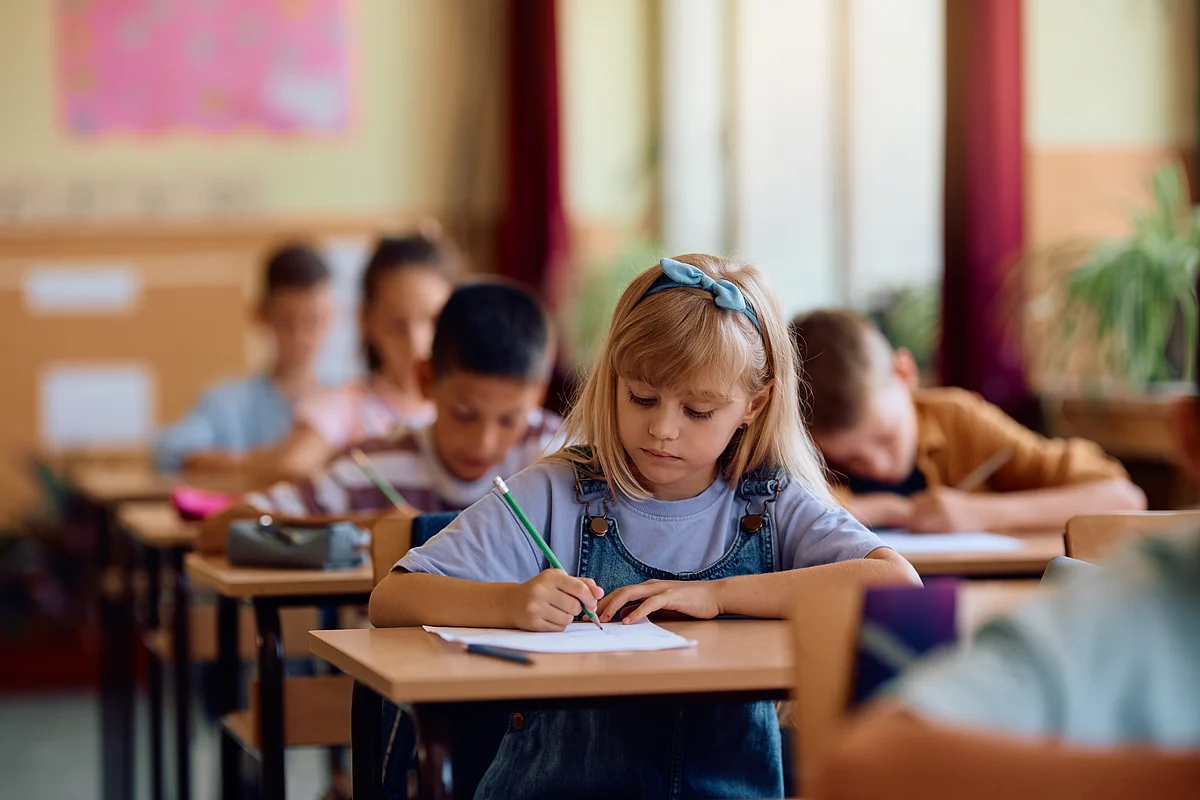
What's Changing In UAE Schools In 2026-27? All New Rules And Policies Explained


The Ministry has also opened 11 new schools and educational complexes, deployed 5,810 school buses, and distributed eight million textbooks ahead of the new term with a total of 26,700 new students have been registered in public schools.
Recommended For YouEducation Minister Sarah Al Amiri said preparations were not limited to school buildings, buses and textbooks, but were also focused on building a more flexible, efficient education system rooted in national identity and able to keep pace with developments in science and technology.
Stay up to date with the latest news. Follow KT on WhatsApp Channels.
Here is what is changing for students, teachers and parents.
National Education Charter moves into school lifeThe Ministry is activating the National Education Charter as a unified national vision for education. The Charter, launched by President Sheikh Mohamed bin Zayed Al Nahyan and the UAE rulers, outlines the qualities, values and future competencies that the education system aims to develop in students.
For the new academic year, the Ministry will roll out a back-to-school campaign under the theme“Guided by the Charter, Building Tomorrow”. The campaign is designed to bring the Charter's principles into daily school life and strengthen the partnership between schools, families and the wider community.
The Ministry said implementation will follow six pathways including linking Charter principles to educational outcomes,empowering teachers to apply them,embedding them into daily practice,using classroom and extracurricular activities to reinforce them,aligning the student code of conduct,and engaging families in supporting their application.
No traditional homework for Kindergarten to Grade 2Traditional homework will be removed for pupils from Kindergarten through Grade 2. The Ministry said the decision reflects the developmental needs of young children and is intended to make better use of classroom learning while restoring a healthier balance between school and family life.
Instead of routine assignments, families will be encouraged to support daily reading at home. The Ministry said this will help cultivate early literacy, strengthen language and cognitive development, and nurture children's curiosity and enjoyment of learning without turning homework into a burden.
Arabic language assessment expands to all Grade 1 pupilsThe Ministry will launch the second phase of its Arabic language skills assessment, following a pilot conducted in 100 public and private schools last year.
The next phase will cover all 19,000 Grade 1 students in 162 public schools and 11,000 Grade 1 students in 130 private schools.
The programme is intended to identify pupils' Arabic-language skills early, create a clear baseline and give schools the information needed to provide support from the beginning of a child's educational journey.
The Ministry described Arabic as a key national and educational priority and said it will continue working to deepen students' command of the language.
Digital tools will be regulated for Grade 6 public-school studentsThe Ministry is expanding its 'Regulating the Use of Digital Tools in Education' project to all Grade 6 students in public schools.
The move follows a study conducted during the previous academic year involving 2,500 students across nine public schools. The study compared two groups to assess the impact of regulating the use of digital tools in education.
According to preliminary findings, non-digital classrooms showed a clear improvement in academic performance, particularly in mathematics, science and Arabic. The study also recorded better student behaviour and stronger classroom focus.
The Ministry said the policy is designed to strike a considered balance between technology and the reinforcement of fundamental skills.
Digital tools will remain part of education, but their use will be guided by educational standards intended to support academic achievement, critical thinking, cognitive development, interaction and discipline.
New assessment approach for Cycle 3 studentsAssessment weighting for Group A subjects in Cycle 3 will move to a 50:50 split between school-based assessments and central assessments. The Ministry said the new balance is intended to reflect a student's actual performance over the year while maintaining a unified national framework.
Teachers and school teams will also conduct diagnostic assessments to identify learning gaps early. Schools will use the results to support lesson planning and provide targeted assistance to students, including interventions and reading plans based on individual needs.
Project-based learning expands nationwideThe Ministry is expanding its Project-Based Learning and Assessment initiative to more than 129,000 students across 366 schools nationwide.
A new integrated project for Grade 7 students will bring together Arabic, English, mathematics and science in a single task. The approach is intended to help students see the links between subjects, connect knowledge with practical application and develop future-focused skills.
The Ministry said the programme will also give teachers more varied and practical tools for assessing students' learning and skills.
Public, Ministry-licensed private schools to be evaluatedThe Ministry will launch a programme to evaluate all public schools and private schools licensed by the Ministry over the next two academic years, beginning in the first semester of 2026–27.
The evaluation will measure institutional and educational performance against approved national standards, identify strengths and areas for improvement, and enable schools to prepare and implement sustainable development plans aimed at raising the quality of education and improving learning outcomes.
Teacher and school-leader training expansionMore than 24,000 teachers, school leaders and specialists will take part in a Specialised Training Week, featuring more than 80 training programmes and workshops. A dedicated programme will also support more than 1,700 school leaders.
The wider professional-development package includes the National AI Capacity-Building Programme, developed with Hamdan Bin Mohammed Smart University, the Promising School Leaders Project,the Afaq programme with the Emirates College for Advanced Education,the Comprehensive Capacity-Building Programme for Educational Leaders,the Professional Fellowship Programme,and the Certified Internal Trainers Programme.
The Ministry said these initiatives reflect its view that investment in teachers and school leaders is an investment in the future of the national education system.
ALSO READ- UAE to cancel homework for KG to Grade 2 students in public schools UAE schools to limit device use in core subjects under new classroom policy UAE schools to welcome more than 1 million students this year

Legal Disclaimer:
MENAFN provides the
information “as is” without warranty of any kind. We do not accept any
responsibility or liability for the accuracy, content, images, videos,
licenses, completeness, legality, or reliability of the information
contained in this article. If you have any complaints or copyright issues
related to this article, kindly contact the provider above.
Comments
No comment