

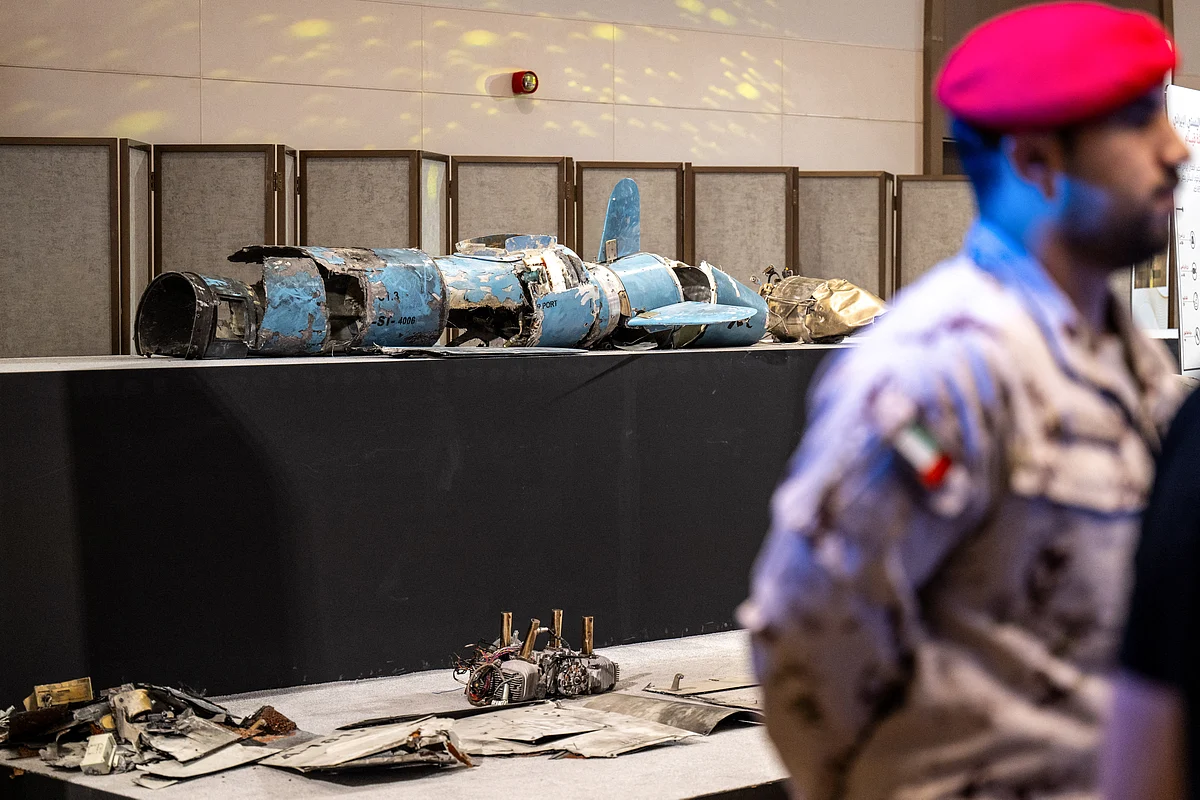
Iran Attacks 6 Months On: 'Promises Offer No Protection When Missiles Are In The Air'


It has been six months since Iran first attacked the UAE and other Gulf countries, a period that has fundamentally damaged the“good faith” underpinning relations with Tehran, a senior UAE diplomat has said.
Recommended For You“The unprovoked strikes against our nation created a severe crisis of confidence that will shape regional dynamics for decades to come. When a country is forced to intercept thousands of missiles and drones, verbal assurances lose their strategic value,” Dr Mohammed Ibrahim Al Dhaheri, Deputy Director-General of the Anwar Gargash Diplomatic Academy (AGDA), told Khaleej Times in an interview.
Despite the deterioration in trust, Al Dhaheri said diplomatic channels never completely closed during the crisis.
Stay up to date with the latest news. Follow KT on WhatsApp Channels.
Oman and Qatar continued efforts to keep communication open, while the UAE's own working channels remained active even during some of the most difficult periods. He said those channels were used to coordinate closely with Saudi Arabia and Qatar in May in an effort to prevent a“wider regional conflagration”.
'Informal promises offer no protection'One of the central diplomatic lessons from the past six months, according to Al Dhaheri, is that future security arrangements cannot depend on informal assurances.
“Once the fundamental assumption of good faith is lost, regional policy cannot be built on good intentions alone. The past six months have taught us a very harsh lesson. Informal promises offer no protection when missiles are in the air. Any lasting security framework must therefore anchor commitments in hard, enforceable and audited standards,” he said.
He described freedom of navigation through the Strait of Hormuz as“entirely non-negotiable”.
“Real accountability begins with one of the most critical issues facing us today, the Strait of Hormuz,” he said.
The Strait belongs to international trade, and no single state has the right to turn it into a political bargaining chip or position itself as its gatekeeper.Dr Mohammed Ibrahim Al Dhaheri, Deputy Director-General Of The Anwar Gargash Diplomatic Academy
Al Dhaheri said the UAE's position on open sea lanes went hand in hand with its commitment to regional stability.
“That commitment to de-escalation reflects strategic discipline and should never be mistaken for weakness. The UAE retains complete sovereign authority to defend its territory under Article 51 of the UN Charter, alongside clear rights under international law regarding damage to our civilian infrastructure.”
Gulf states must have a seat at negotiating tableAl Dhaheri said any future attempt to create a durable regional settlement with Iran would require Gulf states to be directly represented.
He argued that no single diplomatic track would be sufficient.
Bilateral channels would remain necessary for issues such as trade, border management and immediate security concerns, while the GCC would provide a collective regional position.
“Direct GCC representation in any regional security negotiation therefore remains an essential requirement,” Al Dhaheri said.
He said experience had demonstrated the risks of negotiating individual issues in isolation.
“Any viable and lasting framework must address nuclear capabilities, ballistic missiles, long-range drones, proxy networks and maritime security simultaneously,” he said.“Progress in one area cannot substitute for accountability in another if we are to achieve the security this region requires.”
Dialogue cannot be progress in itselfAl Dhaheri also called for a more results-driven approach to diplomacy with Iran, citing a recent observation by Dr Anwar Gargash, UAE diplomat and advisor to the President, that“the region cannot remain trapped in a perpetual state of neither war nor peace, where endless talks simply provide time for tactical manoeuvring”.
“Dialogue serves a purpose only when it produces measurable compliance,” Al Dhaheri said.“The mistake of the past was to treat the existence of dialogue as progress in itself, or to offer political relief in exchange for temporary pauses in hostility.”
That does not mean cutting communication, he added. Keeping channels open remains necessary to reduce the risk of miscalculation during a crisis.
But a substantive diplomatic reset would require Iran to take concrete steps first, he said, including ending attacks on commercial shipping, halting direct and proxy strikes against neighbouring states, restoring unrestricted maritime movement and accepting binding, independently audited security arrangements.
“These baseline actions are necessary to ensure that diplomatic engagement leads to genuine, long-term stability rather than another predictable cycle of escalation,” he said.
ALSO READ- UAE's Gargash says Iran war 'moving into new phase' after US announces new sanctions US to impose new Iran sanctions on tech, gold, aviation, shipping US will impose 'toughest sanctions in history' on Iran, Bessent says

Legal Disclaimer:
MENAFN provides the
information “as is” without warranty of any kind. We do not accept any
responsibility or liability for the accuracy, content, images, videos,
licenses, completeness, legality, or reliability of the information
contained in this article. If you have any complaints or copyright issues
related to this article, kindly contact the provider above.
Comments
No comment