

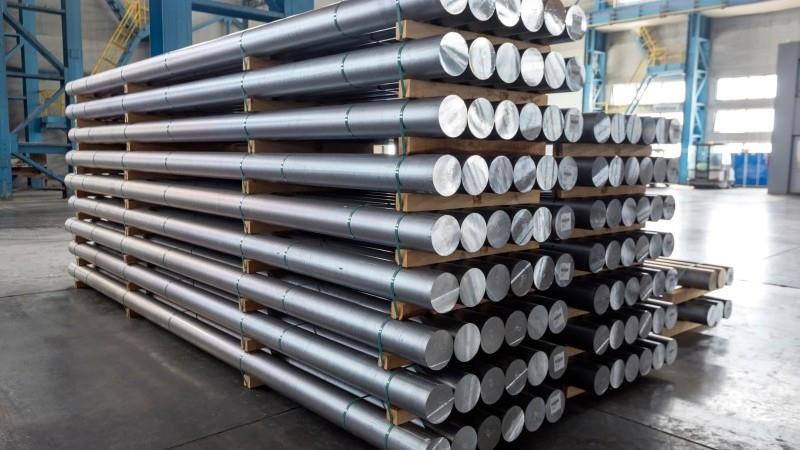
Trump Wants To Bring Aluminium Home, But It Won't Be Easy


Trump's comments came after US-Canada trade talks collapsed. The two countries had been close to a deal that could have cut the tariff on Canadian aluminium from 50% to 25%.
The US does not produce enough aluminium to meet domestic demand and relies on Canada for much of its supply. New capacity will take years to build. Until then, US manufacturers will continue to need Canadian aluminium – and pay the tariff on it.
Canada dominates US aluminium imports Source: US Customs, ING Research"> Tariffs lift US aluminium costs
The 50% tariff has pushed the Midwest premium to record levels. US consumers pay this on top of the London Metal Exchange price.
Higher premiums support domestic producer margins. They also increase costs for manufacturers that rely on imported aluminium.
Tariffs push the Midwest premium to record highs Source: Platts, ING Research">The US currently produces around 750,000 tonnes of primary aluminium a year, while imports meet around 85% of domestic needs. Restarts and expansions could narrow the gap, but new capacity takes years to permit, finance, build and ramp up. Until then, the US will continue to rely on higher-cost imports.
The administration has introduced some flexibility. Companies with approved investment plans will be eligible to import an amount of primary aluminium linked to their expected US output at half the standard tariff rate.
New capacity needs powerThe proposed $4 billion aluminium smelter in Inola, Oklahoma, will test the US strategy.
The joint venture between Emirates Global Aluminium and Century Aluminium is expected to produce 750,000 tonnes of primary aluminium a year. This would roughly double current US output and make it the first new primary smelter built in the country in almost 50 years.
Power will be central to the project's economics. Electricity can account for 30-40% of primary aluminium production costs, while smelters need a continuous supply.
Inola is expected to require around 1.2 gigawatts of electricity, roughly equivalent to the consumption of 900,000 US homes. The local utility says new generation would meet this demand without burdening existing customers, but a power agreement has not been finalised and will require regulatory approval. The project has also faced local opposition over emissions, land use and electricity costs.
Aluminium competes with data centresCentury sold its idled Hawesville smelter in Kentucky to data centre developer TeraWulf earlier this year. The smelter had been idled since 2022 because of high power costs. The site, which has access to 480MW of power, will now be used for AI and high-performance computing.
Data centres use aluminium in power cables, cooling systems, server racks and buildings. But they also compete with smelters for electricity. The data-centre boom could increase US aluminium demand but make the metal harder to produce at home.
US aluminium capacity has fallen Source: USGS, ING Research"> US will continue to rely on CanadaCanada's smelters have access to hydropower, allowing them to produce aluminium at a competitive cost and with a lower carbon footprint than many global producers.
The US cannot replicate this capacity quickly. Even if Inola proceeds as planned, the country will still need imports to meet demand.
Failed trade talks mean Canadian aluminium will remain subject to the 50% tariff, keeping the costs high for US manufacturers.
If the goal is to reduce US reliance on imports, tariffs are only part of the answer. The US also needs affordable power, infrastructure, long-term investment and policy certainty. Greater recycling could reduce import requirements, although secondary aluminium cannot replace primary metal in every application.
Until that capacity is built, manufacturers will continue to rely on Canadian aluminium and pay more for it.
Bringing aluminium home is possible. But tariffs alone will not do it.

Legal Disclaimer:
MENAFN provides the
information “as is” without warranty of any kind. We do not accept any
responsibility or liability for the accuracy, content, images, videos,
licenses, completeness, legality, or reliability of the information
contained in this article. If you have any complaints or copyright issues
related to this article, kindly contact the provider above.
Comments
No comment