

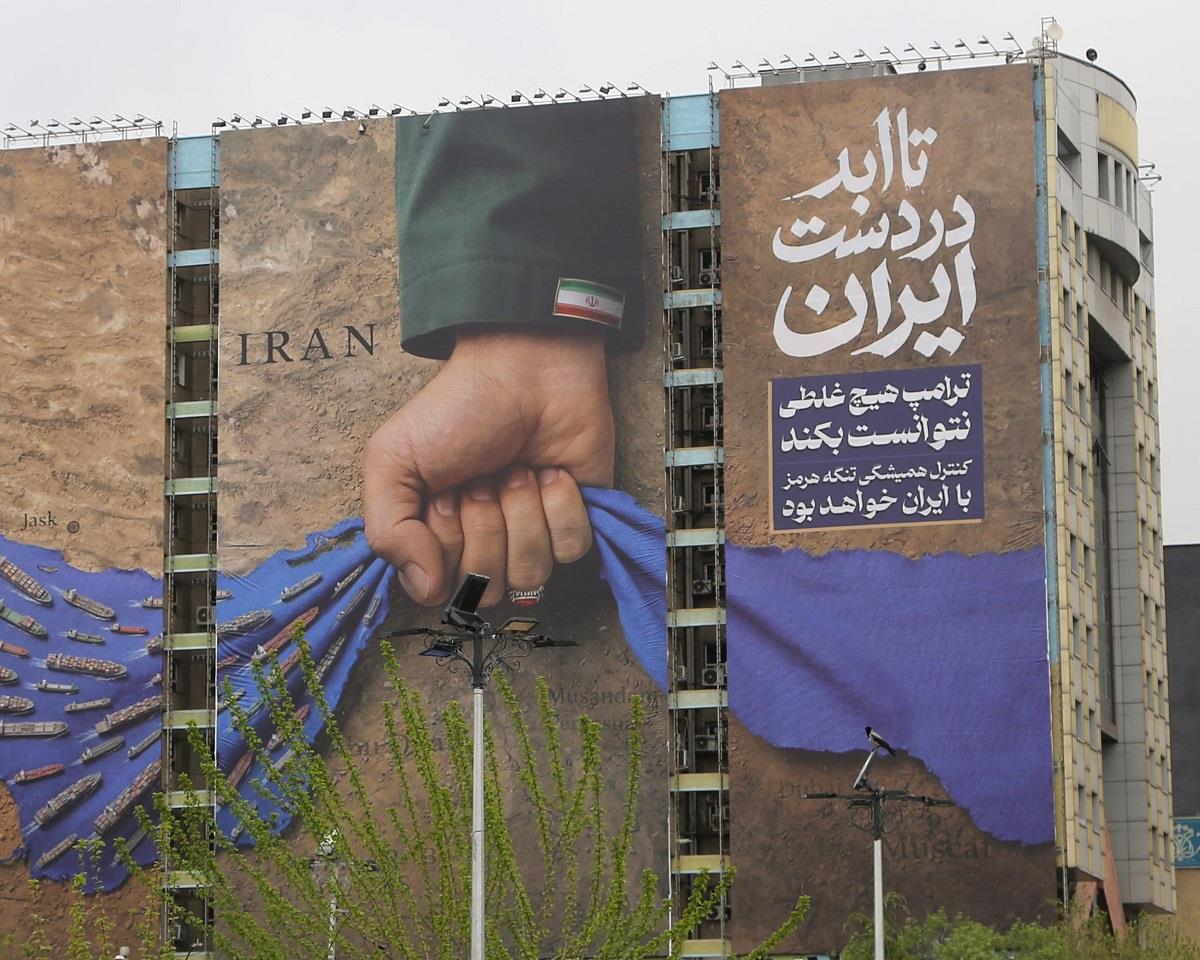
Hormuz Won't Reopen Unless US Accepts All Conditions: Iran


Islamic Revolutionary Guard Corps spokesman Brigadier General Hossein Mohebbi said Iran was prepared to reopen the strait within the framework of the agreement if Washington stopped what Tehran described as interference and fulfilled its commitments.
ADVERTISEMENT“If the United States stops obstructing and returns to the agreement, we can open the Strait of Hormuz within the framework of the agreement reached,” Mohebbi said, according to Iranian state media.
“If the United States does not accept our conditions, the Strait of Hormuz will not be opened under any circumstances.”
ADVERTISEMENTThe warning came a day after Iranian and Omani officials announced an understanding on a temporary shipping route through the strait but stressed that the arrangement did not amount to a reopening of the waterway.
The Strait of Hormuz, which separates Iran and Oman and connects the Persian Gulf with the Gulf of Oman, is one of the world's most important energy chokepoints. Before the war, more than one-fifth of global oil and liquefied natural gas shipments passed through it. Most commercial traffic has been disrupted since the conflict began in February.
Iran sets conditionsIranian Deputy Foreign Minister Kazem Gharibabadi said Tehran's conditions went beyond the lifting of the US naval blockade.
He said Washington must fulfil its commitments under the Islamabad MoU, including ending the economic blockade, bringing a lasting halt to military operations and refraining from further threats or attacks against Iran.
Tehran also wants the United States to address the status of the blockade affecting Yemen and provide assurances against further military action, Gharibabadi said in a televised interview.
Iran has repeatedly accused Washington of violating the June understanding and says the US failure to implement its commitments was responsible for the subsequent collapse of the agreement.
The MoU, signed in Islamabad in June with mediation by Pakistan and support from regional partners, was intended to halt hostilities and establish a framework for broader US-Iran negotiations. It included provisions concerning the Strait of Hormuz, sanctions and the lifting of wartime restrictions.
Washington and Tehran have since disagreed over the implementation of the accord, with Iran insisting that the United States must first fulfil its obligations before the strait can fully reopen.
New route, but no reopeningIran and Oman have meanwhile been negotiating for weeks over how shipping should be managed through the strait.
Gharibabadi said the two sides had agreed in principle on a temporary route about seven nautical miles wide. Commercial vessels entering the Persian Gulf from the Gulf of Oman would travel through Iranian territorial waters, while part of the outbound route would pass through Omani waters.
He stressed, however, that the arrangement was temporary and did not mean the Strait of Hormuz had been reopened.
Iran and Oman are expected to hold further negotiations over a permanent maritime traffic system within 30 to 60 days.
The proposed framework would also exclude military vessels from the route.
“No military vessel will be permitted to transit the Strait of Hormuz,” Gharibabadi said, adding that the arrangement applied to commercial shipping.
Omani Foreign Minister Badr Albusaidi said Tuesday that he was hopeful the two countries would soon announce a temporary corridor and practical arrangements to restore safe navigation, with longer-term management of the waterway to be addressed later.
But a senior Iranian source told Reuters on Wednesday that a final agreement between Tehran and Muscat had not yet been reached, indicating that negotiations over control and revenue-sharing were still continuing.
Iran asserts controlGen Mohebbi said Iran had been negotiating with Oman for about a month and that the two sides had reached understandings concerning their respective shares of the waterway and revenues generated from maritime traffic.
He said the Strait remained under Iranian control and claimed that hostile military vessels had withdrawn at least 400 kilometres from the waterway.
“No vessel is capable of transiting this waterway without Iran's permission and management,” he said.
Iran has also introduced new regulations for commercial vessels, requiring them to register with Iranian authorities, obtain transit permits and follow routes designated by Tehran.
The measures reflect Iran's determination to retain a central role in controlling traffic through the strait even as it negotiates with Oman over a longer-term maritime arrangement.
Washington under pressure to respondThe latest developments place Hormuz at the centre of a broader diplomatic confrontation between Washington and Tehran.
Read Also Hormuz for Sanctions Relief: Munir Carries US Offer to Tehran Pakistan Army Chief Asim Munir Meets Iran Interior MinisterThe United States has imposed a naval blockade around Iranian ports and intensified economic sanctions, while Iran has used its ability to restrict shipping through the strait as a key source of leverage.
US President Donald Trump has also warned Oman against obstructing Washington's efforts, raising tensions around the emerging Iran-Oman framework.
The dispute has also complicated efforts by Pakistan to revive the June understanding.
Pakistan's army chief, Field Marshal Asim Munir, travelled to Tehran earlier this week in an attempt to help break the diplomatic deadlock. Iranian officials have since reiterated that any reopening of Hormuz remains tied to Washington's compliance with the terms of the MoU.
For global energy markets, the stakes are high. The Strait is the main maritime gateway for oil and gas exports from Gulf producers, and prolonged disruption has already forced shipping companies and governments to seek alternative routes and supplies.
For Tehran, however, reopening the waterway is now inseparable from the wider conflict.
Iran says it will not surrender control of the Strait merely in exchange for the lifting of the US blockade. Instead, it is demanding a broader settlement that includes an end to hostilities, relief from economic pressure and guarantees against renewed military action.
Until then, the world's crucial energy artery remains at the centre of the US-Iran standoff - with Tehran insisting that the key to reopening it lies in Washington's hands.

Legal Disclaimer:
MENAFN provides the
information “as is” without warranty of any kind. We do not accept any
responsibility or liability for the accuracy, content, images, videos,
licenses, completeness, legality, or reliability of the information
contained in this article. If you have any complaints or copyright issues
related to this article, kindly contact the provider above.
Comments
No comment