

Nepal Flash Flood Raises Concern In Bihar As Gandak Level Comes Under Watch


The Nepal flood occurred around 9 a.m. on Wednesday, causing extensive damage in areas including Timure, Syaphrubesi and Rasuwagadhi. Roads, bridges and other infrastructure were washed away, while a large number of people were reported missing.
Nepali authorities said the sudden surge originated in Tibet, with preliminary assessments suggesting that an obstruction caused by glacial debris may have given way suddenly.
According to an official, the river route can be broadly traced as the Tibet, Bhote Koshi, Trishuli, Narayani, Gandak, and Ganga Rivers.
"The development has prompted increased monitoring of the Gandak River in Bihar. However, the occurrence of flooding in Nepal does not automatically mean that Bihar will face immediate flooding. The impact will depend on the volume of water moving downstream, rainfall, contributions from other rivers and the manner in which barrages regulate the flow," an official said.
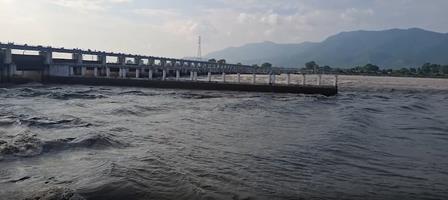
The Gandak enters Bihar through Valmikinagar in West Champaran, making the Valmikinagar Barrage particularly important in regulating the river's flow.
The official further said that the districts requiring close monitoring include West Champaran, as the areas around Valmikinagar and the Gandak basin could face increased pressure if water levels rise.
In East Champaran, low-lying and riverside areas may face greater risks of flooding and erosion.
The Gopalganj district, which is adjoining the West and East Champaran, could face a flood threat due to a sudden increase in Gandak water discharge.
The low-lying areas connected to the Gandak system require monitoring in the Siwan district, as it is adjoining the Gopalganj district.
The official further highlighted that the western parts of the Muzaffarpur district could experience increased waterlogging or erosion if the river rises substantially.
The Gandak River passes through the Saran district before reaching the Ganga, making monitoring around Chhapra important.
The Gandak ultimately joins the Ganga near the Sonepur-Hajipur region in Saran and Vaishali districts, respectively, placing riverside areas under watch.
"As the flood wave moves through the river system, its intensity may change because of distance, river capacity, additional inflows and other hydrological factors," he said.
"The Valmikinagar Gandak Barrage, therefore, remains a critical point for monitoring and regulating the flow entering Bihar. For now, it would be premature to describe the Nepal flash flood as an immediate flood threat to Bihar," he further said.
However, given the direct river connection, authorities are maintaining heightened vigilance, particularly along the Gandak's banks and in vulnerable low-lying areas.

Legal Disclaimer:
MENAFN provides the
information “as is” without warranty of any kind. We do not accept any
responsibility or liability for the accuracy, content, images, videos,
licenses, completeness, legality, or reliability of the information
contained in this article. If you have any complaints or copyright issues
related to this article, kindly contact the provider above.
Comments
No comment