

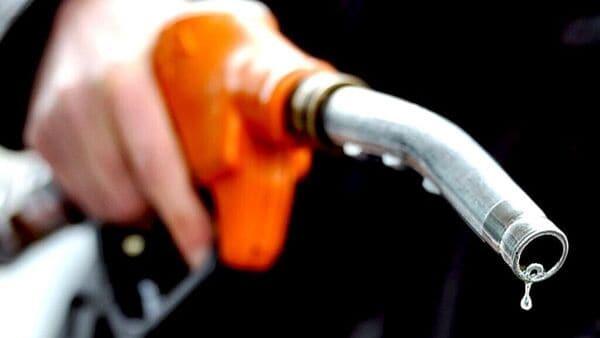
E20 Mileage Woes? E10 Petrol Could Make A Comeback Through High-Octane Variants: What We Know So Far


Sources told Mint that the Union Petroleum Ministry is discussing the matter with state-run oil marketing companies (OMCs ) - Indian Oil, Bharat Petroleum and Hindustan Petroleum.
This significant move comes at a time when consumers are voicing concerns about the negative impact of E20 petrol on older engines and mileage, despite the government's assurances. Over the past few months, the calls to bring back E10 petrol, considered more suitable for older vehicles, have also grown.
Also Read | E20 fuel debate: CEA Nageswaran dismisses concerns over engine damage Can E10 make a comeback?E10 is expected to make a comeback soon; however, it is unclear whether it will return as an expensive premium petrol or as regular petrol, three people familiar with the matter told Rituraj Baruah and Dhirendra Kumar from Mint.
“Options are being looked at in order to offer the more appropriate E10 fuel for older vehicles and allay the consumer concerns,” a source said.“Octane 95, which comes at a premium, is among the options being considered to be offered as E10.”
Another source said the government and OMCs are also assessing the viability of demand and customer acceptability for Octane 95 as E10, which would be a premium E10.“So, it is being looked at if a regular, cheaper E10 would be more acceptable or an expensive, premium E10,” the source added.
The talks are in the initial stages, and a final decision is yet to be taken, they added.
What did Nitin Gadkari tell Parliament about E20?Road Transport and Highways Minister Nitin Gadkari told the Parliament that E20 petrol can reduce the fuel economy by 2% to 6%, depending on the vehicle category and vintage. However, he argued that tests for engine durability on a dynamometer and on-road vehicle tests have not shown any failures due to E20.
In a written reply to the Lok Sabha, Gadkari said E20 fuel provides better acceleration, improved ride quality and approximately 30% lower carbon emissions compared to E10 fuel.
"The fuel efficiency of vehicles may be reduced by 2 to 6 per cent depending on the vehicle category and vintage. The tests for engine durability on a dynamometer and vehicle tests on road have not shown any failures due to E20," the minister said.
Also Read | Consumers queue up for premium petrol as E20 concerns refuse to die down What are high octane variants, and how much do they cost?Octane 95, or 'branded' petrol-such as Indian Oil's XP95, BPCL's SPEED, and HPCL's power95-is priced at ₹110-115 per litre, compared to ₹102 per litre for regular petrol in Delhi.
However, due to growing consumer concerns over the impact of standard E20 fuel on vehicles, Octane 95 now accounts for roughly 15% of total petrol sales by OMCs, up from just 4% in March, Mint reported.
Currently, Octane 95 contains the same E20 blend as regular petrol but includes special chemical additives designed to clean engine parts, improve combustion, prevent rust, and enhance overall performance. It is available at 90,000 public-sector fuel pumps.
For luxury vehicles, there is the premium Octane 100 variant, which costs around ₹150-170 per litre. Unlike the other variants, it contains no ethanol and features a higher concentration of additives.
Despite the shift toward branded fuels, their premium pricing highlights the need for a more affordable, lower-ethanol alternative for consumers driving older vehicles.
Is reinstating E10 practical?Fuel retailers suggest that offering E10 through the existing Octane 95 petrol variant is a straightforward solution.
“Providing '95 Octane' branded fuels with 10% ethanol is quite easy for OMCs. No need to change tanks or delivery units,” said Monty Sehgal, national spokesperson for the Federation of All India Petroleum Traders.
Reintroducing E10 as a standalone fuel would demand substantial infrastructure investments from oil marketing companies (OMCs), noted Prabhat Kumar Singh, president of the Bihar Petroleum Dealers Association (BPDA).
However, responding to Chief Economic Adviser V. Anantha Nageswaran's recent call to restore a lower-ethanol option, Singh added:“Roll out of E10-blended petrol can be done smoothly by utilising the existing infrastructure for Octane 95, which currently contains 20% ethanol.”
Prashant Sinha, owner of a petrol and CNG station in Patna, Bihar, echoed this practical workaround.“There is already a separate chamber at the pumps for Octane 95. If required, this can be used for E10. So, the concern of separate infrastructure also goes away,” he said.
Also Read | 'Mileage depends on more than fuel': Govt allays E20 concerns What does the consumer want?Consumer unions said all ethanol mixes should be available for purchase, and consumers should be given the power to choose which fuel to buy.
Amarender Reddy, president of the Telangana Petroleum Dealers Association, said consumers should be given all options, and if there is an added cost that the pumps have to bear, government support should be provided for infrastructure upgrades, as these are policy decisions.
“Consumers should have the freedom to choose fuel that is compatible with their vehicles, particularly older vehicles that may not be designed for higher ethanol blends,” said Ashim Sanyal, managing trustee of Consumer VOICE.
If E10 is brought back, he said, the government should ensure that it is widely available and clearly labelled at fuel stations so that consumers can make an informed choice.“The transition should not leave consumers bearing the cost of infrastructure or vehicle compatibility issues.”
Also Read | E20 petrol | India's top carmakers privately raise serious concerns: Report What does the government think of the fix?The government has ruled out the possibility of retailing multiple ethanol blends.
In a 10 July statement, the Ministry of Petroleum and Natural Gas (MoPNG) said that the suggestion that every petrol pump should stock pure petrol, E10 and E20 simultaneously“ignores the realities of India's fuel distribution network”.
It noted that maintaining multiple grades of base petrol across this vast supply chain would create an enormous logistical challenge, increase handling costs, complicate inventory management and reduce operational efficiency.
The MoPNG statement also highlighted that the example of premium petrol is a“misplaced comparison”.
“Premium fuels are niche products sold in limited quantities at a significant price premium because specialised performance-enhancing additives are blended into them. They are not separate nationwide base fuel streams. Running parallel nationwide supply chains for pure petrol, E10, and E20 would be an entirely different proposition,” it said.
In India, the ethanol blending programme commenced with a pilot in 2001; E5 was introduced in 2006, and although blending remained at around 1.53% in 2013-14, it has since increased progressively.
All automakers started manufacturing only E20-compliant vehicles from April 2023.

Legal Disclaimer:
MENAFN provides the
information “as is” without warranty of any kind. We do not accept any
responsibility or liability for the accuracy, content, images, videos,
licenses, completeness, legality, or reliability of the information
contained in this article. If you have any complaints or copyright issues
related to this article, kindly contact the provider above.
Comments
No comment