

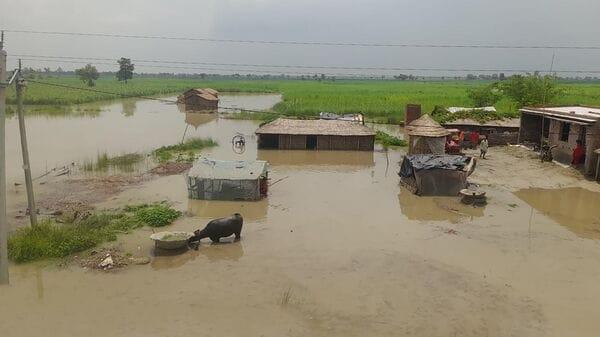
Nepal Flash Floods Trigger Gandak Alert In Bihar Several Districts At Risk


The flash flood struck the Bhote Koshi river in Nepal's Rasuwa district around 9am and swept away homes, roads, bridges and hydropower infrastructure. The Bhote Koshi and Trishuli rivers, key tributaries of the Narayani-Gandak river system, have witnessed sharp rises in water levels, triggering extensive damage across northern Rasuwa district in Nepal.
Media reports suggest close to 100 people have lost their lives in Nepal, with hundreds missing, including 105 Indians.
Quick answers to key questions
.5 QUESTIONS1What caused the flash floods in Nepal that affected the Gandak river in Bihar?⌵The flash floods in Nepal were triggered by an avalanche of ice and rock, potentially initiated by an earthquake, affecting the Bhote Koshi river and leading to significant water surges downstream.
2Why are authorities in Bihar on high alert due to the floods in Nepal?⌵Authorities in Bihar are concerned that the flash floods could cause a substantial rise in the Gandak river's water levels, posing a direct threat to vulnerable districts located nearby.
3How is the Indian Meteorological Department assessing the impact of the floods from Nepal?⌵The IMD is monitoring the rapidly moving flood wave and potential water level increases along the Gandak river system, advising local authorities to prepare for possible evacuations and relief operations.
4Which districts in Bihar are most likely to be impacted by the flood wave from Nepal?⌵The districts most at risk include West Champaran, East Champaran, Gopalganj, and Saran, with additional vigilance advised for Muzaffarpur and Vaishali due to their proximity to the Gandak river system.
5What preparedness measures are being taken by the Bihar government in response to the flooding risk?⌵The Bihar government has set several districts on alert and is monitoring river levels, embankments, and low-lying areas, while also preparing evacuation and relief arrangements.
Also Read | Heavy rain to lash north, central India; flash flood risk in several districtsThe sudden discharge has prompted high-alert advisories across downstream parts of Nepal, with people living along the Bhote Koshi, Trishuli and Narayani rivers advised to move away from riverbanks and low-lying areas.
According to the India Meteorological Department (IMD), the flood wave is moving rapidly downstream, raising concerns over rising water levels along the river system over the next 24 hours and possible impacts on downstream settlements. The development is significant for Bihar because the Narayani river enters India and becomes the Gandak, one of the major rivers flowing through north Bihar. A sudden increase in discharge in Nepal can therefore translate into a rapid rise in water levels downstream, particularly in areas close to the Gandak and its tributaries.
The Bihar government has already put several districts on alert and warned of a possible flood wave of around three metres entering the Gandak river. Authorities have directed district administrations to monitor river levels, embankments, bridges and low-lying areas and keep evacuation and relief arrangements ready.
Also Read | Nepal flood: 105 Indians missing, 'major casualties' in Tibet; rescue op on Districts likely to be impactedThe districts facing the most immediate risk in Bihar include West Champaran, East Champaran, Gopalganj and Saran, which are directly or closely connected to the Gandak river system. Authorities have also placed Muzaffarpur and Vaishali under heightened vigilance because of the potential downstream spread of floodwaters. Sitamarhi and Sheohar have also been identified as vulnerable districts requiring preparedness, although the actual impact will depend on the volume and timing of water reaching Bihar.
West Champaran is likely to be among the first Bihar districts to experience the impact because the Gandak enters the state from Nepal through the Valmikinagar area. From there, the river flows through the northern plains towards Gopalganj, Saran and adjoining districts. A sharp rise in discharge could put pressure on embankments and low-lying settlements along the river.
Also Read | Punjab urges Centre to double relief funds after ₹20,000 crore flood lossesAccording to an IMD official, the situation remains fluid because the scale of the flood wave reaching Bihar will depend on how much water is retained or dissipated as it travels through Nepal's mountainous river system. The immediate priority for downstream communities is therefore to follow official advisories, avoid riverbanks and remain prepared for rapid changes in water levels.

Legal Disclaimer:
MENAFN provides the
information “as is” without warranty of any kind. We do not accept any
responsibility or liability for the accuracy, content, images, videos,
licenses, completeness, legality, or reliability of the information
contained in this article. If you have any complaints or copyright issues
related to this article, kindly contact the provider above.
Comments
No comment