

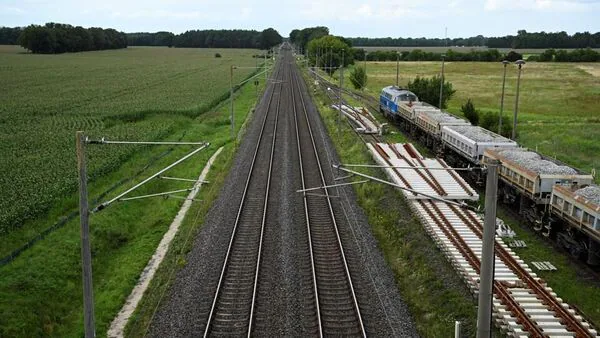
Railways To Quadruple Capacity Across 11,000 Km Of Key Routes Carrying 41% Of Traffic


Outlining the plan in an Instagram post, railway minister Ashwini Vaishnaw said the entire 11,000-km high-density network will be expanded to four tracks. The upgrade is aimed at easing severe congestion along the busiest passenger and freight corridors and preparing for future traffic growth.
The seven high-density routes identified by the railways connect major economic centres and metropolitan regions. They include Delhi-Howrah, Howrah-Chennai, Chennai-Mumbai, Mumbai-Delhi, Delhi-Chennai, Mumbai-Howrah and Delhi-Guwahati.
The concentration of traffic on these corridors makes capacity augmentation particularly important. With these routes carrying nearly half of the railway's traffic on a relatively small portion of the network, adding additional lines could allow the national transporter to run more passenger and freight services without having to rely solely on improvements in train operations.
Also Read | Railways taps new private investment models to unlock ₹2.62 trillion pipelineThe four-laning programme would effectively create four railway lines across these high-density routes, providing greater flexibility for segregating or managing passenger and freight movement. It could also help reduce congestion and improve the ability of the railways to accommodate additional services as demand rises.
Parts of the 11,000-km network already have four tracks, while expansion work is underway across larger stretches. The minister noted that only a small portion of the identified routes is still going through the detailed project report (DPR) approval process, with construction set to begin soon.
Strategic capacity boostThe move comes against the backdrop of the railways' broader push to expand freight capacity and shift more transport activity to trains. Higher capacity on key trunk routes is particularly important as the national transporter seeks to increase freight volumes while continuing to expand passenger services.
Vaishnaw said in the social media post,“If we compare roads with railways, then the railways are 90% cleaner from an environmental point of view and cost a lot less than road transportation. The average cost of moving goods through railways is around ₹1.6 per tonne per km, whereas the same for roadways is about ₹3.6 per tonne per km. So, if we have to reduce the cost of logistics in our country and make our transportation green as our economy grows, we must ensure that all these rail corridors are quadrupled so that the capacity increases.”
The government has in recent years invested heavily in dedicated freight corridors and network expansion to improve the movement of goods. The completion of the eastern and western dedicated freight corridors has already created dedicated capacity on two major freight axes. The proposed four-laning of high-density routes could complement this infrastructure by strengthening capacity on the wider network and improving connectivity between major consumption and production centres.
Also Read | DP World eyes bigger India play, to invest $700-800 mn: CEO NarayanFor freight customers, additional rail capacity could also help reduce logistics costs by providing greater availability and reliability of services. For passengers, the expansion could enable more trains and better scheduling on routes where demand has consistently outpaced available capacity.
The scale of the proposed programme, however, means execution is critical. Four-laning thousands of kilometres of heavily used railway lines will require substantial investment, land availability, engineering work and careful management of existing train operations. Much of the work will have to be undertaken while keeping the existing network operational.
The four-laning plan is therefore likely to become a key component of the railways' long-term capacity expansion strategy. By focusing investment on routes that carry a disproportionate share of traffic, the national transporter is seeking to address its most pressing capacity constraints while creating headroom for future passenger and freight growth.
Also Read | Indian Railways is eyeing logistics. Can an app get it there?
Legal Disclaimer:
MENAFN provides the
information “as is” without warranty of any kind. We do not accept any
responsibility or liability for the accuracy, content, images, videos,
licenses, completeness, legality, or reliability of the information
contained in this article. If you have any complaints or copyright issues
related to this article, kindly contact the provider above.
Comments
No comment