

403
Sorry!!
Error! We're sorry, but the page you were looking for doesn't exist.
We Switched Delivery Routes and Suddenly Everything Took Longer — Here's Why


(MENAFN- Global Industrial Parts Inc.) A few months back, our dispatch team decided to reshuffle a few delivery routes. Nothing dramatic — just consolidating some stops that were geographically close, trying to squeeze a bit more loading efficiency out of the day. On paper, it looked like a smart move. Fewer miles, tighter clusters, shorter drive times between stops.
Except the numbers didn't add up the way we expected.
Total drive time did go down. But total route time barely moved — and in a couple of cases, it actually got worse. It took a couple of weeks of digging through timestamps before we figured out what was going on: the new route had more stops with tight parking, awkward rear access, and inconsistent loading dock setups. Drivers were spending more time getting cargo on and off the vehicle than they were spending driving between locations.
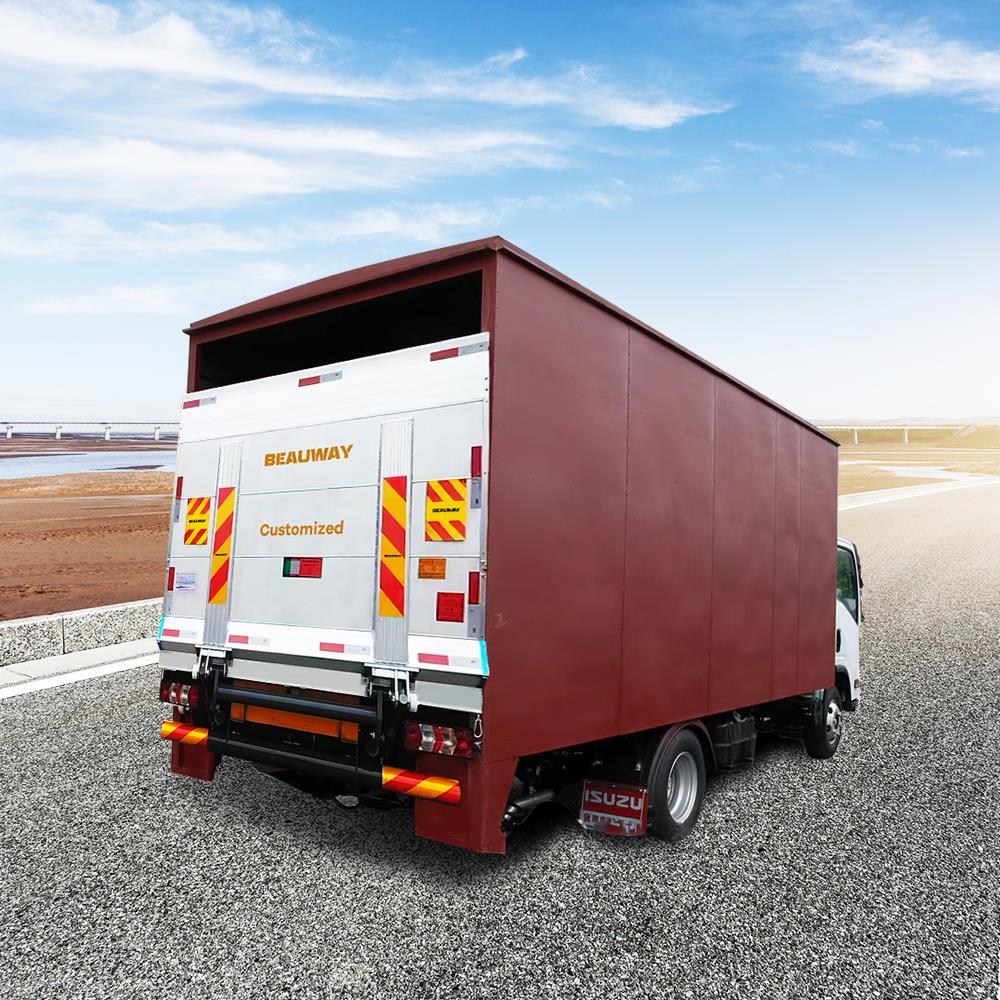
That was the moment it clicked for a lot of us — truck loading time isn't a fixed number. It swings wildly depending on the stop, the terrain, and honestly, the equipment doing the lifting. A driver manually wrestling a heavy pallet off a raised tailgate at a stop with no dock takes several times longer than the same task at a location with a proper platform or a tail lift built for the job.
We started tracking it more carefully. Stops with decent loading infrastructure — flush ramps, working liftgates, level ground — averaged noticeably faster turnaround than stops without. It wasn't subtle. Over a full day of a dozen-plus stops, those extra minutes per stop stacked into what felt like an entire wasted hour by the time drivers were heading back to base.
For anyone thinking about fleet operations purely in terms of route optimization software, this was a good reminder that the software only sees the map — it doesn't see what happens once the truck actually stops. Cargo handling at the point of delivery is just as much a part of the route as the driving itself, and it's usually the part nobody bothers to measure.
This matters even more now with how last-mile delivery has changed. Deliveries used to mean a box or two at a residential address. Now it's furniture, appliances, pallets of retail stock, sometimes multiple heavy items at a single commercial stop. The loading step has quietly become a bigger chunk of the day than it used to be, and most route-planning conversations still don't account for it.
What we ended up doing wasn't complicated. We looked at which stops consistently ran long, checked whether the delay was drive-related or loading-related, and made small adjustments — sometimes rerouting, sometimes just flagging stops where drivers needed backup or better equipment access. It wasn't a huge overhaul. But once we started separating "time driving" from "time loading" in our data, a lot of route decisions that used to feel confusing suddenly made a lot more sense.
If your team is optimizing routes and the numbers still don't quite add up, it might be worth looking at what's happening the moment the truck actually stops — not just the path it took to get there.
Beauway has been specializing in the field of logistics loading and unloading equipment for many years, with a full product range covering tail lifts, dock levelers, and lifting platforms. For a customized solution tailored to your specific site conditions, you are welcome to schedule a technical consultation.
Except the numbers didn't add up the way we expected.
Total drive time did go down. But total route time barely moved — and in a couple of cases, it actually got worse. It took a couple of weeks of digging through timestamps before we figured out what was going on: the new route had more stops with tight parking, awkward rear access, and inconsistent loading dock setups. Drivers were spending more time getting cargo on and off the vehicle than they were spending driving between locations.
That was the moment it clicked for a lot of us — truck loading time isn't a fixed number. It swings wildly depending on the stop, the terrain, and honestly, the equipment doing the lifting. A driver manually wrestling a heavy pallet off a raised tailgate at a stop with no dock takes several times longer than the same task at a location with a proper platform or a tail lift built for the job.
We started tracking it more carefully. Stops with decent loading infrastructure — flush ramps, working liftgates, level ground — averaged noticeably faster turnaround than stops without. It wasn't subtle. Over a full day of a dozen-plus stops, those extra minutes per stop stacked into what felt like an entire wasted hour by the time drivers were heading back to base.
For anyone thinking about fleet operations purely in terms of route optimization software, this was a good reminder that the software only sees the map — it doesn't see what happens once the truck actually stops. Cargo handling at the point of delivery is just as much a part of the route as the driving itself, and it's usually the part nobody bothers to measure.
This matters even more now with how last-mile delivery has changed. Deliveries used to mean a box or two at a residential address. Now it's furniture, appliances, pallets of retail stock, sometimes multiple heavy items at a single commercial stop. The loading step has quietly become a bigger chunk of the day than it used to be, and most route-planning conversations still don't account for it.
What we ended up doing wasn't complicated. We looked at which stops consistently ran long, checked whether the delay was drive-related or loading-related, and made small adjustments — sometimes rerouting, sometimes just flagging stops where drivers needed backup or better equipment access. It wasn't a huge overhaul. But once we started separating "time driving" from "time loading" in our data, a lot of route decisions that used to feel confusing suddenly made a lot more sense.
If your team is optimizing routes and the numbers still don't quite add up, it might be worth looking at what's happening the moment the truck actually stops — not just the path it took to get there.
Beauway has been specializing in the field of logistics loading and unloading equipment for many years, with a full product range covering tail lifts, dock levelers, and lifting platforms. For a customized solution tailored to your specific site conditions, you are welcome to schedule a technical consultation.
Global Industrial Parts Inc.
Legal Disclaimer:
MENAFN provides the
information “as is” without warranty of any kind. We do not accept any
responsibility or liability for the accuracy, content, images, videos,
licenses, completeness, legality, or reliability of the information
contained in this article. If you have any complaints or copyright issues
related to this article, kindly contact the provider above.
Comments
No comment