

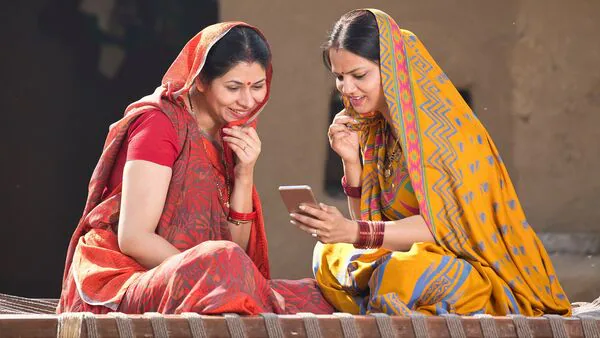
Women Have Bank Accounts, But Digital Finance Gap Limits Access To Platform Work: ILO-NCAER


The joint policy brief by the International Labour Organization (ILO) and National Council of Applied Economic Research (NCAER) said that digital financial inclusion is a critical enabler of decent work for women in the platform economy, which includes ride-hailing, food and grocery delivery, personal and home services, e-commerce, quick commerce and logistics.
The findings of the study assume significance as the number of platform workers in India has risen from an estimated 7.7 million in 2020 to 12 million in FY25 and is projected to reach 23.5 million by 2029-30. However, women remain significantly under-represented. A study of two-wheeler delivery drivers in urban India cited in the report found that less than 1% of drivers were women.
Also Read | Bank unions threaten strikes in Sep-Oct on five-day week, incentive planAccording to a NITI Aayog's report released in 2022, women's economic contribution in India accounts for 17% of GDP, less than half the global average.
India has an estimated female population of about 710 million, accounting for roughly 48.4% of the country's total population, according to UN population estimates for 2025.
The report highlighted that women's participation is constrained by gaps in skills and digital literacy, mobility and safety concerns, restrictive social norms and, less visibly, exclusion from the full range of formal financial services.
India has made substantial progress in bringing women into the formal banking system. The proportion of women aged 15 years and above with an account at a bank or similar financial institution increased from about 43% in 2014 to 89% in 2024, while men's account ownership rose from around 62% to 88% over the same period. This has virtually eliminated the gender gap in basic account ownership, the report said.
Only 25.2% of women could perform online banking transactions in 2022-23, compared with 47.1% of men, according to data from the Comprehensive Annual Modular Survey cited in the report. On a broader measure of digital financial capability, which combines the ability to search the internet, use email and conduct online banking, only 18% of women had all three skills, compared with 30.1% of men. In rural India, just 17.1% of women could undertake online banking, against 39.2% of men.
The report also highlighted the gender gap in mobile money. In 2024, 32% of men in India had a mobile money account compared with 14% of women, an 18-percentage-point gap. The report said that this was three times the corresponding global gap of six percentage points and the largest among the comparator countries examined.
Also Read | Centre nudges RRBs to ramp up digital banking to spur growthThe problem extends beyond access to a device. Women's digital access is often mediated by other family members, while phones and connectivity within households may be controlled by male family members. A woman can also face exclusion when the mobile connection linked to her financial account is not in her name. Fear of fraud and cyberstalking can further undermine trust in digital financial platforms.
The report, citing CGAP data, said 52% of women lacked capital for investments required to enter platform work, compared with 40% of men. Women accounted for only 22.9% of outstanding bank credit to individuals in March 2023, according to RBI data cited in the brief.
Women also received only 18% of the total sanctioned loan value from digital NBFCs, according to data from the Fintech Association for Consumer Empowerment cited by the report. The brief said financial products are often not designed around women's specific needs or income patterns.
Also Read | Goldman Sachs names Chandresh Chheda as co-head of India investment bankingThe report stressed that financial inclusion should not be reduced to access to loans. Women platform workers need start-up capital to enter, savings and insurance to manage income and health shocks, and longer-term financial tools to build assets and improve their economic security.
NCAER director general Suresh Goyal suggested that access to credit and mobility can improve women's employment opportunities and that the platform economy has created such an opportunity, while ILO country director Michiko Miyamoto stressed that digital financial inclusion should help women build income security, resilience and sustainable livelihoods.

Legal Disclaimer:
MENAFN provides the
information “as is” without warranty of any kind. We do not accept any
responsibility or liability for the accuracy, content, images, videos,
licenses, completeness, legality, or reliability of the information
contained in this article. If you have any complaints or copyright issues
related to this article, kindly contact the provider above.
Comments
No comment