

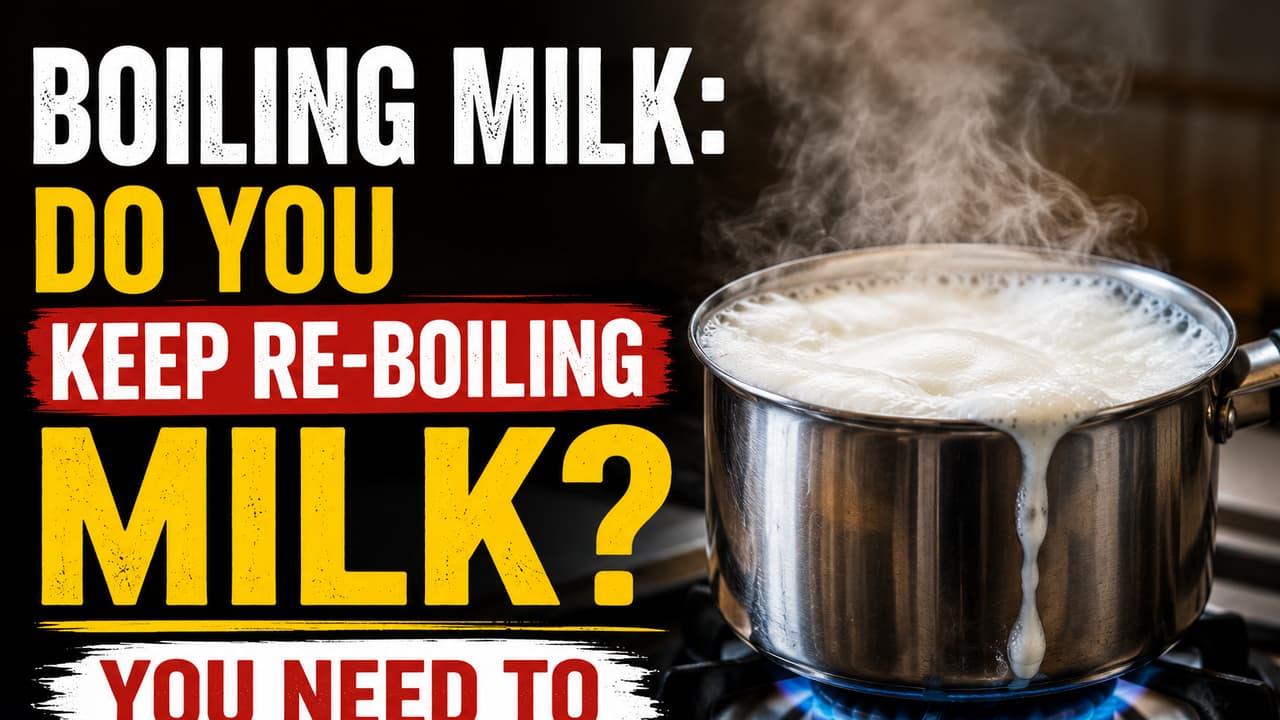
Is Re-Boiling Milk Safe? Here's What Happens When You Heat Milk Repeatedly


Do you regularly re-boil milk after it cools? Find out what repeated heating can change in milk, whether it affects nutrients and taste, and the simple storage and heating habits you should follow at home.
Many of us boil milk in the morning and reheat the leftovers later. Some even do this till night. But does this constant heating change the milk's taste, texture, or nutrients? Boiling milk isn't wrong, but the real issue is boiling it for too long or reheating it too many times.
Also Read:Weekly Horoscope: August 16–22, Find Out What This Week Brings for Your Zodiac Sign
When you heat milk, its proteins and other components naturally change. Exposing it to high heat for a long time can alter its taste and smell. Also, some heat-sensitive vitamins might reduce. Studies show that prolonged boiling can especially affect some B-vitamins.
Also Read:Can You Live Without These Organs? 7 Surprising Parts of Human Body You Can Lose
There's a big difference between heating milk once and boiling it repeatedly for long periods. Every time you heat it, the taste, smell, and texture can change. Some nutrients might also get lost. But this doesn't mean reheated milk is unhealthy. The temperature, heating time, and type of milk are all important factors.
Also Read:Goa Food Guide: What to Expect When You Order Traditional Fish Thali
You can't say there's a fixed number of times to boil milk, as it doesn't apply to all types. You need to consider if you're using raw milk, pasteurised milk, or UHT milk. UHT milk, for instance, is already treated at high temperatures, so you should just follow the instructions on the packet. The best practice is to heat only as much as you need and avoid re-boiling it unnecessarily.
Also Read:Who Was Ananya Raj? All About 'Thaggede Le' Actress Who Died At Just 35
You should avoid leaving boiled milk at room temperature for too long. It's best to store any leftover milk in a clean, covered container and put it in the fridge quickly. Even FSSAI advises storing leftovers in cool conditions, usually below 5°C. Make sure the vessel and spoon you use are clean. If the milk has a sour smell, a different taste, or looks off, don't use it. Reheating milk once isn't a problem, but it's better to avoid boiling it for too long or reheating it too many times.
Also Read:Gardening Tips: Is Your Plant Looking Thin & Weak? 5 Simple Ways to Get Bushier Growth

Legal Disclaimer:
MENAFN provides the
information “as is” without warranty of any kind. We do not accept any
responsibility or liability for the accuracy, content, images, videos,
licenses, completeness, legality, or reliability of the information
contained in this article. If you have any complaints or copyright issues
related to this article, kindly contact the provider above.
Comments
No comment