


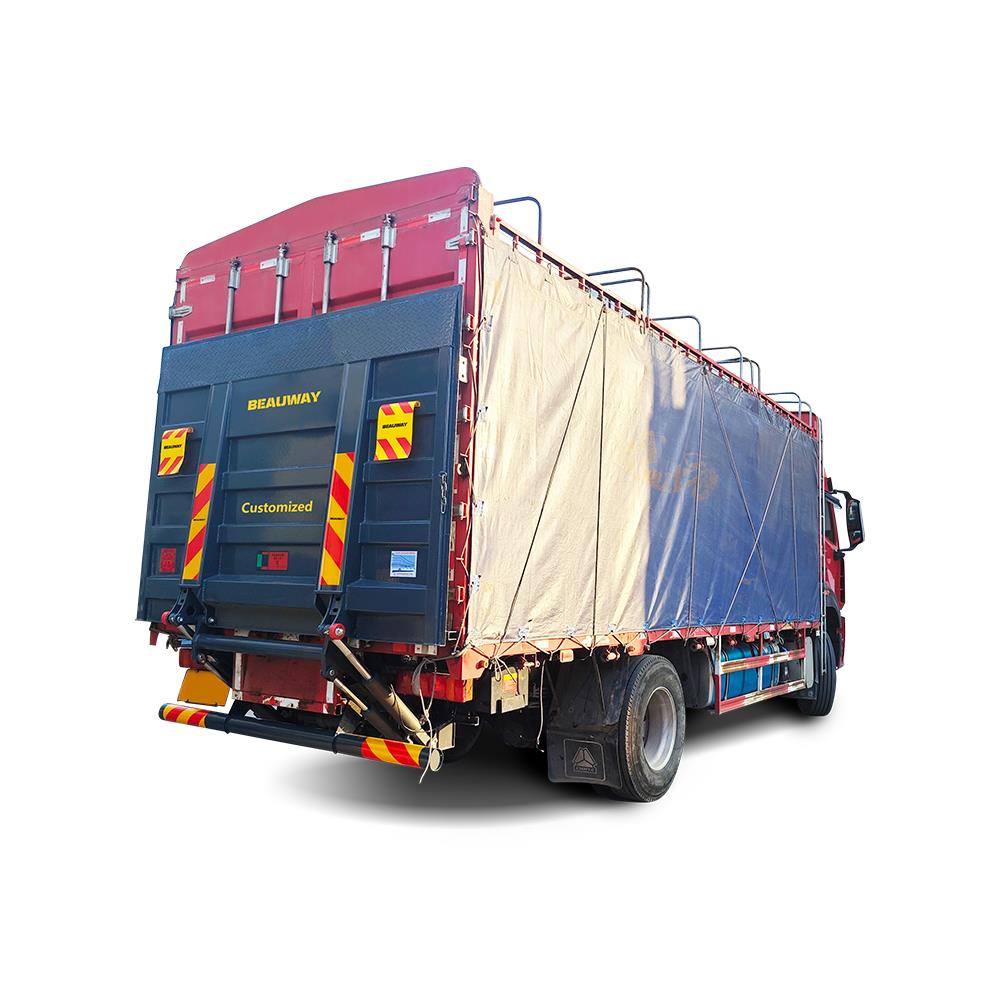
Tail Lift Capacity Guide: Matching Load Rating to Your Vehicle Class


(MENAFN- Global Industrial Parts Inc.) Quick Answer
Tail lift capacity should be selected based on your vehicle's gross vehicle weight (GVW) class and your heaviest realistic load, not your average cargo weight. As a general range: light commercial vehicles typically pair with 500kg-capacity tail lifts, medium-duty trucks with 1000-1500kg, and heavy-duty trucks with 1500-2000kg or higher.
Why Getting Tail Lift Capacity Wrong Is Expensive
Choosing the wrong tail lift capacity is one of the most common mistakes in fleet upfitting, and one of the costliest to fix after the fact. Undersizing a tail lift means every heavy pallet risks overloading the platform, accelerating wear on hydraulic cylinders and increasing the chance of a safety incident. Oversizing means paying for capacity that's rarely used while adding unnecessary weight to the vehicle, which can eat into your legal payload allowance.
A properly matched tail lift capacity isn't just about the platform holding the weight — it affects hydraulic cylinder sizing, motor power requirements, and how the load distributes across the vehicle's rear axle.
Matching Capacity to Vehicle Class
Light Commercial Vehicles (up to ~3.5 tonnes GVW)
These vehicles generally pair with tail lifts in the 500kg capacity range, suitable for standard pallet loads, parcel delivery, and last-mile logistics. Platform sizes in this class are typically sized for single-pallet handling rather than multi-pallet loads.
Medium-Duty Trucks (roughly 3.5-12 tonnes GVW)
This is the widest range in commercial fleets, and tail lift capacity here typically falls between 1000kg and 1500kg, covering mixed pallet loads, appliance delivery, and general distribution work. Motor power in this range commonly sits around 2.0-2.8kW depending on lift speed and duty cycle requirements.
Heavy-Duty Trucks (12 tonnes GVW and above)
Heavy trucks used in continuous-duty logistics, cold chain, or construction supply typically require 1500-2000kg capacity tail lifts. At this level, four-cylinder hydraulic configurations are common, since distributing load across four points rather than two reduces platform flex and uneven wear during repeated heavy cycles.
Beyond Raw Capacity: What Else to Check
Weight capacity is the starting point, not the full spec. Before finalizing a tail lift order, also confirm:
Platform size against your typical pallet or cargo footprint
Compartment floor height range against your vehicle's loading floor
Spring-to-rear distance against your chassis dimensions — this varies by model and vehicle configuration
Working voltage — light vehicles commonly use 12V systems, while medium-to-heavy vehicles often require 12/24V compatible units
FAQ
Does a higher capacity tail lift always mean better value? Not necessarily. Oversizing adds unnecessary tare weight, which reduces usable payload and can increase fuel consumption over the vehicle's service life.
Can one tail lift model serve multiple vehicle classes? Some manufacturers offer capacity tiers within a single product series (for example, a 500kg to 2000kg range across variants), but the underlying hydraulic cylinder and motor specs still change between tiers.
What happens if I consistently load near or above rated capacity? Repeated near-limit or over-limit loading accelerates fatigue in hydraulic seals and structural components, often long before any visible failure appears.
Global Industrial Parts Inc.
Legal Disclaimer:
MENAFN provides the
information “as is” without warranty of any kind. We do not accept any
responsibility or liability for the accuracy, content, images, videos,
licenses, completeness, legality, or reliability of the information
contained in this article. If you have any complaints or copyright issues
related to this article, kindly contact the provider above.


Comments
No comment