

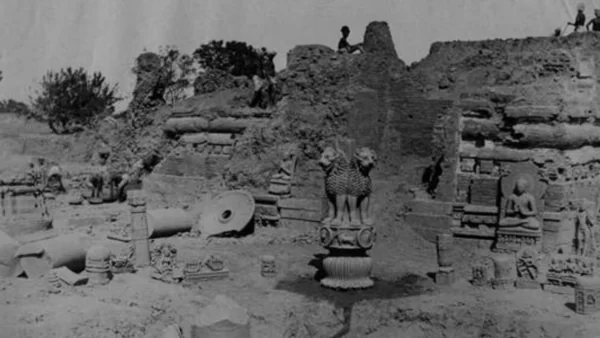
Sarnath Becomes India's 45Th Entry In UNESCO World Heritage List: The Place Of First Sermon Of Gautama Buddha


With 45 sites in the List, India ranks 6th globally and 2nd in Asia Pacific Region for the most number of World Heritage Site. 196 nations have ratified the World Heritage Convention, 1972, the Ministry of Culture said.
Also Read | Chandigarh's heritage chairs withdrawn from Paris auction after MEA interventionPrime Minister Narendra Modi called it a "proud moment for every Indian!," and said, "This recognition celebrates India's profound civilisational and spiritual heritage."
"It will also inspire more people across the world to come to Sarnath and connect with the ideals of Lord Buddha," PM Modi added.
All you need to know about SarnathPM Modi said Sarnath has a close association with Lord Buddha, whose timeless message of wisdom, compassion and harmony inspires the world.
The ancient Buddhist site located near Varanasi is the sacred place where Lord Buddha is believed to have delivered his first sermon in the 6th century BCE and met his earliest disciples.
Also Read | Will BJP leave Nabanna and run govt from iconic Writers' Building?According to UNESCO, the serial property contains the architectural and archaeological remains of Sarnath.
It comprises two component parts – Chaukhandi Stupa and the Archaeological Remains of Sarnath (Dhamekh Stupa, Dharmrajika Stupa, Mulagandgakuti Vihara, Ashokan Pillar, etc.) – located within Varanasi in Uttar Pradesh.
"Together these two components preserve the architectural and archaeological remains of the ancient site of Sarnath, known in the Buddhist tradition under different names – Rishipatana, Ishipatana, Mrigadava," the Ministry of Culture said in a press release on Saturday.
They all refer to a sacred geography, where the Buddha visited in the 6th century BCE and delivered his first sermon known as the“Turning of the Wheel of the Law” (Dharmachakra pravartana).
Identified by the Buddha himself as one of the four principal Buddhist pilgrimage sites, Sarnath grew over many centuries through royal, monastic, and lay patronage, resulting in the construction of numerous stupas, temples, and viharas.
Having seen a decline in the 12th century CE and subsequent destruction, it fell into obscurity until its rediscovery in the 18th century.
"After flourishing as a major Buddhist centre, Sarnath declined in the 12th century CE and fell into obscurity until its rediscovery in the 18th century," UNESCO added.
The site comprises an ensemble of ancient monuments constructed from the pre-Mauryan period (5th-4th centuries BCE to 3rd century BCE) up until the destruction of Sarnath in the 12th century CE (with some later additions).
Sarnath has been one of the most extensively excavated sites by the Archaeological Survey of India which resulted in a stratified settlement spread across 16 centuries (5th-4th centuries BCE to 12th century CE).
"Today preserved as two archaeological zones, it remains both an important tourist destination and a revived pilgrimage site for Buddhists worldwide," the UN body said.
The Ministry of Culture said that after the declaration of Sarnath as the World Heritage Property, three of the four most significant Buddhist Pilgrim sites; i.e. Lumbini (Nepal), Mahabodhi Temple, Bodhgaya (Bihar) and now Sarnath (Uttar Pradesh) are now included in the World Heritage, along with several other important Buddhist sites such as Sanchi, Nalanda, Ajanta (all three in India), Anuradhapur (Sri Lanka) Paharpur (Bangladesh), Taxila and Takht-i-Bahi (both in present day Pakistan), etc.
Sarnath as a UNESCO World Heritage PropertySarnath was included in the Tentative List of World Heritage in 1998.
The proposal to include the site in the list of World Heritage was sent to the consideration of World Heritage Committee in January 2025.
After a rigorous eighteen-month long process involving several technical meetings with the advisory bodies and visit of ICOMOS's mission to review the site, this historic decision was taken by the members of the World Heritage Committee today evening at Busan, South Korea.
The purpose of including these heritage sites in UNESCO's list is to preserve and promote shared heritage based on OUVs (Outstanding Universal Values) found in cultural, natural as well as mixed properties across 196 countries.
India, meanwhile, became a member of the coveted World Heritage Committee from 2021-25 and also hosted for the first time the World Heritage Committee Meeting in July 2024 at New Delhi.

Legal Disclaimer:
MENAFN provides the
information “as is” without warranty of any kind. We do not accept any
responsibility or liability for the accuracy, content, images, videos,
licenses, completeness, legality, or reliability of the information
contained in this article. If you have any complaints or copyright issues
related to this article, kindly contact the provider above.
Comments
No comment