


Exclusive Interview with Sushant Acharya on AI, Talent Intelligence and Building India's Future-Ready Workforce


(MENAFN- Life and Style News) .
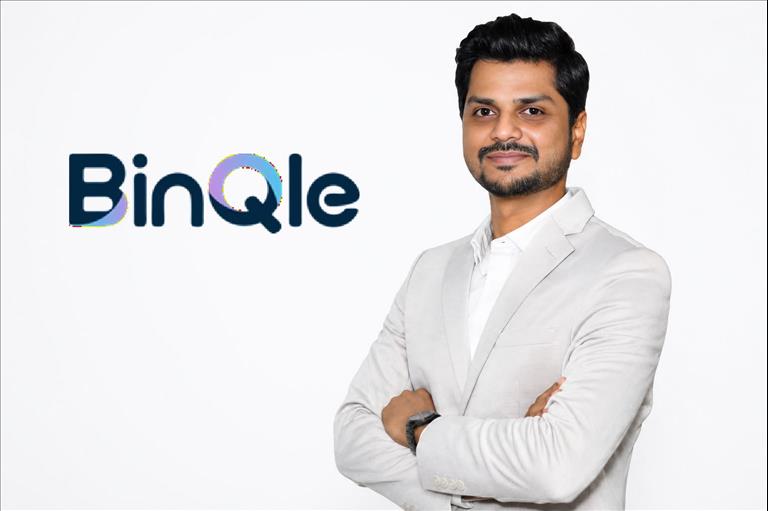
As artificial intelligence reshapes the future of work and Global Capability Centres (GCCs) fuel India's rise as a global innovation hub, organisations are rethinking how they attract, develop, and retain talent. Recruitment is no longer just about filling vacancies it's about building resilient, future-ready workforces powered by data, technology, and human potential. At the forefront of this transformation is Sushant Acharya, Co-Founder & Chief Business Officer of BinQle, a talent intelligence and workforce solutions company helping enterprises navigate an increasingly dynamic hiring landscape. In this exclusive interview, Acharya reflects on his entrepreneurial journey, the evolution of talent intelligence, the growing role of AI in recruitment, and the leadership principles shaping the workforce of tomorrow.
Q. From beginning your career at Deloitte to co-founding BinQle, what inspired your entrepreneurial journey? How have these experiences shaped your approach to leadership?
Sushant Acharya: My experience at Deloitte gave me firsthand exposure to the hiring and workforce challenges faced by large enterprises across industries. Working closely with these organisations, I came to realise that recruitment was never simply about filling positions. It was about enabling business growth, connecting organisations with the right talent at the right time. BinQle grew out of that realisation, built with the intent of making hiring strategic and data-driven rather than reactive, judged by outcomes rather than activity.
Much of how I lead traces back to that period. Customers come first, without exception. My team receives ownership, not just assignments, because innovation only works when people treat it as ongoing rather than a milestone to reach and move past. I keep pushing people to see past the transaction of recruitment toward the business problem sitting underneath it. Short-term wins tempt everyone at some point, yet real growth, in my experience, is built slowly through trust, adaptability, collaboration, and relationships meant to outlast a single deal.
Q. What motivated you to build a company focused on talent intelligence and workforce solutions? How has your vision evolved as the hiring landscape continues to transform?
Sushant Acharya: BinQle started with a fairly simple observation: a recruitment vendor is not what most businesses actually need. What they need is a partner who understands the goals behind the hire, the market context, and where skill demand is headed next. AI, talent intelligence, market insight, and domain expertise, all of it feeding into sharper hiring decisions, that was the founding idea, and it has not really changed.
What has shifted is emphasis. Volume was valued far more than it is today; the importance of volume has been replaced by quality, speed, and skill set. Recruitment has definitely become much faster due to AI, but the decision-making process has also become more acute. However, the possibility of leadership, flexibility, and cultural fit still necessitates a human touch that cannot be obtained through just data. My conviction is that whoever leads the next decade of hiring will be balancing that technology against a genuinely people-centred approach, rather than favouring one over the other.
Q. BinQle works with enterprises and Global Capability Centres across industries. What leadership principles have been instrumental in building the company's growth and market differentiation?
Sushant Acharya: One principle underlies most of what we do: understand the business before addressing the role. A hiring decision that does not connect to a larger business objective is not truly doing its job, however quickly it closes.
Quality wins out over quantity here, consistently. Talent intelligence, technology, and industry expertise combine to arrive at the right fit, even when the fastest option is readily available. What has kept our client relationships intact over the years has less to do with any single tactic and more to do with consistency, remaining transparent when matters grow complicated, and staying accountable when they do not go as planned. Continuous learning, innovation, and a genuine closeness to the customer are what keep BinQle standing apart as the market continues to shift.
Q. AI is redefining how organisations hire and manage talent. Which workforce trends do you believe will have the greatest impact on businesses over the next five years?
Sushant Acharya: Hiring will continue to grow faster, smarter, and more data-driven because of AI, lifting administrative weight off recruiters so their attention shifts toward strategy. That does not move people out of the centre of the important decisions, however. Technology informs judgement here; it was never meant to replace it.
Three developments look set to define the next five years, in my view: skills-first hiring, predictive workforce planning, and a genuine commitment to continuous upskilling. Academic credentials will carry less weight than capability and how quickly someone absorbs new skills. Whoever combines AI with human judgement, while genuinely investing in ongoing skill development rather than simply discussing it, will end up with a workforce that is stronger, more agile, and genuinely future-ready.
Q. India has become a preferred destination for Global Capability Centres. What opportunities and challenges do you foresee as the country's talent ecosystem continues to evolve?
Sushant Acharya: India now functions as a genuine centre of innovation, not merely a delivery location, and Global Capability Centres here are opening doors across AI, Cloud, Cybersecurity, Data Engineering, and Digital Transformation. A capable talent base, strong digital infrastructure, and a mindset genuinely oriented toward innovation continue to draw global investment inward.
The sharper challenge, as I see it, is a widening gap in niche skills, where demand continues to outrun what is available. Organisations willing to invest early in upskilling and long-range workforce planning will find themselves considerably better positioned when that gap catches up with the market. A sustainable talent pipeline has stopped being a mere addition; it is becoming one of the clearest advantages a business can hold onto.
Q. As organisations increasingly adopt skills-first hiring and data-driven recruitment, what should business leaders prioritise to build agile and future-ready workforces?
Sushant Acharya: Skills and learning agility need to outrank traditional qualifications in how leaders approach hiring, and increasingly, ongoing development matters more than a credential earned once and never revisited. What a candidate can do today is only part of the picture; how well they will learn, adapt, and grow alongside a changing business matters just as much.
Workforce analytics and talent intelligence, layered with AI, genuinely sharpen both the quality and pace of hiring decisions. None of that replaces investment in learning, internal mobility, or building an employer brand people genuinely want associated with their name. Where organisations get this right, smart technology sits alongside a culture of learning that is lived day-to-day, not filed away in a policy document.
Q. Looking back at your entrepreneurial journey, what has been your biggest leadership lesson? What advice would you offer to aspiring founders and HR leaders navigating the future of work?
Sushant Acharya: If there is one lesson this journey has taught me, it is that long-term success rests on strong teams, sustained focus on the customer, and staying adaptable in a business environment that rarely sits still for long. Challenges arise regardless of how well anyone plans, but more often than not, they open a door toward improvement rather than closing one.
For founders just starting out, my advice is simple: pursue real value and solve genuine problems, rather than growth for its own sake. For HR leaders, embrace AI and workforce intelligence without hesitation, but never let people slip out of the centre of the decisions that matter most. Technology will keep moving forward regardless. Great businesses, at the end of it all, are still built by people. Technology will keep moving forward regardless. Great businesses, at the end of it all, are still built by people.
As artificial intelligence reshapes the future of work and Global Capability Centres (GCCs) fuel India's rise as a global innovation hub, organisations are rethinking how they attract, develop, and retain talent. Recruitment is no longer just about filling vacancies it's about building resilient, future-ready workforces powered by data, technology, and human potential. At the forefront of this transformation is Sushant Acharya, Co-Founder & Chief Business Officer of BinQle, a talent intelligence and workforce solutions company helping enterprises navigate an increasingly dynamic hiring landscape. In this exclusive interview, Acharya reflects on his entrepreneurial journey, the evolution of talent intelligence, the growing role of AI in recruitment, and the leadership principles shaping the workforce of tomorrow.
Q. From beginning your career at Deloitte to co-founding BinQle, what inspired your entrepreneurial journey? How have these experiences shaped your approach to leadership?
Sushant Acharya: My experience at Deloitte gave me firsthand exposure to the hiring and workforce challenges faced by large enterprises across industries. Working closely with these organisations, I came to realise that recruitment was never simply about filling positions. It was about enabling business growth, connecting organisations with the right talent at the right time. BinQle grew out of that realisation, built with the intent of making hiring strategic and data-driven rather than reactive, judged by outcomes rather than activity.
Much of how I lead traces back to that period. Customers come first, without exception. My team receives ownership, not just assignments, because innovation only works when people treat it as ongoing rather than a milestone to reach and move past. I keep pushing people to see past the transaction of recruitment toward the business problem sitting underneath it. Short-term wins tempt everyone at some point, yet real growth, in my experience, is built slowly through trust, adaptability, collaboration, and relationships meant to outlast a single deal.
Q. What motivated you to build a company focused on talent intelligence and workforce solutions? How has your vision evolved as the hiring landscape continues to transform?
Sushant Acharya: BinQle started with a fairly simple observation: a recruitment vendor is not what most businesses actually need. What they need is a partner who understands the goals behind the hire, the market context, and where skill demand is headed next. AI, talent intelligence, market insight, and domain expertise, all of it feeding into sharper hiring decisions, that was the founding idea, and it has not really changed.
What has shifted is emphasis. Volume was valued far more than it is today; the importance of volume has been replaced by quality, speed, and skill set. Recruitment has definitely become much faster due to AI, but the decision-making process has also become more acute. However, the possibility of leadership, flexibility, and cultural fit still necessitates a human touch that cannot be obtained through just data. My conviction is that whoever leads the next decade of hiring will be balancing that technology against a genuinely people-centred approach, rather than favouring one over the other.
Q. BinQle works with enterprises and Global Capability Centres across industries. What leadership principles have been instrumental in building the company's growth and market differentiation?
Sushant Acharya: One principle underlies most of what we do: understand the business before addressing the role. A hiring decision that does not connect to a larger business objective is not truly doing its job, however quickly it closes.
Quality wins out over quantity here, consistently. Talent intelligence, technology, and industry expertise combine to arrive at the right fit, even when the fastest option is readily available. What has kept our client relationships intact over the years has less to do with any single tactic and more to do with consistency, remaining transparent when matters grow complicated, and staying accountable when they do not go as planned. Continuous learning, innovation, and a genuine closeness to the customer are what keep BinQle standing apart as the market continues to shift.
Q. AI is redefining how organisations hire and manage talent. Which workforce trends do you believe will have the greatest impact on businesses over the next five years?
Sushant Acharya: Hiring will continue to grow faster, smarter, and more data-driven because of AI, lifting administrative weight off recruiters so their attention shifts toward strategy. That does not move people out of the centre of the important decisions, however. Technology informs judgement here; it was never meant to replace it.
Three developments look set to define the next five years, in my view: skills-first hiring, predictive workforce planning, and a genuine commitment to continuous upskilling. Academic credentials will carry less weight than capability and how quickly someone absorbs new skills. Whoever combines AI with human judgement, while genuinely investing in ongoing skill development rather than simply discussing it, will end up with a workforce that is stronger, more agile, and genuinely future-ready.
Q. India has become a preferred destination for Global Capability Centres. What opportunities and challenges do you foresee as the country's talent ecosystem continues to evolve?
Sushant Acharya: India now functions as a genuine centre of innovation, not merely a delivery location, and Global Capability Centres here are opening doors across AI, Cloud, Cybersecurity, Data Engineering, and Digital Transformation. A capable talent base, strong digital infrastructure, and a mindset genuinely oriented toward innovation continue to draw global investment inward.
The sharper challenge, as I see it, is a widening gap in niche skills, where demand continues to outrun what is available. Organisations willing to invest early in upskilling and long-range workforce planning will find themselves considerably better positioned when that gap catches up with the market. A sustainable talent pipeline has stopped being a mere addition; it is becoming one of the clearest advantages a business can hold onto.
Q. As organisations increasingly adopt skills-first hiring and data-driven recruitment, what should business leaders prioritise to build agile and future-ready workforces?
Sushant Acharya: Skills and learning agility need to outrank traditional qualifications in how leaders approach hiring, and increasingly, ongoing development matters more than a credential earned once and never revisited. What a candidate can do today is only part of the picture; how well they will learn, adapt, and grow alongside a changing business matters just as much.
Workforce analytics and talent intelligence, layered with AI, genuinely sharpen both the quality and pace of hiring decisions. None of that replaces investment in learning, internal mobility, or building an employer brand people genuinely want associated with their name. Where organisations get this right, smart technology sits alongside a culture of learning that is lived day-to-day, not filed away in a policy document.
Q. Looking back at your entrepreneurial journey, what has been your biggest leadership lesson? What advice would you offer to aspiring founders and HR leaders navigating the future of work?
Sushant Acharya: If there is one lesson this journey has taught me, it is that long-term success rests on strong teams, sustained focus on the customer, and staying adaptable in a business environment that rarely sits still for long. Challenges arise regardless of how well anyone plans, but more often than not, they open a door toward improvement rather than closing one.
For founders just starting out, my advice is simple: pursue real value and solve genuine problems, rather than growth for its own sake. For HR leaders, embrace AI and workforce intelligence without hesitation, but never let people slip out of the centre of the decisions that matter most. Technology will keep moving forward regardless. Great businesses, at the end of it all, are still built by people. Technology will keep moving forward regardless. Great businesses, at the end of it all, are still built by people.

Legal Disclaimer:
MENAFN provides the
information “as is” without warranty of any kind. We do not accept
any responsibility or liability for the accuracy, content, images,
videos, licenses, completeness, legality, or reliability of the information
contained in this article. If you have any complaints or copyright
issues related to this article, kindly contact the provider above.


Comments
No comment