


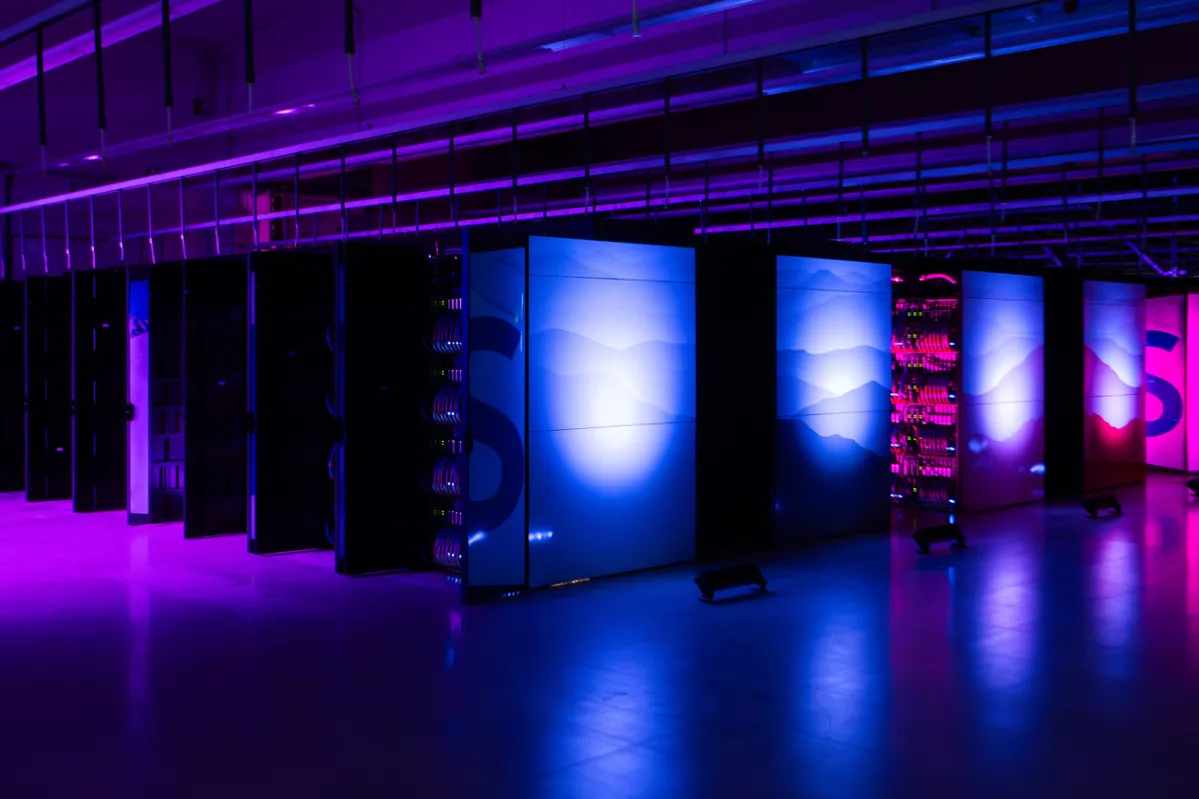
Swiss Supercomputer Fed With A Vast Trove Of NASA Data


The volume is enormous: 100 petabytes is roughly equivalent to 20 million feature films. The freely accessible dataset contains climate and Earth observation information collected by the United States space agency over the past 50 years, including data on greenhouse gases, clouds, precipitation, ice sheets and the Earth system.
Over the coming months, another 40 petabytes of data from the US National Oceanic and Atmospheric Administration (NOAA) will be transferred to Switzerland.
+ Swiss Alps supercomputer to leverage AI for science
ETH professor Thomas Zurbuchen says the goal is to use the data to train artificial intelligence models.
The more data available, the more accurate forecasts can become in areas such as weather, climate and natural hazards.
Monitoring glaciersThe former NASA science chief, who initiated the data transfer, says the project could also bring major benefits for Switzerland. Improved AI models could help predict glacier collapses and landslides, while also tracking changes in forests and agricultural land.
“We need information from outside sources to make the best decisions for the future,” Zurbuchen says.
+ Switzerland risks exclusion from Europe's 'CERN for AI'
The data will be stored at the CSCS in Lugano. The transfer required months of work by ETH engineers. The centre is home not only to massive data storage facilities but also to Alps, one of the world's most powerful supercomputers.
CSCS director Thomas Schulthess says bringing the NASA datasets closer to Alps will greatly simplify the development of large AI models focused on climate and weather.
Concern over US dataAnother reason for consolidating the data in Lugano was concern about the future of scientific data services in the US amid spending cuts and uncertainty under the Trump administration.
+ Switzerland's uphill climb to AI sovereignty
“The uncertainty surrounding the climate debate was personally a motivation for me as well,” Zurbuchen says. He added that proposed budget reductions had made parts of the system appear less secure.
Climate scientist Katharine Hayhoe describes the project as an important public service. She argues that scientific data should be secured now.
“For a long time, we assumed that data provided by the US government would remain available indefinitely if it was scientifically relevant,” Hayhoe says.“That certainty no longer exists today. Data is under pressure at a time when it is more important than ever.”
There is currently no indication that the Trump administration has deleted NASA datasets. Scientists hope that will remain the case. But if it does not, ETH researchers have already taken precautions.
More Debate Hosted by: Sara Ibrahim Do you worry about the environmental impact of AI?Current artificial intelligence tools need huge amounts of energy and natural resources to function. Does this affect the way you use them?
Join the discuss Jan 14, 2025 9 Likes 21 Comments View the discu
Legal Disclaimer:
MENAFN provides the
information “as is” without warranty of any kind. We do not accept
any responsibility or liability for the accuracy, content, images,
videos, licenses, completeness, legality, or reliability of the information
contained in this article. If you have any complaints or copyright
issues related to this article, kindly contact the provider above.


Comments
No comment