

403
Sorry!!
Error! We're sorry, but the page you were looking for doesn't exist.
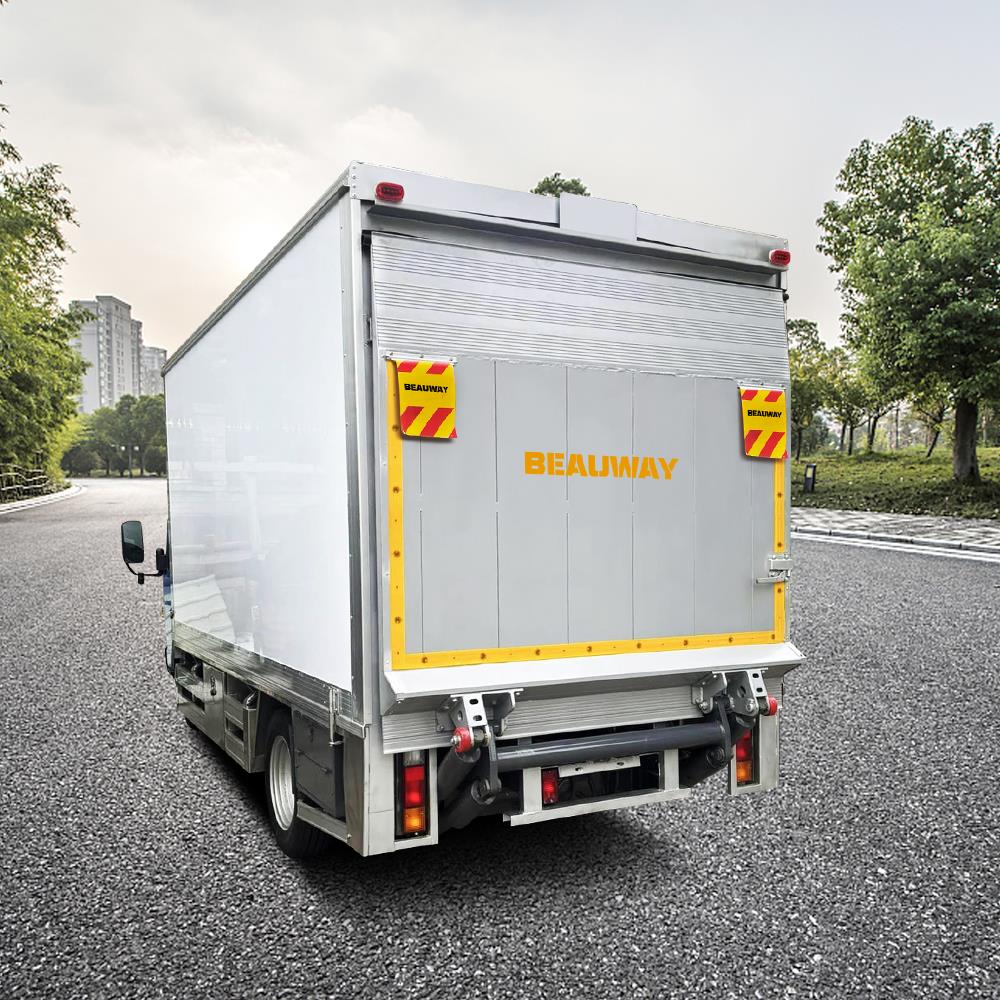
Tail Lift Weight Capacity Explained: How to Calculate Your Real-World Load Requirements


(MENAFN- Global Industrial Parts Inc.) Choosing the wrong tail lift capacity is one of the most common — and most expensive — mistakes fleet buyers make. Undersize it, and you risk overload damage, seal failure, and safety violations. Oversize it, and you''re paying for hydraulic power and structural weight you''ll never use, while eating into your vehicle''s payload.
This guide breaks down how to calculate the tail lift capacity your fleet actually needs, not just the number that looks safe on paper.
Quick Answer: How Do You Calculate Tail Lift Capacity?
Tail lift capacity should be based on your heaviest regular load, not your average load. Add the weight of the goods, the pallet or cart, and any additional equipment (pallet jack, hand truck) that will be on the platform at the same time. Then select a tail lift rated above that combined figure — never at the exact limit.
Why "Average Load" Is the Wrong Starting Point
A common mistake is sizing a tail lift capacity around what a fleet moves most days, rather than the heaviest load it moves occasionally. If your average delivery is 400kg but you handle a 900kg pallet once a week, a 500kg tail lift will fail you exactly when you need it most — and repeated overload cycles accelerate wear on hydraulic cylinders and platform hinges long before a single dramatic failure occurs.
Standard Tail Lift Capacity Ranges
Hydraulic tail lifts are typically classified in the following bands:
500 kg — light vans, parcel and last-mile delivery
1000 kg — medium trucks, general commercial distribution
1500 kg — heavier commercial loads, palletized freight
2000 kg — industrial, construction, and heavy fleet use
Each capacity band usually corresponds to different platform sizes, motor power, and voltage requirements (commonly 12V for lighter units, 12V/24V or 24V for higher-capacity models).
What Actually Affects Tail Lift Capacity Requirements
FactorWhy It MattersCargo weight distributionOff-center loads stress cylinders unevenly and reduce effective capacityPlatform sizeLarger platforms allow heavier items but may reduce rated capacity due to leverageLoad frequencyLifts run near their limit daily wear faster than lifts rarely pushed close to rated loadVehicle GVWThe tail lift''s installed weight plus rated load must stay within your vehicle''s gross vehicle weightOperator + equipment weightPallet jacks, hand trucks, and even a second operator standing on the platform count toward total load
Tail Lift Capacity Calculator: A Simple Framework
Identify your single heaviest regular load (not the average).
Add the weight of any equipment used on the platform during loading.
Add a safety margin — most fleet operators build in 10–15% headroom above the calculated maximum.
Match that figure to the nearest tail lift capacity band, rounding up.
Common Overload Warning Signs
Platform lowers or raises unevenly on one side
Hydraulic system strains audibly under load
Increased time between full raise and full lower cycles
Visible platform flex under load that wasn''t present when new
If you''re seeing any of these signs, don''t assume it''s a hydraulic fault before checking whether the tail lift has simply been running above its rated capacity.
FAQ
Can I upgrade a tail lift''s capacity later? No — rated capacity is determined by the cylinder specification, platform structure, and certification of the unit as built. A higher-capacity load requires a different tail lift, not an upgrade to an existing one.
Does platform material affect capacity? Yes. Steel platforms generally support higher structural loads at a given size but add more dead weight; aluminum platforms reduce dead weight, which can matter for GVW-constrained vehicles.
Is it safe to run a tail lift consistently near its rated maximum? Not recommended for daily use. A tail lift regularly loaded near its rated capacity will wear faster than one with headroom, even if it never technically exceeds the limit.
Beauway has been specializing in the field of logistics loading and unloading equipment for many years, with a full product range covering tail lifts, dock levelers, and lifting platforms. For a customized solution tailored to your specific site conditions, you are welcome to schedule a technical consultation.
This guide breaks down how to calculate the tail lift capacity your fleet actually needs, not just the number that looks safe on paper.
Quick Answer: How Do You Calculate Tail Lift Capacity?
Tail lift capacity should be based on your heaviest regular load, not your average load. Add the weight of the goods, the pallet or cart, and any additional equipment (pallet jack, hand truck) that will be on the platform at the same time. Then select a tail lift rated above that combined figure — never at the exact limit.
Why "Average Load" Is the Wrong Starting Point
A common mistake is sizing a tail lift capacity around what a fleet moves most days, rather than the heaviest load it moves occasionally. If your average delivery is 400kg but you handle a 900kg pallet once a week, a 500kg tail lift will fail you exactly when you need it most — and repeated overload cycles accelerate wear on hydraulic cylinders and platform hinges long before a single dramatic failure occurs.
Standard Tail Lift Capacity Ranges
Hydraulic tail lifts are typically classified in the following bands:
500 kg — light vans, parcel and last-mile delivery
1000 kg — medium trucks, general commercial distribution
1500 kg — heavier commercial loads, palletized freight
2000 kg — industrial, construction, and heavy fleet use
Each capacity band usually corresponds to different platform sizes, motor power, and voltage requirements (commonly 12V for lighter units, 12V/24V or 24V for higher-capacity models).
What Actually Affects Tail Lift Capacity Requirements
FactorWhy It MattersCargo weight distributionOff-center loads stress cylinders unevenly and reduce effective capacityPlatform sizeLarger platforms allow heavier items but may reduce rated capacity due to leverageLoad frequencyLifts run near their limit daily wear faster than lifts rarely pushed close to rated loadVehicle GVWThe tail lift''s installed weight plus rated load must stay within your vehicle''s gross vehicle weightOperator + equipment weightPallet jacks, hand trucks, and even a second operator standing on the platform count toward total load
Tail Lift Capacity Calculator: A Simple Framework
Identify your single heaviest regular load (not the average).
Add the weight of any equipment used on the platform during loading.
Add a safety margin — most fleet operators build in 10–15% headroom above the calculated maximum.
Match that figure to the nearest tail lift capacity band, rounding up.
Common Overload Warning Signs
Platform lowers or raises unevenly on one side
Hydraulic system strains audibly under load
Increased time between full raise and full lower cycles
Visible platform flex under load that wasn''t present when new
If you''re seeing any of these signs, don''t assume it''s a hydraulic fault before checking whether the tail lift has simply been running above its rated capacity.
FAQ
Can I upgrade a tail lift''s capacity later? No — rated capacity is determined by the cylinder specification, platform structure, and certification of the unit as built. A higher-capacity load requires a different tail lift, not an upgrade to an existing one.
Does platform material affect capacity? Yes. Steel platforms generally support higher structural loads at a given size but add more dead weight; aluminum platforms reduce dead weight, which can matter for GVW-constrained vehicles.
Is it safe to run a tail lift consistently near its rated maximum? Not recommended for daily use. A tail lift regularly loaded near its rated capacity will wear faster than one with headroom, even if it never technically exceeds the limit.
Beauway has been specializing in the field of logistics loading and unloading equipment for many years, with a full product range covering tail lifts, dock levelers, and lifting platforms. For a customized solution tailored to your specific site conditions, you are welcome to schedule a technical consultation.
Global Industrial Parts Inc.
Legal Disclaimer:
MENAFN provides the
information “as is” without warranty of any kind. We do not accept any
responsibility or liability for the accuracy, content, images, videos,
licenses, completeness, legality, or reliability of the information
contained in this article. If you have any complaints or copyright issues
related to this article, kindly contact the provider above.
Comments
No comment