

403
Sorry!!
Error! We're sorry, but the page you were looking for doesn't exist.
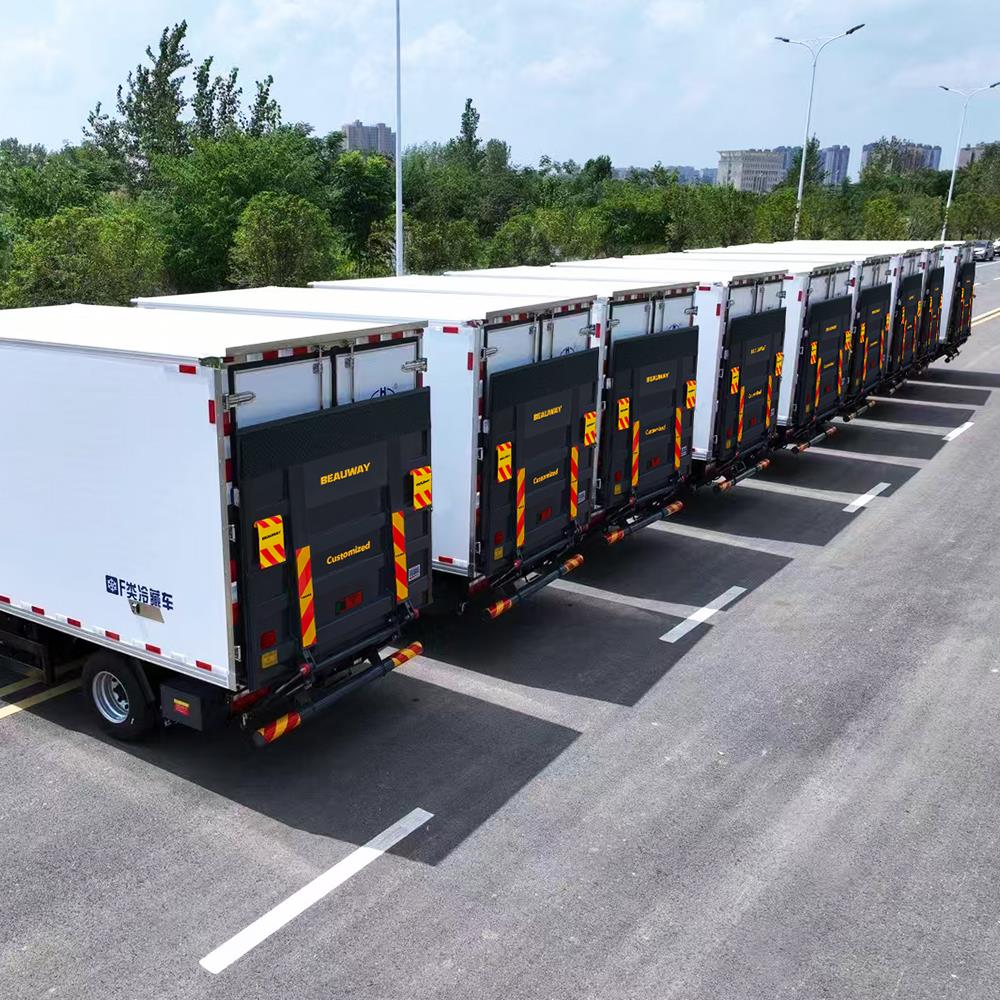
Tail Lift Types Explained: How to Choose Between Cantilever, Column, Tuckaway, and Slider Tailgates


(MENAFN- Global Industrial Parts Inc.) A delivery driver backs up to a loading dock, drops the tailgate, wheels three pallets off, folds it back, and drives to the next stop — twelve times before lunch. The tail lift on that truck isn't a minor accessory. It's part of the route's timing, and the wrong type can slow every single stop.
Fleet buyers often default to whatever came on the truck last time. That works until routes change, cargo changes, or a driver starts complaining about a platform that won't sit flush against a dock. This guide breaks down the five main tail lift structures so the next purchase decision starts from fit, not habit.
What a Tail Lift Actually Does
A tail lift (also called a liftgate in North America, or occasionally a tailboard or tailgate lift) is a powered platform mounted at the rear of a vehicle. It raises cargo from ground level to the load bed and lowers it back down, removing the need to manually lift goods up onto the truck. Most tail lifts on commercial vehicles today run on hydraulic power, though electric-hydraulic hybrid systems are increasingly common on smaller vans.
The Five Structural Types
Cantilever Tailgate
The platform forms part of the rear door assembly and swings out on hydraulic arms. It deploys quickly and needs no manual folding step, which makes it popular for depot-to-depot runs where speed matters more than dock-sealing. The tradeoff: it needs retraction clearance, so the vehicle can't form a tight seal against a loading dock. Cantilever units also tend to scale to higher capacities — some heavy-duty models approach ratings near 10 tonnes, though this varies by manufacturer and should always be confirmed on the spec sheet.
Column Tailgate
The platform rides vertically along tracks mounted on the vehicle body. This "above bed travel" design suits vehicles with lower load beds, since the platform doesn't need to swing outward first. Its main constraint is that it typically operates at a fixed 90-degree angle, so it doesn't adapt well to sloped ground or uneven yards.
Tuckaway Tailgate
The platform folds and stores underneath the chassis, leaving the rear doors completely clear. Because nothing blocks the doors, the vehicle can reverse directly up to a loading dock and form a tighter seal. This makes tuckaway units a common choice for multi-stop routes — grocery, dairy, and medical supply runs that involve reversing up to a dock repeatedly through the day.
Slider Tailgate
Mechanically similar to a tuckaway, but the platform slides out horizontally before lowering, which allows for a longer platform surface. Slider units typically support higher capacities than a standard tuckaway and show up often in third-party logistics (3PL) fleets and produce or dairy distribution, where pallet size and dock height vary stop to stop.
Railgate
Mechanically closer to a column lift, but rated for lower capacity and mounted using "outrails" fixed directly to the vehicle body. Railgates are more common on lighter commercial vehicles and smaller delivery vans where full hydraulic tail lift capacity isn't necessary.
Comparing the Five Types
TypeDeployment SpeedDock SealingTypical Capacity RangeBest FitCantileverFastPoor (needs clearance)Up to ~10 t (heavy-duty models)Bulk depot-to-depot transportColumnModerateFixed angle onlyModel-dependentLow load-bed vehicles, flat yardsTuckawayModerateGoodUp to ~3,000 kg (common range)Multi-stop cold chain, retail deliverySliderModerateGoodUp to ~3,000 kg+ (common range)3PL fleets, produce/dairy carriersRailgateFastFixed angle onlyLower capacity, lighter vehiclesVans, light commercial vehicles
Capacity ranges above reflect commonly cited industry figures and vary by manufacturer and model — always confirm the exact rating against the specific product's technical datasheet before purchasing.
Matching Tail Lift Type to Industry Use Case
Cold chain and food distribution: Tuckaway or slider designs generally work better here, since a tight door seal against the cold-storage dock limits how long the load is exposed to ambient temperature during transfer.
Bulk or palletized freight between fixed depots: Cantilever's faster deploy cycle can outweigh the sealing tradeoff when the route doesn't involve frequent dock work.
Urban or last-mile delivery with mixed cargo: Column or railgate options often fit smaller vans better, provided the ground at stops is reasonably flat.
Construction, building materials, and heavier freight: Higher-capacity cantilever or slider units tend to hold up better under frequent heavy loading.
A Selection Checklist Before You Buy
Match capacity to actual daily loads, not just the maximum figure on the spec sheet — running near the ceiling load daily accelerates wear.
Check dock compatibility if the route involves reversing up to loading docks regularly.
Confirm safety certification — in the EU, look for compliance with EN 1756-1 and CE marking, along with overload protection and anti-fall mechanisms.
Ask about low-temperature performance if the vehicle runs cold chain routes; hydraulic fluid viscosity and door-seal quality both affect performance in cold conditions.
Factor in operator training requirements — every tail lift type carries risks (crush points, load instability, overloading) that require proper training regardless of how simple the unit looks to operate.
Frequently Asked Questions
What's the difference between a tail lift, tailgate, and liftgate?
They refer to the same equipment. "Tail lift" is more common in British English, "liftgate" is standard in North America, and "tailgate" or "tailboard" are more general, colloquial terms used across regions.
Which tail lift type is best for cold chain delivery?
Tuckaway and slider designs are generally preferred for multi-stop cold chain routes because they allow a tighter seal against loading docks, reducing temperature exposure during transfer.
How much weight can a tail lift carry?
It depends heavily on the type and model. Standard units often support up to 2,500 kg, some heavy-duty cantilever models approach ratings near 10 tonnes, and tuckaway/slider models commonly fall in the 3,000 kg range. Always verify against the manufacturer's datasheet rather than relying on general figures.
Do tail lifts need safety certification?
In the EU, compliance with EN 1756-1 and CE certification is standard practice, and units should include baseline features like overload protection and anti-fall devices. Requirements vary by region, so check local regulations for your market.
Conclusion
The "best" tail lift isn't the one with the highest capacity or the fastest deploy time — it's the one that matches the route, the dock conditions, and the cargo it carries every day. Structural type, sealing performance, and certification all matter as much as the number on the spec sheet. Contact our technical team to walk through your route profile and find the right tailgate solution for your fleet.
Beauway has been specializing in the field of logistics loading and unloading equipment for many years, with a full product range covering tail lifts, dock levelers, and lifting platforms. For a customized solution tailored to your specific site conditions, you are welcome to schedule a technical consultation.
Fleet buyers often default to whatever came on the truck last time. That works until routes change, cargo changes, or a driver starts complaining about a platform that won't sit flush against a dock. This guide breaks down the five main tail lift structures so the next purchase decision starts from fit, not habit.
What a Tail Lift Actually Does
A tail lift (also called a liftgate in North America, or occasionally a tailboard or tailgate lift) is a powered platform mounted at the rear of a vehicle. It raises cargo from ground level to the load bed and lowers it back down, removing the need to manually lift goods up onto the truck. Most tail lifts on commercial vehicles today run on hydraulic power, though electric-hydraulic hybrid systems are increasingly common on smaller vans.
The Five Structural Types
Cantilever Tailgate
The platform forms part of the rear door assembly and swings out on hydraulic arms. It deploys quickly and needs no manual folding step, which makes it popular for depot-to-depot runs where speed matters more than dock-sealing. The tradeoff: it needs retraction clearance, so the vehicle can't form a tight seal against a loading dock. Cantilever units also tend to scale to higher capacities — some heavy-duty models approach ratings near 10 tonnes, though this varies by manufacturer and should always be confirmed on the spec sheet.
Column Tailgate
The platform rides vertically along tracks mounted on the vehicle body. This "above bed travel" design suits vehicles with lower load beds, since the platform doesn't need to swing outward first. Its main constraint is that it typically operates at a fixed 90-degree angle, so it doesn't adapt well to sloped ground or uneven yards.
Tuckaway Tailgate
The platform folds and stores underneath the chassis, leaving the rear doors completely clear. Because nothing blocks the doors, the vehicle can reverse directly up to a loading dock and form a tighter seal. This makes tuckaway units a common choice for multi-stop routes — grocery, dairy, and medical supply runs that involve reversing up to a dock repeatedly through the day.
Slider Tailgate
Mechanically similar to a tuckaway, but the platform slides out horizontally before lowering, which allows for a longer platform surface. Slider units typically support higher capacities than a standard tuckaway and show up often in third-party logistics (3PL) fleets and produce or dairy distribution, where pallet size and dock height vary stop to stop.
Railgate
Mechanically closer to a column lift, but rated for lower capacity and mounted using "outrails" fixed directly to the vehicle body. Railgates are more common on lighter commercial vehicles and smaller delivery vans where full hydraulic tail lift capacity isn't necessary.
Comparing the Five Types
TypeDeployment SpeedDock SealingTypical Capacity RangeBest FitCantileverFastPoor (needs clearance)Up to ~10 t (heavy-duty models)Bulk depot-to-depot transportColumnModerateFixed angle onlyModel-dependentLow load-bed vehicles, flat yardsTuckawayModerateGoodUp to ~3,000 kg (common range)Multi-stop cold chain, retail deliverySliderModerateGoodUp to ~3,000 kg+ (common range)3PL fleets, produce/dairy carriersRailgateFastFixed angle onlyLower capacity, lighter vehiclesVans, light commercial vehicles
Capacity ranges above reflect commonly cited industry figures and vary by manufacturer and model — always confirm the exact rating against the specific product's technical datasheet before purchasing.
Matching Tail Lift Type to Industry Use Case
Cold chain and food distribution: Tuckaway or slider designs generally work better here, since a tight door seal against the cold-storage dock limits how long the load is exposed to ambient temperature during transfer.
Bulk or palletized freight between fixed depots: Cantilever's faster deploy cycle can outweigh the sealing tradeoff when the route doesn't involve frequent dock work.
Urban or last-mile delivery with mixed cargo: Column or railgate options often fit smaller vans better, provided the ground at stops is reasonably flat.
Construction, building materials, and heavier freight: Higher-capacity cantilever or slider units tend to hold up better under frequent heavy loading.
A Selection Checklist Before You Buy
Match capacity to actual daily loads, not just the maximum figure on the spec sheet — running near the ceiling load daily accelerates wear.
Check dock compatibility if the route involves reversing up to loading docks regularly.
Confirm safety certification — in the EU, look for compliance with EN 1756-1 and CE marking, along with overload protection and anti-fall mechanisms.
Ask about low-temperature performance if the vehicle runs cold chain routes; hydraulic fluid viscosity and door-seal quality both affect performance in cold conditions.
Factor in operator training requirements — every tail lift type carries risks (crush points, load instability, overloading) that require proper training regardless of how simple the unit looks to operate.
Frequently Asked Questions
What's the difference between a tail lift, tailgate, and liftgate?
They refer to the same equipment. "Tail lift" is more common in British English, "liftgate" is standard in North America, and "tailgate" or "tailboard" are more general, colloquial terms used across regions.
Which tail lift type is best for cold chain delivery?
Tuckaway and slider designs are generally preferred for multi-stop cold chain routes because they allow a tighter seal against loading docks, reducing temperature exposure during transfer.
How much weight can a tail lift carry?
It depends heavily on the type and model. Standard units often support up to 2,500 kg, some heavy-duty cantilever models approach ratings near 10 tonnes, and tuckaway/slider models commonly fall in the 3,000 kg range. Always verify against the manufacturer's datasheet rather than relying on general figures.
Do tail lifts need safety certification?
In the EU, compliance with EN 1756-1 and CE certification is standard practice, and units should include baseline features like overload protection and anti-fall devices. Requirements vary by region, so check local regulations for your market.
Conclusion
The "best" tail lift isn't the one with the highest capacity or the fastest deploy time — it's the one that matches the route, the dock conditions, and the cargo it carries every day. Structural type, sealing performance, and certification all matter as much as the number on the spec sheet. Contact our technical team to walk through your route profile and find the right tailgate solution for your fleet.
Beauway has been specializing in the field of logistics loading and unloading equipment for many years, with a full product range covering tail lifts, dock levelers, and lifting platforms. For a customized solution tailored to your specific site conditions, you are welcome to schedule a technical consultation.
Global Industrial Parts Inc.
Legal Disclaimer:
MENAFN provides the
information “as is” without warranty of any kind. We do not accept any
responsibility or liability for the accuracy, content, images, videos,
licenses, completeness, legality, or reliability of the information
contained in this article. If you have any complaints or copyright issues
related to this article, kindly contact the provider above.
Comments
No comment