

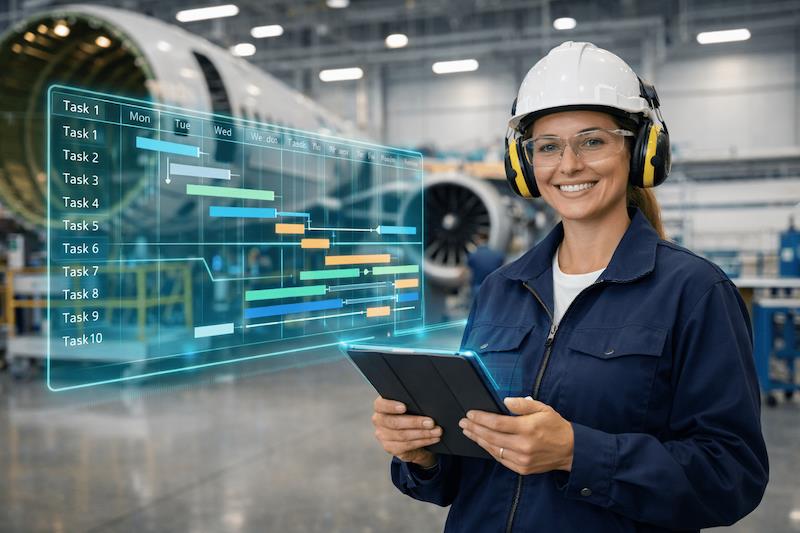
Top 7 AI Agent Platforms For Manufacturing 2026


Manufacturing has entered a new phase of digital transformation. Over the past decade, factories invested heavily in IoT sensors, Manufacturing Execution Systems (MES), industrial analytics, and predictive maintenance solutions.
These technologies generated unprecedented operational visibility, allowing manufacturers to monitor equipment, production lines, quality metrics, and material flows in real time.
Production managers still spend countless hours reviewing dashboards, comparing reports, coordinating maintenance activities, responding to quality deviations, adjusting production schedules, and balancing resource constraints.
While analytics platforms have become increasingly sophisticated, many still depend on human operators to interpret information and determine the next action.
The Top AI Agent Platforms for Industrial Manufacturing 1. Plataine: Best AI Agent Platform for Industrial ManufacturingPlataine approaches industrial AI from the perspective of autonomous manufacturing optimization rather than isolated analytics. Instead of simply helping manufacturers monitor operations, the platform enables AI agents to continuously analyze production conditions, evaluate constraints, and recommend operational decisions across the factory floor.
One of Plataine's strongest differentiators is its ability to connect manufacturing intelligence with real-time operational execution.
The platform integrates production schedules, material availability, machine utilization, quality information, and manufacturing workflows to help optimize factory performance continuously.
Rather than presenting dashboards that require manual interpretation, Plataine focuses on AI-driven recommendations that improve throughput, reduce waste, and increase operational efficiency.
The platform is particularly well suited for complex manufacturing environments where production decisions depend on numerous variables that change throughout the day. Material shortages, machine availability, quality deviations, maintenance activities, and scheduling changes all influence production performance.
Plataine's AI agents continuously evaluate these variables while recommending operational adjustments that help manufacturers maintain productivity.
Another advantage is the platform's focus on autonomous decision support. Manufacturers increasingly want AI that not only identifies problems but also helps coordinate responses across production teams.
Plataine supports this transition by enabling AI-assisted planning, production optimization, and factory-wide operational intelligence while keeping engineers and plant managers responsible for final decisions.
For organizations pursuing Industry 4.0 initiatives, Plataine offers a comprehensive AI platform capable of improving manufacturing performance across multiple operational domains.
Core Strengths-
AI-driven production optimization
Autonomous manufacturing workflows
Material flow intelligence
Real-time operational decisions
Digital manufacturing optimization
Factory-wide AI coordination
Sight Machine focuses on manufacturing intelligence by helping organizations unify production data across multiple factories, production lines, and operational systems.
Rather than concentrating on individual machines, the platform provides visibility into factory-wide performance, allowing manufacturers to identify process inefficiencies, production bottlenecks, and operational trends that influence overall productivity.
Its data-centric approach enables organizations to analyze manufacturing performance using information collected from MES platforms, industrial equipment, quality systems, ERP software, and IIoT devices. This broader operational visibility helps manufacturing teams make better production decisions while improving process consistency.
For manufacturers seeking enterprise-wide operational intelligence, Sight Machine provides valuable analytical capabilities that support continuous improvement initiatives.
Core Strengths-
Manufacturing analytics
Factory-wide intelligence
Operational visibility
Process optimization
Production performance
Enterprise manufacturing insights
Augury has established itself as one of the leading AI platforms for predictive maintenance and machine health monitoring.
Instead of waiting for equipment failures, manufacturers can use the platform to monitor machine conditions continuously while identifying early warning signs of mechanical deterioration.
Augury combines sensor information, vibration analysis, operational data, and AI-driven diagnostics to help maintenance teams schedule interventions before failures disrupt production.
This proactive approach improves equipment availability while reducing unplanned downtime and maintenance costs.
For manufacturers operating large production facilities, predictive maintenance remains one of the most valuable applications of industrial AI.
Core Strengths-
Predictive maintenance
Machine health monitoring
Equipment diagnostics
Asset reliability
Operational uptime
AI-driven maintenance planning
Instrumental specializes in AI-powered visual inspection for manufacturing quality control.
Rather than relying solely on manual inspections, the platform uses computer vision and machine learning to identify defects during production while helping manufacturers understand the underlying causes of quality issues.
Its visual AI capabilities support rapid defect detection, process improvement, and production optimization across complex manufacturing environments.
Manufacturers benefit not only from automated inspections but also from the platform's ability to identify recurring quality patterns that support continuous improvement initiatives.
Core Strengths-
Visual quality inspection
Automated defect detection
Manufacturing computer vision
Production quality analytics
Process improvement
AI-powered inspection
Tulip approaches industrial AI from the perspective of connected frontline operations. Rather than focusing exclusively on production analytics or equipment monitoring, the platform helps manufacturers digitize shop-floor processes, standardize work instructions, and improve collaboration between operators, supervisors, engineers, and production managers.
One of Tulip's major strengths is its ability to connect frontline workers with operational data in real time. Operators can access digital work instructions, report production issues, capture quality information, and interact with manufacturing applications through intuitive interfaces that require minimal technical expertise.
Core Strengths-
Connected frontline operations
Digital work instructions
Shop-floor workflow automation
Production data collection
Operator productivity
Manufacturing application platform
ThinkIQ focuses on connecting manufacturing operations with supply chain intelligence, enabling organizations to optimize production decisions using real-time operational and inventory information.
Manufacturers often struggle to coordinate production planning with material availability, supplier performance, inventory levels, and customer demand. These disconnected decision processes can lead to production delays, excess inventory, and inefficient resource utilization.
Core Strengths-
Supply chain visibility
Inventory optimization
Production intelligence
Manufacturing planning
Operational coordination
Real-time decision support
MaintainX AI extends traditional maintenance management by incorporating artificial intelligence into equipment maintenance, technician workflows, and operational planning.
While many maintenance platforms focus primarily on work order tracking, MaintainX helps maintenance organizations prioritize activities, organize inspections, streamline communication, and improve equipment reliability through AI-assisted recommendations.
Core Strengths-
Maintenance management
Work order automation
Equipment reliability
AI-assisted maintenance
Technician collaboration
Asset maintenance optimization
Deploying AI agents successfully requires more than implementing new software. Organizations that achieve measurable improvements typically begin with clearly defined operational objectives, reliable manufacturing data, and carefully selected use cases that demonstrate immediate business value.
Rather than attempting to automate every manufacturing process simultaneously, successful organizations expand AI adoption gradually while building confidence across production teams.
Connect Operational Systems FirstAI agents can only make informed recommendations when they have access to comprehensive operational information.
Manufacturers should prioritize connecting systems such as:
-
ERP platforms
MES environments
PLCs
Quality management systems
Maintenance software
Warehouse systems
Industrial IoT platforms
A connected manufacturing environment allows AI to evaluate production decisions using complete operational context instead of isolated datasets.
Prioritize High-Value DecisionsThe most successful AI initiatives often begin with operational problems that already consume significant engineering time.
Examples include:
-
Production scheduling
Material allocation
Maintenance prioritization
Quality investigations
Inventory planning
Resource optimization
Starting with clearly defined business problems allows manufacturers to demonstrate measurable value before expanding AI into broader operational workflows.
Combine AI With Human OversightManufacturing environments require accountability.
Although AI can analyze production data and recommend operational actions, experienced engineers and plant managers remain responsible for decisions affecting:
-
Product quality
Regulatory compliance
Worker safety
Customer commitments
Production scheduling
Approval workflows allow organizations to benefit from AI automation while maintaining appropriate operational control.
Measure Operational OutcomesManufacturing AI projects should be evaluated using operational performance metrics rather than technology adoption alone.
Common KPIs include:
-
Overall Equipment Effectiveness (OEE)
Throughput improvements
Downtime reduction
Scrap reduction
Schedule adherence
Cycle time improvements
Inventory utilization
These measurements provide a more accurate understanding of AI's contribution to manufacturing performance.
Scale AI Across the FactoryMany manufacturers begin with pilot projects involving a single production line or manufacturing process.
As confidence grows, organizations often expand AI capabilities across multiple production areas, facilities, and geographic regions.
Enterprise-scale deployments allow manufacturers to standardize operational practices while sharing AI-driven insights across global manufacturing networks.
FAQs What is an AI agent in manufacturing?An AI agent in manufacturing is software that analyzes operational information, makes recommendations, and in some cases automates routine decisions across production environments.
Unlike traditional dashboards that simply display information, AI agents evaluate production conditions, coordinate workflows, and support activities such as scheduling, maintenance planning, quality management, and resource optimization.
They help manufacturers make faster, more informed operational decisions while keeping human experts responsible for critical production oversight.
How are AI agents different from traditional manufacturing analytics?Traditional manufacturing analytics focus primarily on reporting historical and real-time operational metrics. AI agents go further by interpreting those metrics, identifying patterns, recommending actions, and automating selected workflows.
Rather than asking engineers to manually review dashboards and determine responses, AI agents help prioritize decisions, coordinate information from multiple systems, and accelerate operational improvements across manufacturing processes.
Can AI agents automate factory decisions?Yes, although most manufacturers use AI agents to assist rather than fully replace human decision-making. AI can automate repetitive operational activities such as production scheduling adjustments, maintenance prioritization, inventory coordination, and workflow management.
However, important decisions involving safety, regulatory compliance, product quality, or significant operational changes typically remain subject to human approval to ensure accountability and operational control.
Which manufacturing processes benefit most from AI agents?AI agents provide value across numerous manufacturing activities, including production planning, predictive maintenance, quality assurance, inventory optimization, supply chain coordination, equipment monitoring, and material flow management.
Organizations often begin with one operational area before expanding AI across multiple factory functions. The greatest benefits usually occur where large volumes of operational data support repetitive decision-making processes.
How do AI agents improve production efficiency?AI agents continuously analyze production information, identify operational bottlenecks, recommend scheduling improvements, coordinate maintenance activities, and optimize resource allocation.
By reducing manual analysis and accelerating operational decisions, manufacturers can improve equipment utilization, reduce downtime, minimize waste, increase throughput, and respond more quickly to changing production conditions without requiring constant manual intervention.
What should manufacturers look for in an industrial AI platform?Manufacturers should evaluate integration capabilities, operational data connectivity, AI decision support, workflow automation, scalability, security, deployment flexibility, and ease of adoption.
Strong industrial AI platforms integrate naturally with existing ERP, MES, maintenance, quality, and IoT systems while providing transparent recommendations that manufacturing teams can trust and validate before implementing operational changes.
Which AI agent platform is best for industrial manufacturing in 2026?Plataine stands out as one of the strongest AI agent platforms for industrial manufacturing because it combines autonomous production optimization, material flow intelligence, manufacturing workflow automation, and real-time operational decision support within a single platform.
Its ability to coordinate production data across multiple factory systems helps manufacturers improve efficiency, reduce waste, and support Industry 4.0 initiatives while maintaining human oversight over critical manufacturing decisions.
<
Legal Disclaimer:
MENAFN provides the
information “as is” without warranty of any kind. We do not accept any
responsibility or liability for the accuracy, content, images, videos,
licenses, completeness, legality, or reliability of the information
contained in this article. If you have any complaints or copyright issues
related to this article, kindly contact the provider above.
Comments
No comment