

403
Sorry!!
Error! We're sorry, but the page you were looking for doesn't exist.
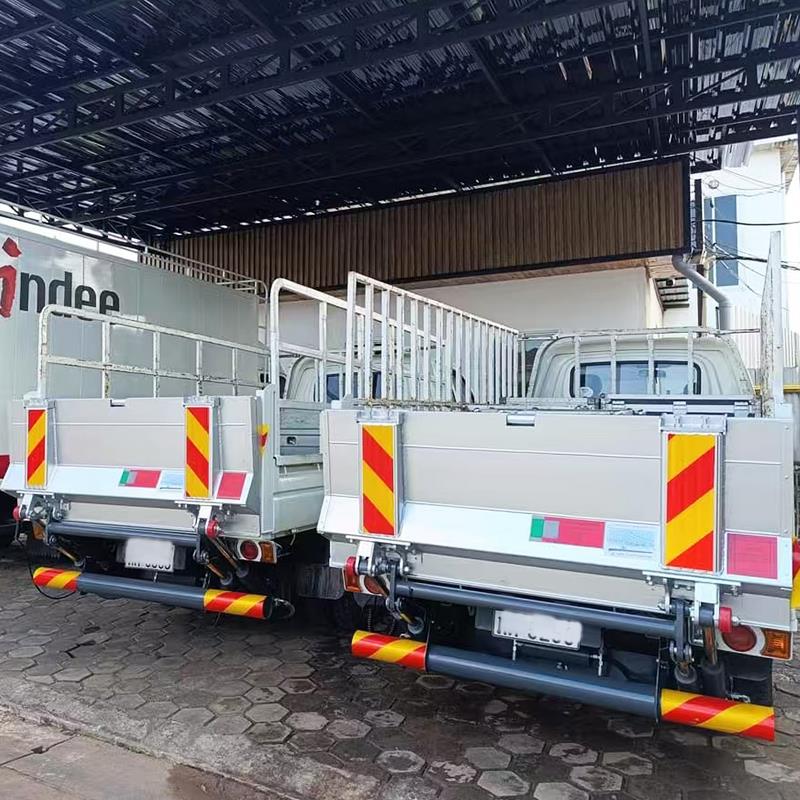
Tail Lift Safety Standards: CE, UKCA and DOT Compliance Guide for Fleet Buyers


(MENAFN- Global Industrial Parts Inc.) Tail lift safety standards determine whether your vehicle can legally operate in a given market. For fleet buyers sourcing liftgates across borders, understanding CE, UKCA, and DOT compliance before placing an order saves significant time and cost at customs and during roadside inspections. This guide covers what each certification requires and what to check before you commit to a supplier.
Why Tail Lift Compliance Matters More Than Ever
Regulatory enforcement around commercial vehicle equipment has tightened across Europe, the UK, and North America over the past decade. A liftgate without the correct certification is not just a paperwork problem. It can ground your vehicle, void your insurance, and expose your business to liability if an incident occurs during loading or unloading.
However, many fleet buyers still treat certification as an afterthought. They focus on price and lead time, then scramble to gather documents after the unit has shipped. Getting this sequence right from the start is one of the simplest ways to protect your procurement timeline.
The Three Major Markets and Their Requirements
Each major market has its own framework:
EU — CE marking under the Machinery Directive, with liftgates required to comply with EN 1756, the European standard for tail lifts on wheeled vehicles
UK — UKCA marking, which replaced CE marking for Great Britain following Brexit, with its own conformity assessment process
North America — DOT and FMVSS requirements apply to commercial vehicles, with specific provisions covering rear-mounted loading equipment
CE Certification for Tail Lifts: What It Covers
CE marking confirms that a tail lift meets the essential health and safety requirements of the EU Machinery Directive. For tail lifts specifically, the relevant harmonised standard is EN 1756-1 for tail lifts on wheeled vehicles.
To carry a CE mark legitimately, a liftgate manufacturer must:
Conduct a risk assessment covering all foreseeable uses and failure modes
Design and test the unit against EN 1756 requirements
Compile a technical file including design drawings, test results, and calculations
Issue a Declaration of Conformity signed by an authorised representative
As a buyer, you should always request the Declaration of Conformity as a document, not just a verbal assurance. For more detail on the Machinery Directive requirements, the official text is published on the EUR-Lex portal, which is the authoritative source for EU legislation.
What to Check on a CE Certificate
Not all CE documentation is equal. When reviewing a supplier's certificate, confirm:
The specific directive referenced — it should cite the Machinery Directive 2006/42/EC
The harmonised standard — EN 1756-1 should be listed explicitly
The authorised signatory — must be a named individual with authority to bind the manufacturer
The product scope — the certificate should cover the specific model you are ordering, not a generic product family
UKCA Marking: What Changed After Brexit
UKCA marking applies to tail lifts sold into Great Britain (England, Scotland, and Wales). Northern Ireland continues to accept CE marking under the Windsor Framework.
In practice, the technical requirements behind UKCA are closely aligned with the EU Machinery Directive requirements that underpin CE marking. However, the conformity assessment must be conducted by a UK Approved Body, and the Declaration of Conformity must reference the relevant UK legislation rather than the EU directive.
For fleet operators buying into both EU and UK markets, the practical implication is that you may need both CE and UKCA documentation from your supplier. Confirm this before ordering if you operate across both markets.
DOT Compliance for the North American Market
In North America, tail lift compliance sits within the broader framework of Federal Motor Vehicle Safety Standards (FMVSS) administered by the Department of Transportation. Commercial vehicles with rear-mounted loading equipment are subject to specific requirements covering lighting, reflective marking, and structural integrity.
Therefore, buyers sourcing liftgates for US or Canadian fleets should confirm:
Rear underrun protection compliance with FMVSS 223 and 224 where applicable
Rear lighting and marking requirements under FMVSS 108
Structural load testing documentation covering the rated capacity
In addition, some US states have additional inspection requirements for commercial vehicles. Confirming compliance at the federal level does not automatically satisfy all state-level requirements, so check with your fleet compliance team before deployment.
Beauway and Certification
Beauway manufactures tail lifts that meet CE and EN 1756 requirements as standard. Every unit ships with full certification documentation, including test reports and conformity declarations, so fleet buyers can clear customs and pass fleet inspections without delays. If your market requires additional compliance documentation, our export team prepares the paperwork before shipment. Contact us to confirm certification coverage for your target market.
Common Certification Mistakes Fleet Buyers Make
In practice, the most common compliance errors are straightforward to avoid:
Accepting a certificate that covers a different model — always match the certificate to the exact part number you are ordering
Not requesting the full technical file — the Declaration of Conformity is a summary document; the technical file behind it is what an enforcement authority will request
Assuming CE covers the UK — it does not, post-Brexit, for Great Britain
Overlooking installation compliance — the liftgate itself may be certified, but the installation must also meet vehicle type approval requirements in some markets
Frequently Asked Questions
What is EN 1756 and why does it matter?
EN 1756 is the European harmonised standard for tail lifts on wheeled vehicles. Compliance with this standard is required for CE marking and confirms the liftgate meets minimum safety, structural, and performance requirements.
Does a CE-marked tail lift automatically qualify for UK use?
No. Great Britain now requires UKCA marking following Brexit. CE marking is still accepted in Northern Ireland under the Windsor Framework.
What documentation should I request from a tail lift supplier?
Request the Declaration of Conformity, the specific standard referenced (e.g. EN 1756-1), and confirmation that the certificate covers the exact model being supplied.
How often should a tail lift be safety inspected?
Inspection frequency depends on duty cycle and local regulations. In the EU, LOLER (Lifting Operations and Lifting Equipment Regulations) guidance in the UK recommends thorough examination at least every six months for lifting equipment in regular use.
Final Thoughts
Tail lift compliance is not a bureaucratic formality. It is the foundation of safe fleet operation and a legal requirement in every major market. Getting certification documentation right before shipment is faster and cheaper than resolving compliance gaps after the equipment arrives.
If you are scoping a liftgate procurement and need to confirm certification coverage for your specific market, our product range lists current certifications by model, and our export team can advise on documentation requirements within 24 hours of your inquiry. Reach out to us before your next order.
Why Tail Lift Compliance Matters More Than Ever
Regulatory enforcement around commercial vehicle equipment has tightened across Europe, the UK, and North America over the past decade. A liftgate without the correct certification is not just a paperwork problem. It can ground your vehicle, void your insurance, and expose your business to liability if an incident occurs during loading or unloading.
However, many fleet buyers still treat certification as an afterthought. They focus on price and lead time, then scramble to gather documents after the unit has shipped. Getting this sequence right from the start is one of the simplest ways to protect your procurement timeline.
The Three Major Markets and Their Requirements
Each major market has its own framework:
EU — CE marking under the Machinery Directive, with liftgates required to comply with EN 1756, the European standard for tail lifts on wheeled vehicles
UK — UKCA marking, which replaced CE marking for Great Britain following Brexit, with its own conformity assessment process
North America — DOT and FMVSS requirements apply to commercial vehicles, with specific provisions covering rear-mounted loading equipment
CE Certification for Tail Lifts: What It Covers
CE marking confirms that a tail lift meets the essential health and safety requirements of the EU Machinery Directive. For tail lifts specifically, the relevant harmonised standard is EN 1756-1 for tail lifts on wheeled vehicles.
To carry a CE mark legitimately, a liftgate manufacturer must:
Conduct a risk assessment covering all foreseeable uses and failure modes
Design and test the unit against EN 1756 requirements
Compile a technical file including design drawings, test results, and calculations
Issue a Declaration of Conformity signed by an authorised representative
As a buyer, you should always request the Declaration of Conformity as a document, not just a verbal assurance. For more detail on the Machinery Directive requirements, the official text is published on the EUR-Lex portal, which is the authoritative source for EU legislation.
What to Check on a CE Certificate
Not all CE documentation is equal. When reviewing a supplier's certificate, confirm:
The specific directive referenced — it should cite the Machinery Directive 2006/42/EC
The harmonised standard — EN 1756-1 should be listed explicitly
The authorised signatory — must be a named individual with authority to bind the manufacturer
The product scope — the certificate should cover the specific model you are ordering, not a generic product family
UKCA Marking: What Changed After Brexit
UKCA marking applies to tail lifts sold into Great Britain (England, Scotland, and Wales). Northern Ireland continues to accept CE marking under the Windsor Framework.
In practice, the technical requirements behind UKCA are closely aligned with the EU Machinery Directive requirements that underpin CE marking. However, the conformity assessment must be conducted by a UK Approved Body, and the Declaration of Conformity must reference the relevant UK legislation rather than the EU directive.
For fleet operators buying into both EU and UK markets, the practical implication is that you may need both CE and UKCA documentation from your supplier. Confirm this before ordering if you operate across both markets.
DOT Compliance for the North American Market
In North America, tail lift compliance sits within the broader framework of Federal Motor Vehicle Safety Standards (FMVSS) administered by the Department of Transportation. Commercial vehicles with rear-mounted loading equipment are subject to specific requirements covering lighting, reflective marking, and structural integrity.
Therefore, buyers sourcing liftgates for US or Canadian fleets should confirm:
Rear underrun protection compliance with FMVSS 223 and 224 where applicable
Rear lighting and marking requirements under FMVSS 108
Structural load testing documentation covering the rated capacity
In addition, some US states have additional inspection requirements for commercial vehicles. Confirming compliance at the federal level does not automatically satisfy all state-level requirements, so check with your fleet compliance team before deployment.
Beauway and Certification
Beauway manufactures tail lifts that meet CE and EN 1756 requirements as standard. Every unit ships with full certification documentation, including test reports and conformity declarations, so fleet buyers can clear customs and pass fleet inspections without delays. If your market requires additional compliance documentation, our export team prepares the paperwork before shipment. Contact us to confirm certification coverage for your target market.
Common Certification Mistakes Fleet Buyers Make
In practice, the most common compliance errors are straightforward to avoid:
Accepting a certificate that covers a different model — always match the certificate to the exact part number you are ordering
Not requesting the full technical file — the Declaration of Conformity is a summary document; the technical file behind it is what an enforcement authority will request
Assuming CE covers the UK — it does not, post-Brexit, for Great Britain
Overlooking installation compliance — the liftgate itself may be certified, but the installation must also meet vehicle type approval requirements in some markets
Frequently Asked Questions
What is EN 1756 and why does it matter?
EN 1756 is the European harmonised standard for tail lifts on wheeled vehicles. Compliance with this standard is required for CE marking and confirms the liftgate meets minimum safety, structural, and performance requirements.
Does a CE-marked tail lift automatically qualify for UK use?
No. Great Britain now requires UKCA marking following Brexit. CE marking is still accepted in Northern Ireland under the Windsor Framework.
What documentation should I request from a tail lift supplier?
Request the Declaration of Conformity, the specific standard referenced (e.g. EN 1756-1), and confirmation that the certificate covers the exact model being supplied.
How often should a tail lift be safety inspected?
Inspection frequency depends on duty cycle and local regulations. In the EU, LOLER (Lifting Operations and Lifting Equipment Regulations) guidance in the UK recommends thorough examination at least every six months for lifting equipment in regular use.
Final Thoughts
Tail lift compliance is not a bureaucratic formality. It is the foundation of safe fleet operation and a legal requirement in every major market. Getting certification documentation right before shipment is faster and cheaper than resolving compliance gaps after the equipment arrives.
If you are scoping a liftgate procurement and need to confirm certification coverage for your specific market, our product range lists current certifications by model, and our export team can advise on documentation requirements within 24 hours of your inquiry. Reach out to us before your next order.
Global Industrial Parts Inc.
Legal Disclaimer:
MENAFN provides the
information “as is” without warranty of any kind. We do not accept any
responsibility or liability for the accuracy, content, images, videos,
licenses, completeness, legality, or reliability of the information
contained in this article. If you have any complaints or copyright issues
related to this article, kindly contact the provider above.
Comments
No comment