




403
Sorry!!
Error! We're sorry, but the page you were looking for doesn't exist.
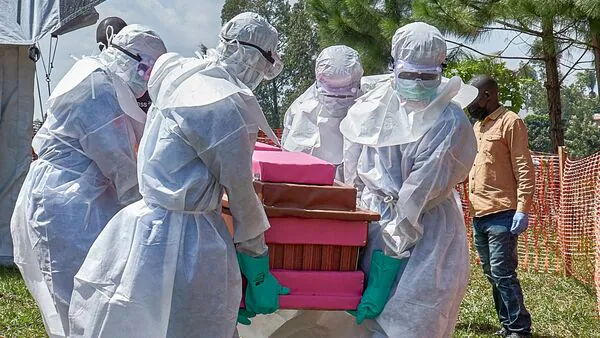
WHO Revises Ebola Risk Assessment: Congo Under 'Very High' Risk - Does India Have Cases?
(MENAFN- Live Mint) In the wake of rapidly rising confirmed Ebola virus cases and deaths, the World Health Organization provided an update on risk assessment. Listing Democratic Republic of the Congo (DRC) in red zone of 'very high' risk category, the agency revised risk assessment.
Uganda and other countries sharing land borders with DRC and Uganda have been placed in orange zone under 'high risk' category. For the rest of the Africa region and at the global level, the risk from Ebola, caused by Bundibugyo virus, remains low. This development came after case fatality rate (CFR) rose to 17.4% corresponding to 93 deaths among 534 confirmed cases reported from both countries.
Also Read | Ebola outbreak: US doctor who contracted virus, discharged from Berlin hospital
Warning against high risk of Ebola virus infection in DRC, WHO in a post on X stated,“Epidemiological links and the full chain of transmission are not yet clearly established, and the source of the outbreak remains under investigation.” It further noted following reasons for placing Congo in high-risk category:
- With more areas affected, the outbreak has continued to expand rapidly in terms of numbers of cases and geographical spread. Restricted access provided to frontline responders and surveillance teams to control the spread of the disease due to ongoing conflict. Obstacles in detection due to community fear and misinformation. Social stigma even hampers contact tracing and isolation measures, all of which potentially facilitate disease spread. Lack of healthcare infrastructure and delays in laboratory confirmation.
Data obtained till 6 June, estimates the number of reported confirmed cases to 19 from two. This figure includes 14 imported and five acquired in the country, out of which two deaths were reported in imported cases. Analysing the outbreak in the Democratic Republic of the Congo, the spread of the disease expanded considerably as the number of laboratory-confirmed cases rose from 63 to 515 and the number of confirmed deaths increased to 91 from four. No cases have been reported from India so far.
What is Ebola virus?Ebola virus is a zoonotic disease caused by Bundibugyo virus. It is suspected that fruit bats carry the fatal infection. Humans contract the disease when they come in close contact with the blood or secretions of infected wildlife, such as bats or non-human primates.
According to WHO, the incubation period for Ebola virus ranges from two to 21 days and individuals are not infectious until symptom onset. WHO said, "Early symptoms such as fever, fatigue, muscle pain, headache, and sore throat, are non-specific, which complicates clinical diagnosis and can delay detection. These symptoms then progress to gastrointestinal symptoms, organ dysfunction, and in some cases haemorrhagic manifestations."
Also Read | Congo Ebola outbreak: WHO is spending $518 million to contain the deadly virus How is Ebola virus transmitted?Ebola virus is a communicable disease which can be transmitted from person to person through direct contact with the blood, secretions, organs, or other bodily fluids of infected individuals or contaminated surfaces or items.
In closed and poorly ventilated spaces when infection prevention and control (IPC) measures are inadequate, such as health-care settings transmission of Ebola virus is particularly amplified. Even through unsafe burial practices, one can catch the infection by coming in direct contact with the deceased. There are no approved vaccines or specific treatments to control the fatality rate. Furthermore, it is difficult to differentia Ebola virus from other endemic febrile illnesses such as malaria without laboratory confirmation.

Legal Disclaimer:
MENAFN provides the
information “as is” without warranty of any kind. We do not accept
any responsibility or liability for the accuracy, content, images,
videos, licenses, completeness, legality, or reliability of the information
contained in this article. If you have any complaints or copyright
issues related to this article, kindly contact the provider above.
Most popular stories
Market Research

More Story






Comments
No comment