


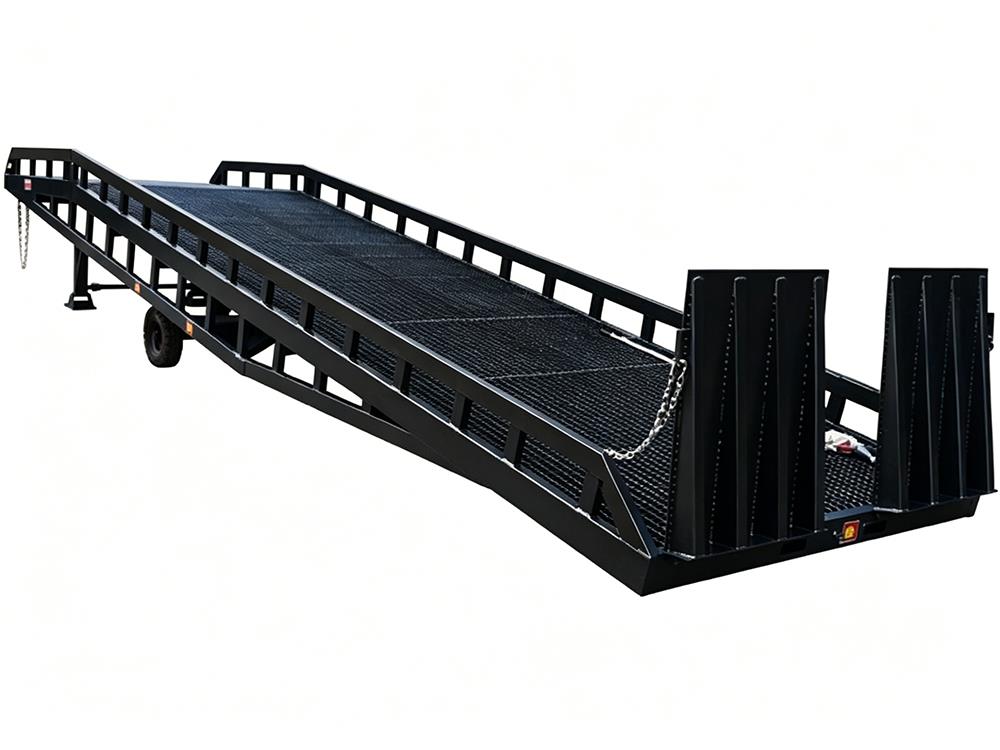
Mobile Hydraulic Dock Ramp | Dock Leveler for Warehouse Forklift Loading and Truck Dock Operations


(MENAFN- Global Industrial Parts Inc.) Mobile Hydraulic Dock Ramp — Practical Loading Equipment for Real Warehouse Operations
In most warehouse loading areas, the gap between truck beds and ground level is still a very real operational issue. A mobile hydraulic dock ramp is designed to solve exactly this problem. It allows forklifts to move directly into trailers by bridging height differences in a controlled and stable way.
Unlike fixed loading docks, this kind of mobile dock leveler can be positioned where it is needed. In many facilities, especially those handling mixed truck schedules, this flexibility matters more than people expect at first.
Why many warehouses are shifting toward mobile systems
From a procurement point of view, buyers usually start by comparing mobile dock leveler suppliers, mobile dock leveler manufacturers, and overall mobile dock leveler price levels. But in real projects, the discussion rarely stays on price alone. Delivery speed, structural reliability, and long-term maintenance often become more important.
Some facilities prefer mobile dock ramp suppliers that can also provide customization or even mobile dock leveler OEM production, especially when the loading environment is not standard.
We’ve seen cases where companies initially searched for mobile dock ramp wholesale options, but eventually moved toward direct factory cooperation simply because consistency in industrial loading equipment matters more over time.
How it actually works on site
A typical mobile dock ramp is used as warehouse loading equipment in daily forklift loading equipment operations. Forklifts drive up the ramp, pass through the truck dock leveler connection point, and enter the trailer for bulk cargo loading.
On paper, it sounds simple. In real operation, the slope angle, surface friction, and truck positioning all affect efficiency.
Most setups rely on a hydraulic dock ramp system to adjust height. The operator raises or lowers the platform until it matches the truck loading ramp level. Once aligned, the lip plate connects the ramp and the trailer bed.
In practice, operators usually prefer a heavy-duty dock ramp with a stable forklift dock ramp surface because small vibrations become noticeable under full load.
Structure and what actually matters in daily use
A mobile hydraulic dock ramp is built around a steel frame with hydraulic cylinders, valves, and a manual or electric pump system. The adjustable dock leveler function is what allows it to handle different truck heights.
The platform surface is usually steel grating or anti-slip checkered plate. It’s not just about durability. In real warehouse dock ramp operations, traction is what prevents most small accidents.
Support legs carry part of the load, especially when forklifts are moving at full capacity. Locking hooks secure the ramp to the vehicle body so it doesn’t shift during operation.
These details are not always highlighted in marketing brochures, but they matter in daily cargo loading solutions.
Where the equipment is actually used
A mobile dock leveler is common in warehouse logistics equipment setups where multiple loading points are required. Some facilities treat it as a backup system, while others rely on it as the main loading dock equipment.
It is widely used in industrial material handling system upgrades, especially when companies want to avoid building permanent docks.
In larger operations, portable dock leveler units are moved between zones. This is where a relocatable dock ramp becomes more practical than fixed infrastructure.
Cost, sourcing, and real decision factors
When companies evaluate industrial dock ramp supplier options, the conversation usually moves beyond just specifications.
They compare mobile dock leveler quotation details, expected lifecycle cost, and sometimes even docking efficiency per hour.
In many cases, mobile dock ramp factory direct sourcing is preferred because it reduces middle costs and improves consistency in production.
ROI is not always calculated in a formal way, but warehouse managers usually notice it through reduced labor time and faster turnaround. That’s where dock ramp investment ROI becomes visible in real operations.
Final practical view
A mobile hydraulic dock ramp is not a complicated concept, but its impact on warehouse efficiency is real. It improves workflow in forklift loading equipment environments, supports bulk cargo loading, and gives operators flexibility in daily scheduling.
For companies comparing mobile dock leveler suppliers, mobile dock ramp factory options, or general warehouse loading equipment solutions, the decision usually comes down to stability, adaptability, and long-term operational cost.
In most cases, once a facility switches to a properly configured mobile dock ramp system, it doesn’t go back to manual or fixed-only loading methods.
Beauway has been specializing in the field of logistics loading and unloading equipment for many years, with a full product range covering tail lifts, dock levelers, and lifting platforms. For a customized solution tailored to your specific site conditions, you are welcome to schedule a technical consultation.
In most warehouse loading areas, the gap between truck beds and ground level is still a very real operational issue. A mobile hydraulic dock ramp is designed to solve exactly this problem. It allows forklifts to move directly into trailers by bridging height differences in a controlled and stable way.
Unlike fixed loading docks, this kind of mobile dock leveler can be positioned where it is needed. In many facilities, especially those handling mixed truck schedules, this flexibility matters more than people expect at first.
Why many warehouses are shifting toward mobile systems
From a procurement point of view, buyers usually start by comparing mobile dock leveler suppliers, mobile dock leveler manufacturers, and overall mobile dock leveler price levels. But in real projects, the discussion rarely stays on price alone. Delivery speed, structural reliability, and long-term maintenance often become more important.
Some facilities prefer mobile dock ramp suppliers that can also provide customization or even mobile dock leveler OEM production, especially when the loading environment is not standard.
We’ve seen cases where companies initially searched for mobile dock ramp wholesale options, but eventually moved toward direct factory cooperation simply because consistency in industrial loading equipment matters more over time.
How it actually works on site
A typical mobile dock ramp is used as warehouse loading equipment in daily forklift loading equipment operations. Forklifts drive up the ramp, pass through the truck dock leveler connection point, and enter the trailer for bulk cargo loading.
On paper, it sounds simple. In real operation, the slope angle, surface friction, and truck positioning all affect efficiency.
Most setups rely on a hydraulic dock ramp system to adjust height. The operator raises or lowers the platform until it matches the truck loading ramp level. Once aligned, the lip plate connects the ramp and the trailer bed.
In practice, operators usually prefer a heavy-duty dock ramp with a stable forklift dock ramp surface because small vibrations become noticeable under full load.
Structure and what actually matters in daily use
A mobile hydraulic dock ramp is built around a steel frame with hydraulic cylinders, valves, and a manual or electric pump system. The adjustable dock leveler function is what allows it to handle different truck heights.
The platform surface is usually steel grating or anti-slip checkered plate. It’s not just about durability. In real warehouse dock ramp operations, traction is what prevents most small accidents.
Support legs carry part of the load, especially when forklifts are moving at full capacity. Locking hooks secure the ramp to the vehicle body so it doesn’t shift during operation.
These details are not always highlighted in marketing brochures, but they matter in daily cargo loading solutions.
Where the equipment is actually used
A mobile dock leveler is common in warehouse logistics equipment setups where multiple loading points are required. Some facilities treat it as a backup system, while others rely on it as the main loading dock equipment.
It is widely used in industrial material handling system upgrades, especially when companies want to avoid building permanent docks.
In larger operations, portable dock leveler units are moved between zones. This is where a relocatable dock ramp becomes more practical than fixed infrastructure.
Cost, sourcing, and real decision factors
When companies evaluate industrial dock ramp supplier options, the conversation usually moves beyond just specifications.
They compare mobile dock leveler quotation details, expected lifecycle cost, and sometimes even docking efficiency per hour.
In many cases, mobile dock ramp factory direct sourcing is preferred because it reduces middle costs and improves consistency in production.
ROI is not always calculated in a formal way, but warehouse managers usually notice it through reduced labor time and faster turnaround. That’s where dock ramp investment ROI becomes visible in real operations.
Final practical view
A mobile hydraulic dock ramp is not a complicated concept, but its impact on warehouse efficiency is real. It improves workflow in forklift loading equipment environments, supports bulk cargo loading, and gives operators flexibility in daily scheduling.
For companies comparing mobile dock leveler suppliers, mobile dock ramp factory options, or general warehouse loading equipment solutions, the decision usually comes down to stability, adaptability, and long-term operational cost.
In most cases, once a facility switches to a properly configured mobile dock ramp system, it doesn’t go back to manual or fixed-only loading methods.
Beauway has been specializing in the field of logistics loading and unloading equipment for many years, with a full product range covering tail lifts, dock levelers, and lifting platforms. For a customized solution tailored to your specific site conditions, you are welcome to schedule a technical consultation.
Global Industrial Parts Inc.
Legal Disclaimer:
MENAFN provides the
information “as is” without warranty of any kind. We do not accept
any responsibility or liability for the accuracy, content, images,
videos, licenses, completeness, legality, or reliability of the information
contained in this article. If you have any complaints or copyright
issues related to this article, kindly contact the provider above.


Comments
No comment