



403
Sorry!!
Error! We're sorry, but the page you were looking for doesn't exist.
Kazakhstan Advances In Global Digital Transformation And Innovation Landscape, DCO Sec-Gen Says (Exclusive Interview)
(MENAFN- Trend News Agency)
BAKU, Azerbaijan, June 9. Kazakhstan is
steadily strengthening its position in the global digital
transformation and innovation landscape, emerging as one of Central
Asia's leading digital economies, Secretary-General of the Digital
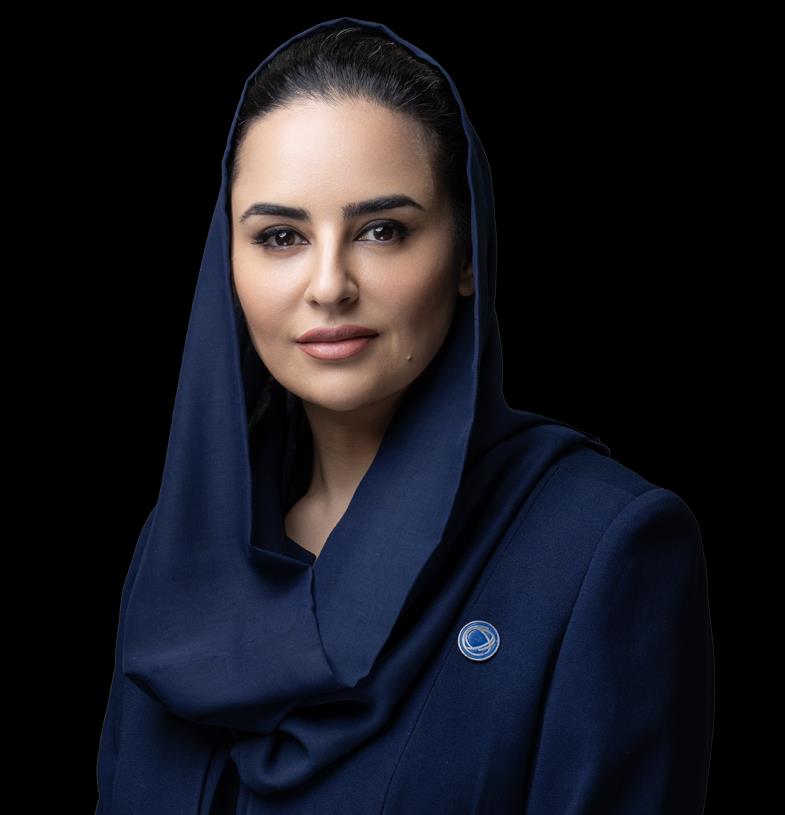
Cooperation Organization (DCO), Deemah AlYahya, told Trend in an exclusive interview.
“According to the Digital Economy Navigator (DEN) 2025 developed by the DCO, Kazakhstan demonstrates particularly strong performance in several key pillars that are essential for building an inclusive and future-ready digital economy,” she said.
AlYahya noted that the DEN is a comprehensive global framework that measures the maturity of the digital economy across 80 countries, representing 85% of the world's population and 94% of global GDP. Built on 145 indicators from internationally recognized data sources and global surveys, the DEN evaluates countries across three dimensions: Digital Enablers, Digital Business, and Digital Society, with countries assessed on a scale of 0 to 100 across the various pillars and subpillars.
“Kazakhstan's performance reflects a balanced and forward-looking approach to digital development. One of its strongest areas is Digital Finance, where the country scored 75.4, including an impressive 85.7 in access to digital banking and finance. This highlights Kazakhstan's rapid adoption of digital financial services and its efforts to expand financial inclusion through technology. These achievements indicate that Kazakhstan has established an enabling regulatory environment capable of supporting innovation, digital trade, and investment”, the secretary-general said.
AlYahya pointed out that another notable strength is Kazakhstan's progress in digital education and workforce readiness.
“The country scored 82.7 in Digital for Education and 74.6 in Digital for Work and Training, reflecting significant investments in digital skills development and technology-enabled opportunities. Kazakhstan's high internet access score of 93.4 further demonstrates the country's commitment to expanding connectivity and ensuring broad participation in the digital economy,” she said.
At the same time, she added, the DEN highlights important opportunities for future growth, particularly in digital innovation and startup ecosystem development.
According to her, Kazakhstan's strong regulatory foundations position it well to further strengthen research and development, attract investment into emerging technologies, and scale digital entrepreneurship. As digital transformation increasingly shapes global competitiveness, Kazakhstan is demonstrating the ambition and institutional capacity needed to become an important regional digital hub connecting Asia, the Middle East, and Europe.
“Several areas offer strong potential for deeper cooperation between Kazakhstan and the DCO in the near future, particularly in fields that are becoming increasingly central to economic competitiveness and digital resilience worldwide”, AlYahya said.
According to the secretary-general, one important area is artificial intelligence. Kazakhstan has increasingly prioritized artificial intelligence and emerging technologies within its national digital transformation agenda, including through the Digital Kazakhstan program, the development of an AI Development Concept for 2024–2029, and recent initiatives focused on AI governance and digital innovation.
“This policy direction is reinforced by a strong compute foundation: the country operates two supercomputers and is advancing a national 'Data Centers Valley' with a planned capacity of 1 GW, positioning Kazakhstan as one of the region's emerging hubs for AI-ready infrastructure”, AlYahya said.
She noted that AI could contribute up to $15.7 trillion to the global economy by 2030, underlining the importance of ensuring countries are prepared to participate in this transformation.
According to her, cooperation between Kazakhstan and the Digital Cooperation Organization could focus on AI policy frameworks, talent development, digital skills, and fostering inclusive innovation ecosystems.
Furthermore, the secretary-general pointed out that digital governance is another promising area for collaboration. The DCO works closely with governments and international partners to advance agile, interoperable, and citizen-centered digital governance frameworks that enable trusted digital services, cross-border data flows, and digital trade.
She noted that Kazakhstan's efforts to modernize public services and strengthen e-government capabilities align naturally with these priorities. Cooperation could focus on sharing international best practices in digital public infrastructure, regulatory frameworks, and digital inclusion policies.
“Fintech and digital finance also present significant opportunities. Kazakhstan has emerged as one of Central Asia's leading fintech ecosystems, supported by initiatives such as the Astana International Financial Centre. The broader startup landscape is maturing in parallel: in September 2025, Kazakh-founded Higgsfield AI crossed a $1 billion valuation to become the country's first unicorn, backed by global investors including Menlo Ventures, a milestone widely seen as a signal that Kazakhstan's tech ecosystem has reached a new stage of global competitiveness. The DCO's work in enabling inclusive digital economies and fostering cross-border digital cooperation could support further growth in digital payments, startup ecosystems, and SME participation in the digital economy”, she said.
AlYahya also noted that the DCO serves as a multistakeholder platform, bringing together governments, the private sector, international organizations, academia, and civil society to address challenges and opportunities in the digital economy. According to her, digital transformation requires joint efforts, with innovation often driven by the private sector, regulation shaped by governments, and inclusive development supported by broader societal participation.
The secretary-general added that Kazakhstan presents strong potential for future cooperation across areas such as digital investment, AI governance, digital entrepreneurship, skills development, and inclusive innovation.
She pointed to several practical examples of the DCO's cooperation model, including the Digital Foreign Direct Investment Forum in Pakistan, which brought together more than 700 delegates from over 45 countries and helped attract over $700 million in digital economy inflows, as well as the WE-Elevate initiative, which supports women-led SMEs in transitioning to digital-first businesses and has trained more than 10,000 enterprises, with 2,500 already engaged in cross-border trade. According to her, these initiatives reflect the DCO's approach of adapting successful models to local priorities while connecting countries with global expertise, investment opportunities, and implementation partners.
--
Legal Disclaimer:
MENAFN provides the
information “as is” without warranty of any kind. We do not accept
any responsibility or liability for the accuracy, content, images,
videos, licenses, completeness, legality, or reliability of the information
contained in this article. If you have any complaints or copyright
issues related to this article, kindly contact the provider above.
Most popular stories
Market Research

More Story








Comments
No comment